

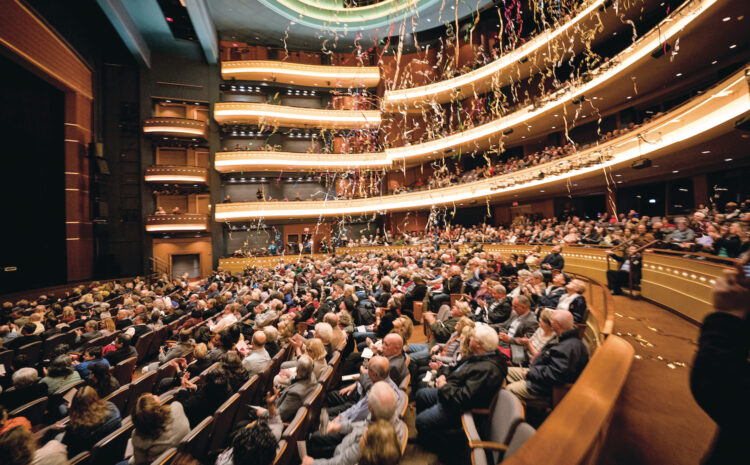
Production planners talk shop about how local stage time gets filled
You pull open the doors to the theater. You pick up a program. You find your seat. The lights go down and the curtain comes up. You put your hands together for the very special guest about to walk out on stage. But how did that show get booked? Did the performer really read all your fan mail and decide to visit you here in the Miami Valley? Booking talent takes a lot of research and effort, and Dayton Magazine is here to bring you the inside scoop on how the faces you wish to see end up on stage.
For organizations like Dayton Live, programming four venues is no small feat. Andre Bennington, director of Programming and Licensing for Dayton Live, shares his insight into what it takes to pick shows that will pack the house.
The first step is to do a little research. “We’re generally booking nine months to a year out for commercial concert and comedy programming,” he says. “We’re speaking to agents, managers, promoters and programmers in other relevant markets to stay informed as to what is touring. It’s a fluid process and things can change quickly.”
After Bennington determines what’s available, he can sort the shows like puzzle pieces into the season lineup. “Once we have a good grasp of what will route through Dayton and the show’s sales potential, we start looking at where we can slot it in the calendar that makes sense,” he says.
This task is increasingly complex when local groups like the Dayton Philharmonic, Dayton Ballet, Dayton Opera or local theater companies need stage time, as well. Plus, educational programming and workshops at venues like the PNC Arts Annex. “Finding enough programmable dates that work financially and operationally for all our stakeholders can be a challenge,” Bennington says. “We are always working to manage a calendar in a way that makes sense for everyone. We call it ‘The Great Calendar Puzzle!’”
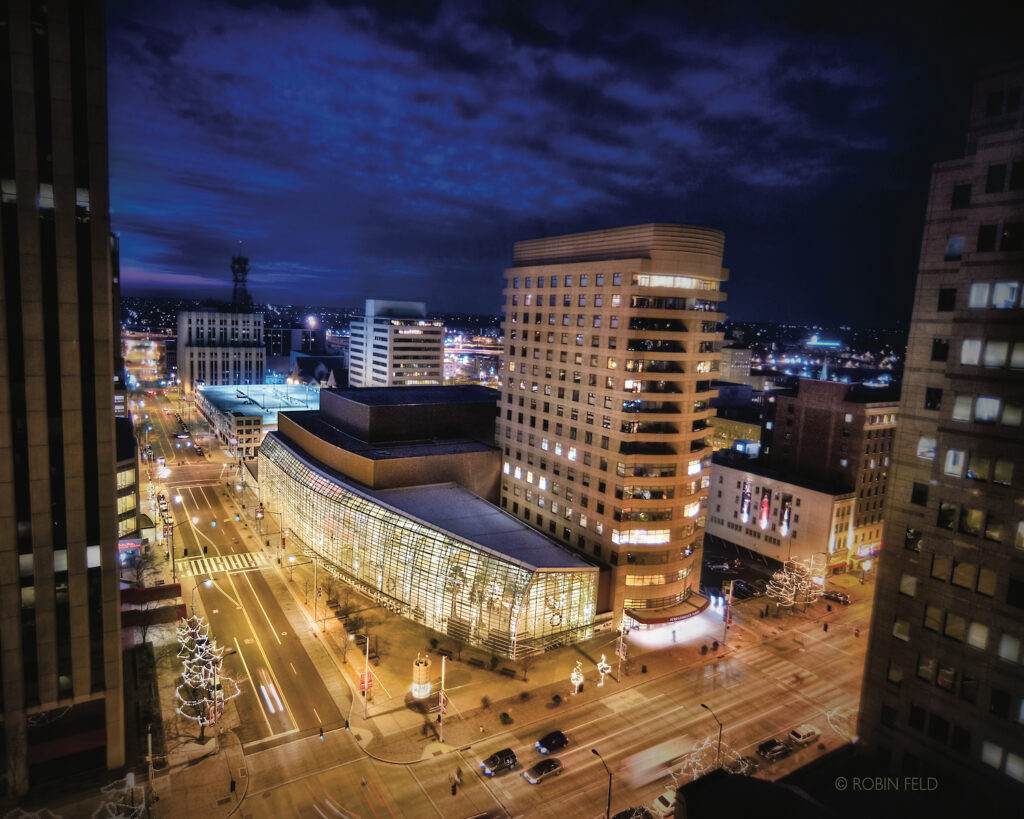
Striking this balance can be challenging when the need to slot into tour schedules competes with supporting local arts organizations. “It’s hard to get a show to work if we’re not available during that touring window,” Bennington says. “We’re always looking to work with local promoters and producers to open up our calendar to make it available to do quality shows by local companies. The venue makes a big difference, of course. [Most] of our programming in the PNC Arts Annex is by local companies, and we work with many different producers in that space.”
For smaller, independent venues like The Brightside in Dayton, the process is just as complex and, without corporate sponsorship, there’s a bit more at stake. Event Creator Libby Ballengee says ticket sales drive the types of shows they can bring in, and each production is a gamble on attendance.
“Each show and deal differs wildly. Some national acts require hefty guarantees, while others are willing to work with us and do door deals,” Ballengee says. “Local shows in our small bar room are low-cost to produce because there are static lights and a simple . Multiple bands on our largest stage, which requires multiple sound and light techs, can get quite expensive from a production standpoint.”
This role isn’t for the faint of heart. There are often instances in which programming managers have to be nimble, say, when a global crisis hits. “We rescheduled hundreds of shows sometimes with an indefinite future date during the pandemic shutdown,” Bennington says. “It was a massive undertaking, but I feel we did a great job keeping the shows we wanted somewhere in our future lineup. Our scheduling department did a fantastic job with this! Agents and buyers were cooperating in a way that was unique. We were all in the same shutdown disaster together, and we knew we needed each other in order to keep content on the books to stay in business.”
Coming out of the pandemic, The Brightside has struggled like other venues to pull audiences back through the doors. In addition to staging live music, The Brightside also serves as a wedding venue, and private events do help pull in additional revenue that can be used to book larger acts.
Like every relationship, sometimes things just don’t work out. But when your income depends on that relationship to work, the breakups can be really ugly. Ballengee and her crew have learned from each experience when the relationship between promoter and venue goes awry.
“We’ve really tried to work with outside promoters, and it gets very complicated quickly. If things don’t go right at the show, the audience’s blame falls on the venue, not the promoter, which puts us in a tricky position,” Ballengee says. “We have learned to be super careful about who we allow to host public, ticketed events. We are continuing to work with organizations and promoters, but we do ask that they can show they have past experience hosting events.”
But how long does it take before big Broadway hits make it to the Schuster Center? According to Dayton Live President and CEO Ty Sutton, that can depend on a variety of factors.
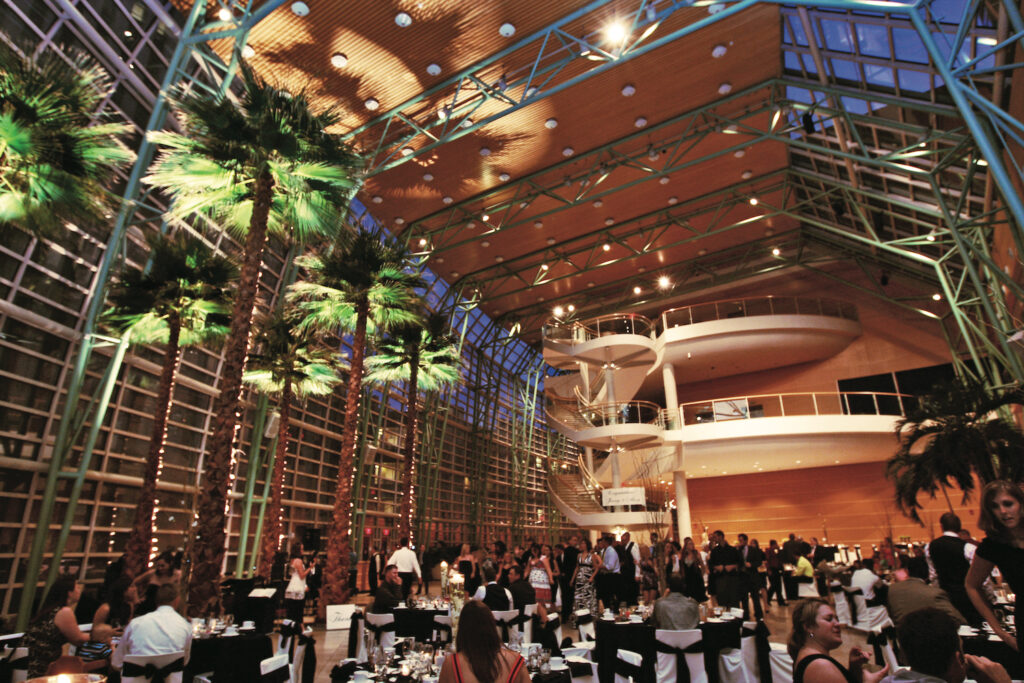
“Generally, we will see the big tours come to Dayton in their third or fourth year on the road,” he says. “The size of the market and subscriber base has a lot to do with where [the shows] play and how soon. Having Cincinnati and Columbus so close to us definitely can have an effect, but we get the same great shows. We also sometimes get shows earlier. For example, we have the only Ohio stop for A Soldier’s Play next season, the Tony winner for Best [Revival of a] Play.”
The commercial success of venues big and small isn’t just for entertainment value (although that is a huge plus). The local economy benefits from theatergoers and concert attendees inside and outside the venue.
“We’ve had people fly in from as far as Sweden and Australia for shows we’ve hosted,” Ballengee says. “Getting patrons to travel to our venue helps Dayton be a destination, which gives business to local hotels and restaurants. We also hire a lot of local workers to work on the facility.”
Bennington says delivering great productions is why organizations like Dayton Live have persisted through tough times. “We hope you’re not going to have to travel to another city to see the acts you want to see and hear,” he says. “It’s something we’re making a reality here at Dayton Live, and we’re glad the community is coming along for the ride!”
