

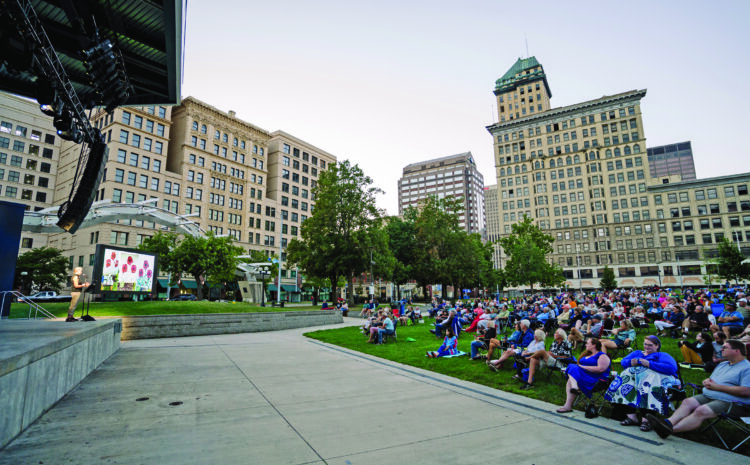
Dayton-area organizations elevate the craft of storytelling
Gilgamesh. The Odyssey. Beowulf. The Divine Comedy. Since the dawn of civilization, humans have connected to one another not just through verbal communication but storytelling. People created and shared cultural traditions via orality, passing down important life lessons, explanation of lineage, historical perspectives and even humorous anecdotes. This powerful form of conveyance continues today.
Several performing arts organizations in the Miami Valley keep oral tradition alive, and they have a few tips to share about what makes a story stick with us through generations—what some might define as “epic.”
Bridget Flaherty, educator and founder of LORE, a local business focused on helping people tell better stories, says storytelling is woven into our DNA. “The human brain is literally wired for stories,” she says. “Stories are older than cave paintings and have been used to pass and persist information for generations.”
One popular model for storytelling is New York-based The Moth. Launched in 1997, The Moth has grown to host open mic competitions in 27 cities in the U.S. and Melbourne and London, plus a syndicated public radio broadcast and podcast. In Dayton, one group has adopted the format and shines the spotlight on local storytellers.
“Story Slam stories are all told in the first person, are true as told and are unscripted,” says Bryan Suddith, producer of Story Slam Dayton. “These are true stories told from the heart. Sometimes funny, oftentimes not. We gravitate toward them because good stories invoke empathy. They connect people on an emotional level. The storyteller isn’t selling something or using facts and statistics to convince you; they are sharing a real experience where they were scared, or happy, or nervous, or excited or anxious. People connect with that.”
Because humans are hard-wired to engage with stories, Flaherty says the connection between the taleteller and audience is mutually enjoyable.
“Brain science has now proven that an emotionally charged first-person story where both the teller and the listener are having an emotional response is the only form of communication that results in neural entrainment—brainwave synchronization. Basically, if you took a scan of each person’s brain waves, the images look the same,” she says. “We literally connect our brains to one another through personal stories. It is incredibly powerful.”
Storytelling takes different forms, and perhaps one of the most unusual formats can be found during PechaKucha events. Derived from the Japanese word for “chit-chat,” PechaKucha (puh-CHA-ka-CHA) requires speakers to give short presentations supplemented with a slideshow. Unlike the never-ending meetings most people endure during their 9-to-5, PechaKucha Dayton avoids “death by PowerPoint” by limiting the number of images to just 20 slides—and those automatically advance after 20 seconds. This results in a snack-sized story, and the audience leaves with a little knowledge covering eight or 10 topics.
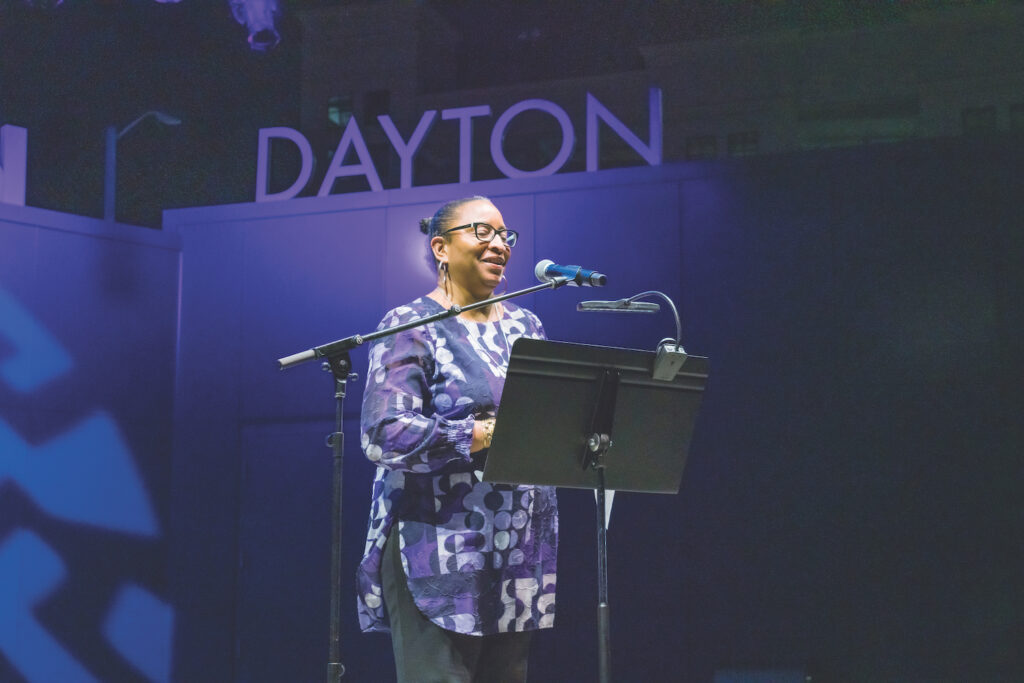
“The set pace is great for all levels of public speaking. Audience members appreciate it for those who tend to run-on with their thoughts, and it’s a great pace for those who have no experience in public speaking,” says Shayna McConville, division manager of Cultural Arts for the city of Kettering at Rosewood Arts Centre and PechaKucha Dayton organizer since 2012 (Dayton joined the PK Network in 2009). “It also creates a more dynamic delivery; the slides are visual and presentations clip along.”
Organizers agree on the basic elements of a quality tale. “A good story contains three parts: life before an event, an event (a single moment or experience) and how life was different after that event or experience,” Suddith explains. “Great stories are focused on one event and have a limited number of characters. We are sharing personal stories, so the main character is often the teller themselves. A great story focuses on the teller’s experience and feelings, not the observations or activities of other peripheral characters.”
Flaherty’s workshops help people refine this skill, which extends beyond parties or special events. Composing a good story can make the case at work for a special project, smooth over interpersonal conflict or close a sale. Public speaking can further one’s career. Flaherty has a few tips to impart that can make an immediate impact when implemented. Her recommendations echo Suddith’s advice.
“First, focus on one moment in time where you were changed as a person. Tell us who you were then, what happened and who you are now. Second, make sure that you have a beginning (the before), a middle (the what happened) and an end (how the what happened changed you). Third, share your story with a trusted friend, ask them to sit quietly until the end and then ask them for feedback,” she says. “Most people can give you good advice on how to make your story more engaging.”
With more than 40 events and hundreds of speakers rolling through the ranks, McConville says the best presentations shared something personal with the audience. “The most memorable PK talks are the ones in which the presenter is passionate about what they are speaking. I personally love the educational PKs; I have been riveted by 20x20s on fermentation and caring for bearded dragons, but I also have a natural inclination towards artists’ presentations,” she says.
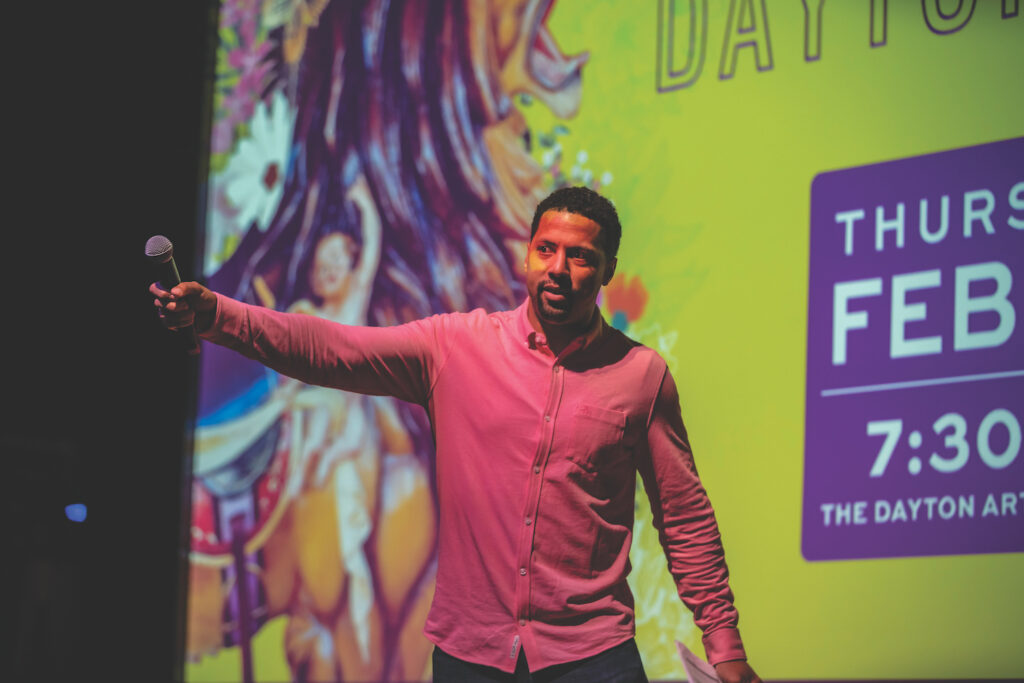
Suddith agrees that passion is an important ingredient in a great story. “Sitting just a few feet from a storyteller really brings you into the story,” he says. “Sometimes you can literally feel the emotion or excitement that the teller is sharing.”
“I have never attended a PK where there was a consensus on the best PKs of the night; it is very subjective to the audience, no matter what the topic is,” McConville says. “I think that is the magic of the presenters embracing PK’s 20×20 format.”
Both PechaKucha Dayton and Story Slam Dayton have events that are open to the public. PK is donation-based and a portion of the entry fee for Story Slams go toward the prize for the audience-selected winner of each Story Slam event. LORE offers community classes, one-on-one coaching and business workshops to help employees gain confidence in public speaking. Visit the websites and social media platforms to learn more about each organization, dates for upcoming programs and more.
