

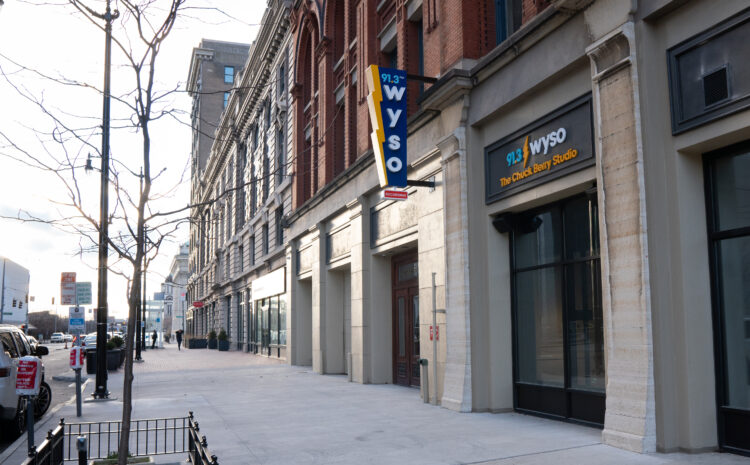
WYSO keeps listeners connected with music, news and local stories
Music and storytelling create important cultural narratives that have been shared among people since the earliest stages of civilization. Although the technology that allowed humans the ability to broadcast those songs and stories was only recently developed, tools like radio became powerful instruments for sharing. In the Miami Valley, listeners have been tuning into WYSO, a public broadcasting station, for more than 65 years.
On the Air
WYSO, like many public broadcasting stations, was launched as a governmental service to citizens. Wireless manufacturers in Britain collectively helped launch the British Broadcasting Company (BBC) in 1922 to help inform the public and share information to citizens climbing out of World War I.
The Knight Foundation’s 2017 whitepaper celebrating the history of America’s Public Broadcast Service (PBS) described public radio’s proliferation heading into the 1930s: “In the decades following the BBC’s establishment, dozens of governments around the world began to set up their own public broadcasters, many explicitly modeled on the BBC. Their approaches varied, but all had the same core objective: to construct an entity, free of commercial and political pressures, that would provide public interest information and entertainment programming.”
In the United States, the Public Broadcasting Act in 1967 led to the creation of the Corporation for Public Broadcasting. This established National Public Radio (NPR) in 1970, which provided programming to the nation’s noncommercial and educational radio stations.
The Dayton region, once more, was on the cutting edge. WYSO began broadcasting in 1958 as a student-run station on the Antioch College campus, broadcasting just four hours a day. Luke Dennis, general manager of WYSO and president of Miami Valley Public Media, says one of those students is still involved, serving on the Community Advisory Board.
“I grew up listening to WYSO and always considered it to be the sound of the region,” says Dennis, a native of Wilmington. “We consider all our programs to be a form of public service, from news to music and everything in between.”
Now Playing
While listeners can still enjoy nationally produced NPR programs, WYSO has its own collection of locally focused productions.
“I love the locally produced content coming out of the Center for Community Voices,” says Amanda Burks, director of development and communications at the station. “It engages a wide range of audiences and provides a platform for individuals to share their stories, educate our communities on issues important to them, and encourage diversity, equity and inclusion within our region.”
Burks says this shared experience helps people connect to those with backgrounds and upbringings different from their own. “The voices of students and youth; veterans; BIPOC; LGBTQA+; people with disabilities; residents of urban, rural and suburban areas; indigenous peoples; immigrants; and more are all honored, and all stories are unique to our region,” she says.
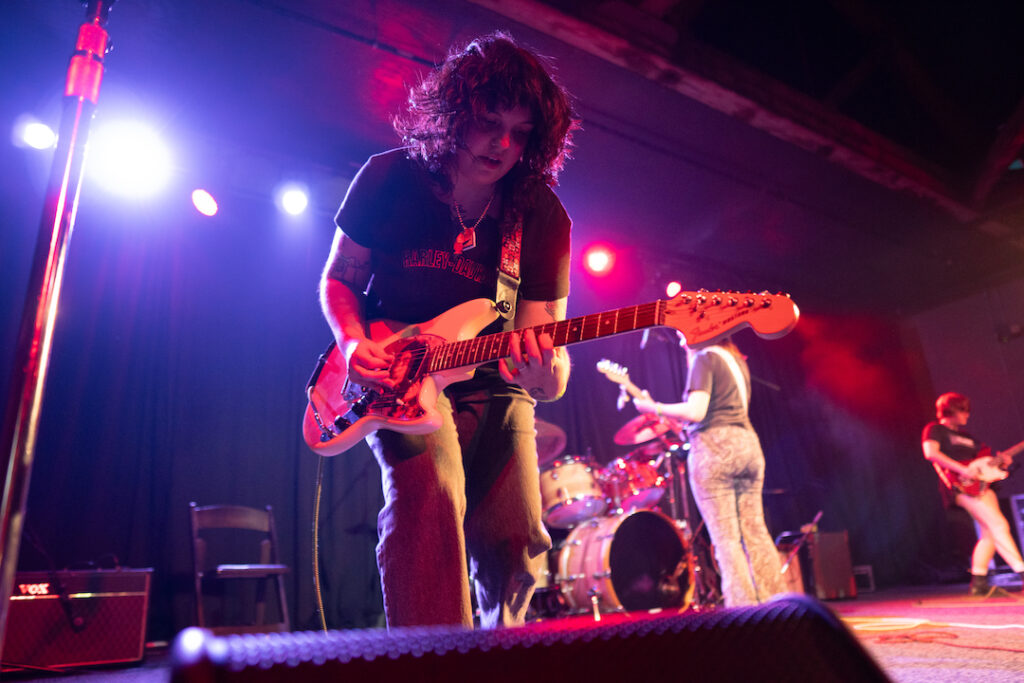
In this vein, some of the newest WYSO programming specifically focuses on exposing more people to a wide range of music and stories. Juliet Fromholt, WYSO’s music director, and her cohost Jocelyn Robinson host a podcast, “Rediscovered Radio: Women’s Voices, Women’s Music in the WYSO Archives.” The series revisits women from the past and present, and studies the role those voices were given in the local and national music scenes with a critical lens.
Another new podcast, “The Ohio Country,” is an 18-episode series that focuses on the forced removal of indigenous peoples from Ohio to Oklahoma in the early years of Ohio’s statehood. “Native men and women from different tribes and their allies—plus teachers, artists, scholars, parents, landowners, foresters, young people and historians—tell their stories about the lands above the Ohio River, known as the Ohio Country,” Burks says.
A soon-to-launch feature will be a boon to music lovers. “My team and I have been developing Novaphonic.FM, our new music channel,” Fromholt says. This new 24/7 music service will air on WYSO HD-2 and be streamable. “It will include WYSO music programs that our local audience knows and loves alongside a full daily schedule of hand curated music.”
WYSO hosts several events throughout the year, many of which are free and open to the public. The Tiny Stacks Music Series, a partnership with the Dayton Metro Library and the International College of Broadcasting, aims to connect local musicians, books and patrons with concerts hosted at various branches. The Outside Presents is a new, free quarterly concert series of experimental music that invites musicians from the region and Midwest to Yellow Springs. Listeners can learn more about these events by visiting WYSO.org, following the station’s social media channels or subscribing to their newsletter.
Listeners Like You
Like all NPR-affiliate radio stations, WYSO relies on support from donations, sponsorships and other charitable giving. This disengagement from commercial production allows journalists more flexibility in creating enriching content rather than catering to the needs of advertisers. Dennis says that freedom means stations like WYSO can focus on delivering content developed specifically to meet the needs of its community.
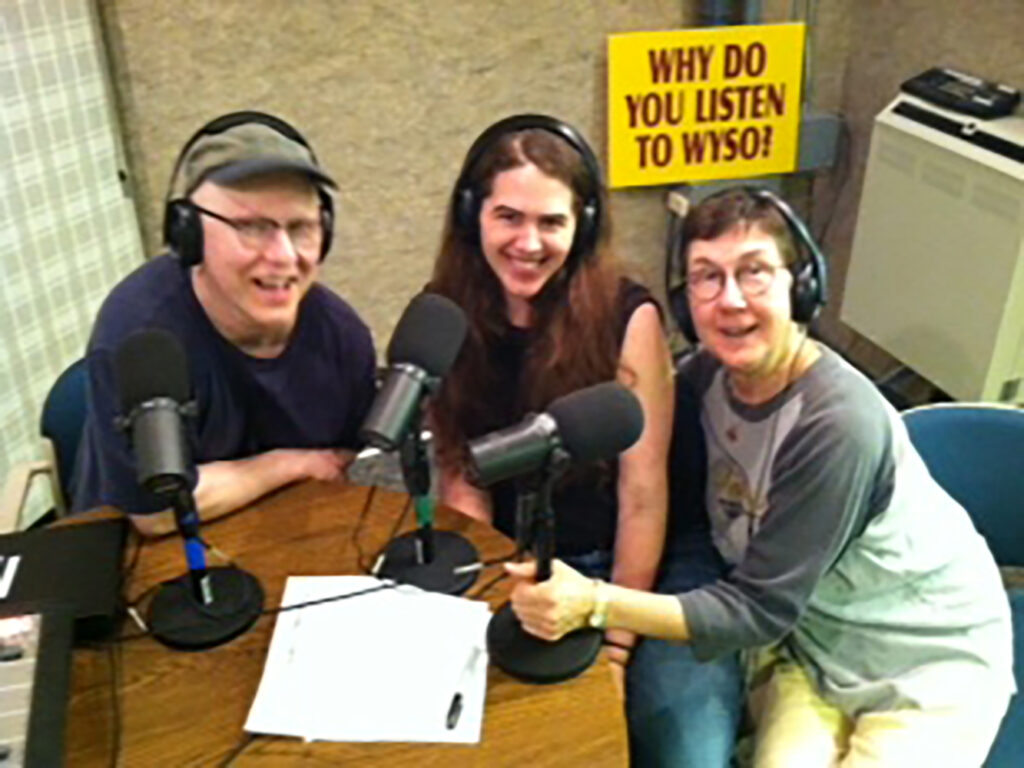
“We actively help build community through our programs,” he says. “We connect people to each other. We help local audiences learn about this place we share. We are an antidote to all things corporate and mainstream. We provide truth and context in a time when those things are scarce. We celebrate independence in thought, news and music.”
Burks says financial support from the listening audience is incredibly important. “We are a nonprofit organization with no earned income. Over half of our annual revenue comes from individuals in our community either through one-time or recurring donations or major gifts,” she says. “Without our generous community, WYSO would not be the beloved community resource it is today.”
From its humble beginnings in 1958, WYSO has grown exponentially thanks to this community support.
“We will be moving into a new home in Yellow Springs in the summer of 2025 and are expanding our reach with a satellite office in the Arcade in downtown Dayton,” Burks says. “There is much to be excited about in our future and we thank our generous community for helping us get to where we are today!”
