

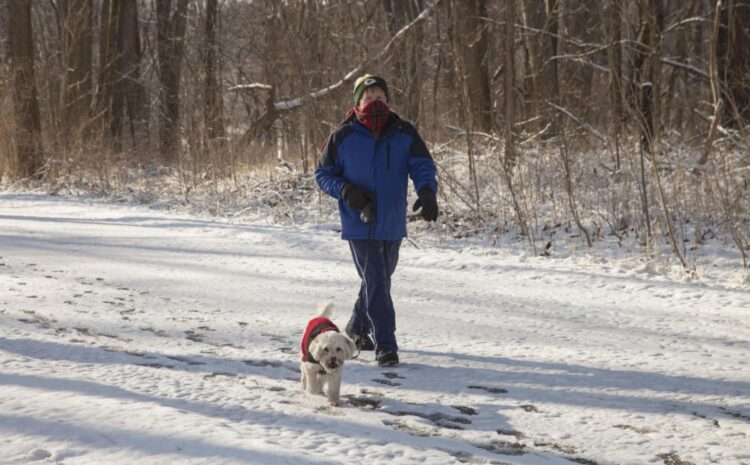
Five Rivers MetroParks shares some tips for staying safe while enjoying parks in the coming months
While 2020 has been filled with many obstacles, one bright spot is that many of us have discovered—or rediscovered—a love for nature and the outdoors. Looking for an excuse to leave the house, we flocked to the region’s parks and tried activities like hiking, biking and paddling, possibly for the first time.
But what happens to these joyful excursions during the winter? Even with the cold and possible snow, it’s still possible to enjoy the outdoors at local parks. We spoke with Angie Sheldon, outdoor recreation coordinator for Five Rivers MetroParks, to learn more about what you can do in the parks this winter, and how to do so safely. Five Rivers MetroParks has 30 locations, including 18 parks and conservation areas, in the Dayton Metropolitan area, thus providing the region with plenty of opportunities to get outside.
What to Do
“With proper clothing and equipment, you can still do most outdoor recreation activities year-round!” says Sheldon. Hiking, mountain biking, cycling, trail running, paddling, bird watching and fishing are available to park visitors no matter the season. Even activities associated with warm weather, like camping and backpacking, can be done in Five Rivers MetroParks during the winter months.
Winter also brings outdoor recreation opportunities that can only be enjoyed during the season, like sledding, ice skating, ice fishing, cross country skiing and snow shoeing, depending on if there’s snow.
Where to Go
While all Five Rivers MetroParks are open for recreation this winter, some are better for specific activities than others. Eastwood MetroPark Lake is great for ice fishing, Englewood, Germantown and Taylorsville parks all have hills for sledding and RiverScape MetroPark has an ice-skating rink.
“Possum Creek MetroPark, Carriage Hill MetroPark and the regional paved trail network have great trails for cross country skiing when the conditions are right, as they tend to be more flat than other parks,” adds Sheldon.
And for those who enjoy bird watching, she says to visit Englewood and Hills & Dales parks. In addition, the “walk from Deeds [Point] to Island [MetroPark] is good for spotting waterfowl in the winter,” she says.
Special Equipment
Special equipment is not necessary for all outdoor recreation, but it is needed for some of them and can make you safer for others.
A sled, cross-country skis and snowshoes are obviously needed for their respective activities, but Sheldon also has some recommendations for hikers and ice fishers.
For hiking, Sheldon says to bring “trekking poles to keep you confident on slick trails, an insulated pad to sit on for breaks, insulated water bottle or hydration pack hose to prevent water from freezing and ice traction cleats to attach to your hiking shoe or boot.” For fishing, she recommends an ice fishing rod (short, only about 2.5 to 3 feet long); a chair, as sitting on the ice can cause it to melt; a hypothermia kit for emergencies; and an auger for drilling holes.
No matter what you plan to do Sheldon says park visitors should bring snacks, water and reusable hand warmers.
“Always stay hydrated, even in winter. It keeps the blood flow moving, which helps keep you warm,” she says.
How to Dress
Dressing properly may be the best way to guarantee a safe and fun time in the parks this winter.
“There’s a great saying in the outdoor world, that there’s no such thing as bad weather, just bad gear! If you layer your clothing properly and have the right equipment, you can stay safe and comfortable in almost any weather while enjoying your local parks,” says Sheldon.
She recommends that you dress like an onion—in layers that can be removed or added based on changes in weather or temperature. According to Sheldon, those layers include:
– Base synthetic layers. “Having this layer against your body will wick away any sweat you might build up while exerting energy. This will prevent a wet layer on your skin getting cold as you cool down,” she says.
– Warm layers, like down or fleece.
– A rain and windproof outer layer.
– Waterproof and/or insulated boots with synthetic or wool socks.
– Warm, waterproof gloves and insulating hats.
While proper boots can keep your feet dry and warm, they’re also important for preserving the trails. “Wear footwear that allows you to walk on muddy trails. As part of practicing leave no trace, prepare to walk through mud and not around it—that can cause damage to the trail,” says Sheldon.
Other Tips
In addition to answering our questions, Sheldon had more specific tips for those looking to participate in particular activities.
On mountain biking: “Frozen trails are great for mountain biking but you should not ride on muddy trails as that can cause damage. Check trail conditions and whether the MetroParks Mountain Biking Area is open for riding at metroparks.org/momba.”
On backpacking: “Backpacking is a great way to stay warm during the day as you hike between camps but remember to pack alternative ways to enjoy the evening as campfires are not allowed in the backcountry sites. However, you could always backpack between frontcountry campsites in order to still enjoy a fire at night. All camping is by permit only.”
On ice fishing: “You should never ice fish alone. Four-inch ice will hold one person, so look for ice 5-6” for two people. A good saying to remember when looking for good ice is ‘Thick and blue, tried and true. Thin and crispy, way too risky.’” And to keep ice from clogging the guides on your fishing rod, “an easy trick is to spray a little cooking oil on them. You can also treat your auger, ice cleats or snowshoes, if wearing them, and ice and snow should not stick to those either.”
