

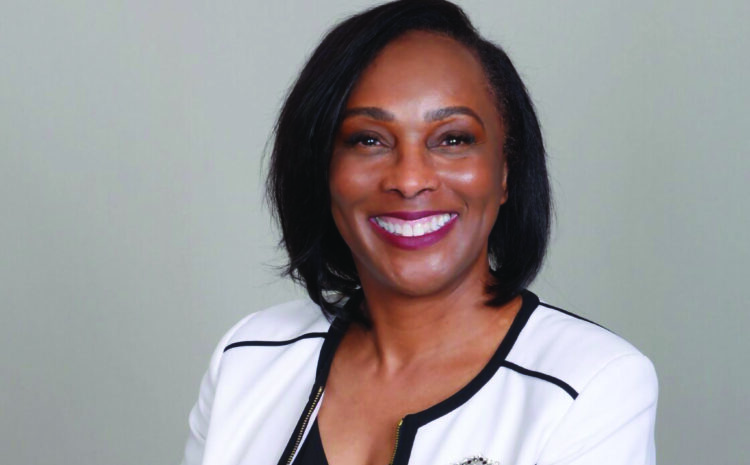
Kettering College’s new president looks to continue the school’s commitment to care
Lamata Mitchell, who joined Kettering College as its president in August last year, didn’t initially set out to join the field of health care education. While she comes from a health care and medical family, all her degrees are in literature. But after being drawn into teaching and then administration, Mitchell found her calling in higher education.
“We influence the minds and the characters of the students that are in our classroom by the way that we interact with them. And hopefully we do it for a positive outcome,” says Mitchell.
After stints as vice provost for Academic Affairs and Student Learning at Pima Community College in Arizona and chief learning officer for AdventHealth, Mitchell is bringing that same passion for education to Kettering College. Dayton Magazine sat down with Mitchell to learn more about her and what she hopes to bring to the school.
Dayton Magazine (DM): How did you come to Kettering College?
Lamata Mitchell (LM): It was the search firm that reached out to me. We had worked together on something else before. And when they reached out, I was like, “No, I don’t think so. I don’t think you have the right person.” And it was my husband that said, “Well, you know, they must have some kind of faith in you to even reach out to you, so why not just do the interview?” So, I did the Zoom interview, and then I was invited to come on campus to do the campus interview. And when I got on campus, not only did the mission and the values resonate with me, but the people that I met, I realized that it also was something that they lived out. It wasn’t just something they wrote in the document and put on a shelf. And I was drawn to that.
I was drawn to their commitment to the students and to the mission. Many of them have been here for decades. That’s how committed they are to helping students achieve their dreams. Getting the opportunity to meet and talk with faculty and staff that understand that this is hard work—but it’s important work and valuable work to do—was what drew me to it.
When I got the invitation to come and serve as the president, I felt extremely honored and humbled to be selected to work with just wonderful people. They’re very kind, they’re very caring, very supportive.
DM: What have you enjoyed most about Kettering College so far?
LM: What’s been my favorite aspect is being able to go into the faculty offices and talk with them and talk with the students, current students and meeting potential students who are thinking about joining the institution. That has really been a joy. And because we’re a part of the Kettering Health system, being able to meet with those leaders as well has been very helpful. The board chair has really made it easy for me to meet people that it’s important for me to meet with and to ask questions and to get the answers that I need to be able to do the job.
Although it’s a small college, there’s a lot to learn to understand the culture and to understand what has been done in the past and achieve. And now to focus on what’s our North Star as we move forward.
…The legacy of Kettering College from the Kettering family is something that I think was very intuitive of them to even plant that seed that we needed to have a college that was focused on training future health care professionals. Who would’ve thought that in 2025 there was such a demand? They were very visionary in that. And we hope to continue and we strive to continue that legacy and that insight to honor what they started.
I think that being a faith-based institution is important because we emphasize to the students that we want them to care for the patients as if that was a member of their own family. And so, their approach to health care also encompasses compassion.
DM: Are there things that you’re hoping to accomplish with Kettering College?
LM: We will begin work on our rolling three-year strategic plan. I did my 30 days of listening tour with internal [and] external stakeholders. And certain themes bubbled up that we are looking at. Some of them we’ve already begun addressing.
But thinking about where we are going next, our niche is faith-based health science education, and we are going to lean into that niche, which means that we will have to do some research. Are we still offering the right programs? Are there new programs that we need to bring on board? Where do we see the college in five to 10 years? What do we want to be this institution’s legacy?
We talk a lot about “whole person care.” That’s what we teach our students that their programs that they have enrolled in are really a calling for them. Whether it is to be a respiratory therapist or a nurse or a physician’s assistant, whatever it might be, it’s a calling. [We see how] we educate them as more than just giving them the competence and the skills that they need to be successful in their jobs, but also to help them develop not just intellectually, but spiritually and socially so they make a positive impact on society
DM: What are you enjoying most about living in the Miami Valley?
LM: I’m really excited that we have an art museum just up the road. I love art museums. And I found all the bookstores because I am a lover of books, as you could imagine, with my degrees being in literature.
