

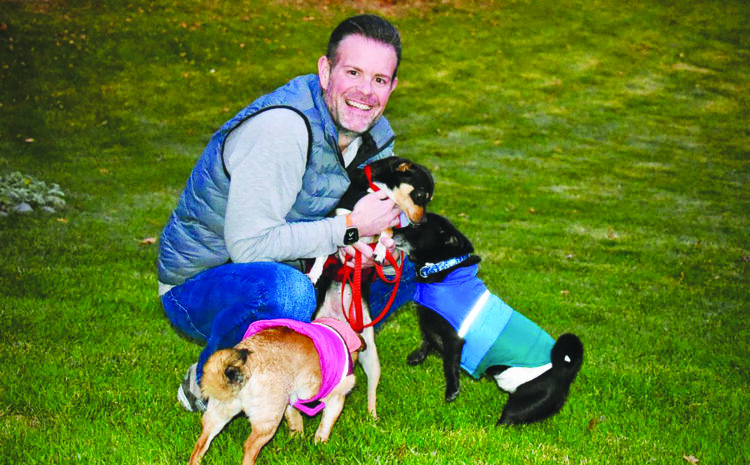
SICSA’s new CEO took an unusual journey to his role in transforming the lives of pets and the people who love them
Sometimes life’s greatest blessings are also the most unexpected.
Just ask Jack Omer, CEO of the Society for the Improvement of Conditions of Stray Animals (SICSA) in Dayton since late last year.
“As long as I can remember, I’ve been an animal lover,” Omer says.
Born in Lafayette, Indiana, Omer moved with his family to Dayton when he was a year old in 1981.
Omer’s path to becoming a CEO of a nonprofit organization was never a straightforward one. After graduating from Alter High School in 1998, he went on to study hotel and restaurant administration and attended both the University of Tennessee and the University of Nevada in Las Vegas.
“I wanted to be a general manager of a boutique luxury hotel,” Omer says.
But as life often does, it sent a few surprises his way. Omer’s first job after college was at Target where he started as a human resources generalist. He was promoted and planned to go through a management training program.
Then Omer was recruited for a position with the local American Heart Association (AHA) where he had his first taste of working in the nonprofit world.
“My chief job at AHA was fundraising,” Omer says. “After that I was recruited by the AIDS Resource Center of Ohio (now Equitas Health) to be their development and special events director.”
Though Omer says he felt that job, which had him heading up events like the organization’s premier fundraiser, Masquerage, was “made for me,” eventually he was pulled away from working for nonprofits into a different career within the corporate world for Brookdale Senior Living in Dayton.
After starting at Brookdale in 2009 he was quickly promoted from sales director to regional director and then to regional vice president. He says he loved the challenges and fast paced environment.
“When Brookdale and Emeritus merged, we had more than 1,200 buildings nationwide, doubling us in size,” Omer says.
In 2015, Omer moved on to work for the Senior Lifestyle Corporation. When the company’s vice president of sales went to work for StoneMor—the second largest operator of cemeteries and funeral homes in the country, Omer followed her.
“I was thriving in that environment,” Omer says. “Large corporations tend to have very consistent policies and procedures and I enjoy working under those expectations.”
Throughout his time climbing the proverbial corporate ladder, Omer also became involved in the local community and rekindled his passion for animals developed in childhood. He joined the SICSA board in 2012 after adopting two dogs from them. He also developed an affinity for senior dogs and those with health issues, making them more difficult to adopt.
“In July of this year, StoneMor did a restructuring, and my position was eliminated,” Omer says.
Omer launched into a job search with the intention of finding another position within a large corporation, never thinking he’d end up back in the nonprofit realm. But when his friend Nora Vondrell, with whom he first worked at the AIDS Resource Center, resigned as the CEO of SICSA, she asked Omer if he’d be interested in serving as interim CEO and helping the organization with their search for a permanent leader.
“I had no interest in the full-time role,” Omer says. “But I agreed to help them out temporarily.”
He agreed to the interim position with SICSA and started that position in late August.
“I was learning about the job and leading the search committee,” Omer says. “We received applications from all over the country.”
But just as Omer was preparing to present his choices for the new CEO, the executive board was working on convincing him to remain in the position permanently.
“I remember coming home one night after a long day at SICSA,” Omer says. “I didn’t feel like I had been at work all day. It was a feeling of reward and not exhaustion. I was making a difference.”
At the end of October, SICSA announced that Omer was its new permanent CEO.
As SICSA prepares to celebrate its 50th anniversary in 2024, Omer is heading up the development of a strategic plan designed to advance the mission and stabilize and grow the business.
“I think what we are really trying to do is keep an innovative approach to making ourselves relevant as a community resource,” Omer says. “We know that animal welfare is as much a human as it is an animal issue.”
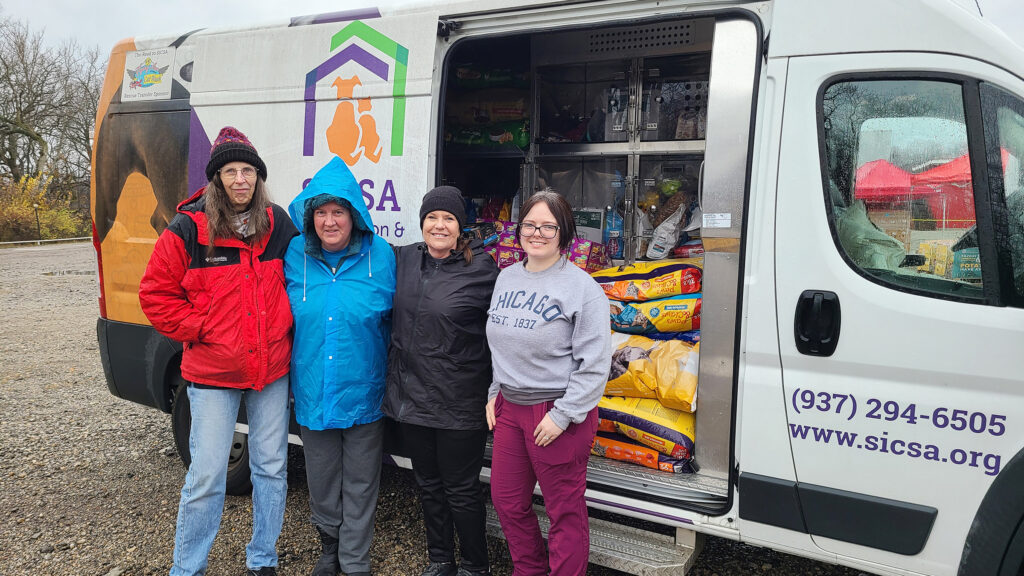
In 2023, SICSA received more than 3,000 inquiries from individuals who were struggling to feed their pets. All of these could easily turn into animal surrender situations if they couldn’t get help.
“We are partnering with the Food Bank and planning to have monthly pet food distributions,” Omer says.
In situations of crises, such as domestic violence or homelessness, people are often forced to give up their pets. SICSA is looking at ways to help provide temporary emergency foster care for these pets. So far, the program has an 85% reunification rate between owners and their beloved animals once their lives are stabilized.
And because many homeless pets have come from stressful situations that have caused behavioral problems, Omer says SICSA is working to support the needs of these animals so they can be successful in their future adoptive families.
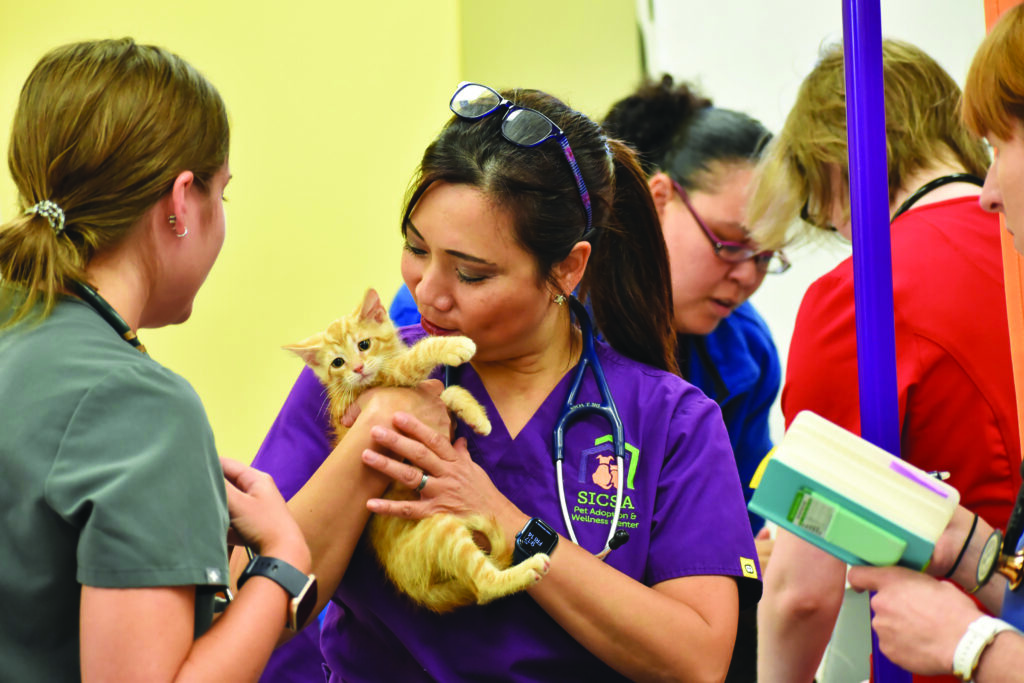
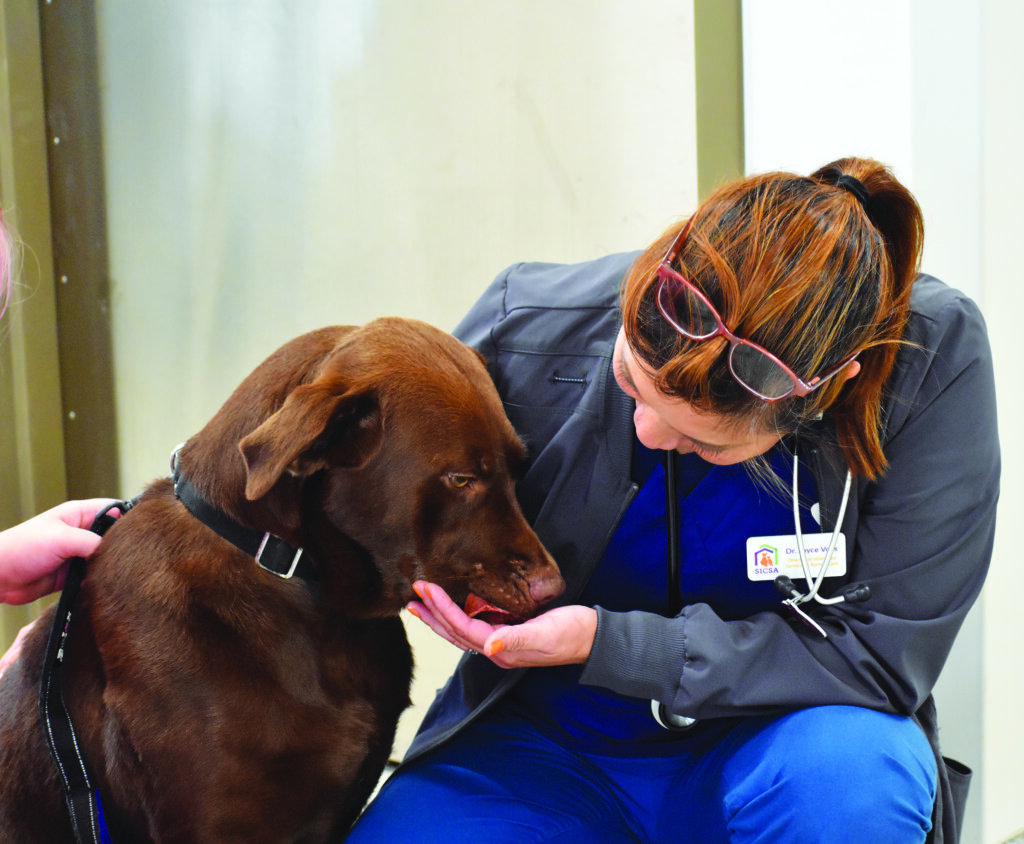
SICSA also hosted five community vet clinics last year, offering wellness checks and vaccinations along with limited medical care to pets in lower income areas, serving 600 animals.
“As we look forward to the next 50 years, we have to figure out a way to humanize animal welfare,” Omer says. “We want to help pet parents who are struggling to pay for food, housing or other needs so we can guarantee the pet won’t suffer.”
Omer also has a plan to pay off the mortgage on SICSA’s new building and is working to discover alternative streams of revenue.
“For me the ability to serve any population—human or otherwise—that cannot ever repay you—is humbling,” Omer says. “We are doing something really good for creatures that don’t have a voice. This is fulfilling in a way I was not prepared for and wasn’t expecting.”
