

Local doctors give tips for decreasing your risk of a stroke
Each year, more than 795,000 Americans experience a stroke. In 2020, it was the fifth leading cause of death. But many people can’t identify the symptoms or differentiate between the different types of strokes.
“Stroke really embodies an event where the blood flow is disrupted to the brain or certain parts of the brain. The least common that occurs in about 13% is a bleeding stroke, or a blood vessel actually breaks opens,” says Dr. Tim Schoonover, a neurologist and the medical director of Kettering Health’s stroke program. “The far more common type of stroke is an ischemic stroke, and that occurs when primarily a blood clot forms in the blood vessel and therefore blocks the blood from flowing down.”
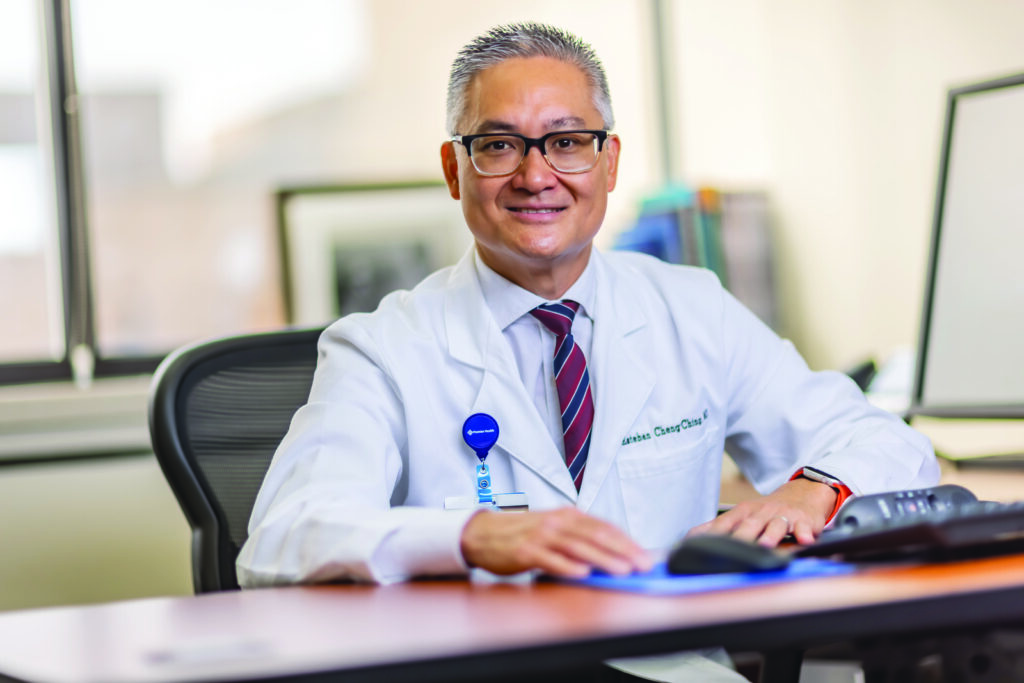
“And that part of the brain [affected by the stroke] lacks blood flow, therefore lacks oxygen and nutrients, and immediately, rapidly, the brain cells in that area start dying,” adds Dr. Esteban Cheng-Ching, stroke and neurosciences neurologist with the Premier Health Clinical Neurosciences Institute. “Immediately, patients start developing symptoms.”
While having a stroke can lead to death, those who experience a stroke also can be left with temporary or permanent disabilities—such as paralysis, difficulty talking, memory loss and pain. That’s why it’s important for people to do what they can now to decrease their risk of stroke.
“The absolute, very best treatment for stroke is prevention,” says Schoonover.
The likelihood of a stroke can increase based on a variety of factors, such as high blood pressure, diabetes, cholesterol and smoking. “What happens is that all those risk factors … tend to injure the blood vessels and that injury can create plaque and narrowing the blood vessels and also clots in the blood vessels,” says Cheng-Ching.
Age is also a factor, with most strokes occurring in people over the age of 65, but 35-40% actually occur in people under the age of 65 and there’s been a recent rise over the last decade of strokes in people under the age of 45.
If someone has a stroke, it’s best to get to the hospital immediately. “We know that stroke care is fastest and most efficient if 911 is called as opposed to somebody’s family member putting them in the car and driving them,” says Schoonover. It’s important for patients to be treated as quickly as possible to decrease any possible disabilities. Both Kettering Health and Premier Health have access to acute treatments for stroke in their emergency rooms. Patients with ischemic strokes who arrive at the hospital within four and a half hours can receive a tissue plasminogen activator, or TPA, which can target and break up clots. For larger clots, patients can undergo a minimally invasive surgery that removes the clot.
Identifying a Stoke
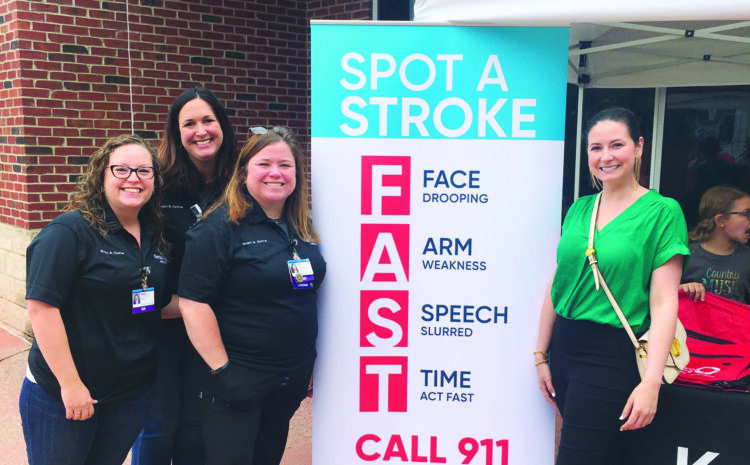
Both Dr. Tim Schoonover of Kettering Health and Dr. Esteban Cheng-Ching of Premier Health say people should be on the lookout for stroke symptoms, which can be remembered with the acronym
BE FAST:
B: Loss of balance.
E: Loss of or trouble with vision.
F: Face drooping.
A: Arm weakness.
S: Speech difficulty,
T: Time to call 911.
One or all of these symptoms can occur, but it’s important to call 911 immediately after one occurs instead of waiting for additional symptoms. “If you can get to the hospital with the earliest amount of time, even if it was just one symptom, it’s a better chance actually that it can resolved,” says Schoonover.
