

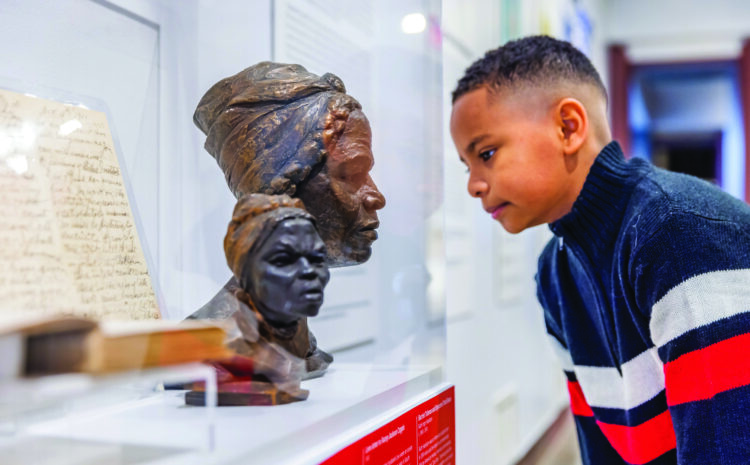
National Afro-American Museum & Cultural Center shares stories of Black experience
Collecting and preserving stories from the past helps to create a shared experience for anyone who may be unfamiliar with those stories and the people they bring to life. In the Dayton region, there are many organizations tasked with keeping the lore and legend of different cultural heritages. Want to learn more about Dayton’s Germanic heritage? Stop by the Liederkranz-Turner. Curious about the eastern Europeans who called Dayton home? Visit the American Czech-Slovak Club.
But what about the legacy of African Americans? Forever entwined with the impacts of colonialism, slavery, American exceptionalism, systemic and codified racism, and other long-lasting societal impacts, it takes a special kind of curation to tell the story of the African diaspora, and Daytonians are fortunate to have ready access to such a collection right in their proverbial backyard.
Heavy Burdens
The National Afro-American Museum & Cultural Center (NAAMCC) is a division of the Ohio History Connection and part of its historic sites and museum system. Located in Wilberforce, housed in a Modernist structure of glass and steel adjacent to Central State University, the NAAMCC is one of the first museums created to preserve, interpret and present African American history on a national scope.
“The preservation of the stories of Black Ohioans is one of NAAMCC’s most significant responsibilities,” says Jerolyn Barbee, assistant director of the NAAMCC. Barbee is one of the center’s 11 full-time employees committed to this facility.
Dayton leader C. J. McLin, who served as a member of the Ohio House of Representatives for the 36th district from 1967 to 1988, was a part of a group who conceived the idea for the museum in the early 1970s.
“McLin worked with many local, state and national leaders, including Ohio governors Jim Rhodes and Dick Celeste, Senator John Glenn and President Jimmy Carter to secure federal and state funding to build the museum,” Barbee says.
Since the NAAMCC opened in April 1988, its mission has been to collect, preserve and interpret the African American experience from its African origins to the present day. The museum collections of over 10,000 artifacts and archives span the history spectrum, including objects ranging from slave shackles to the typewriter used by author Alex Haley to write his blockbuster novel Roots.
“The museum also owns the largest collection of personal and military items of Brigadier General Charles Young, collections representing African and Black art, items from the Civil Rights Movement and a vast collection of Black dolls,” Barbee says. “The NAAMCC serves a national audience through its programming, supporting visiting scholars and researchers, developing traveling exhibits, and loaning art to museums around the world.”
A Place with a Past
Organizers thoughtfully selected Wilberforce for the NAAMCC’s location based on the community’s history, which played a vital role in the national advancement of African Americans spanning generations. The area has preserved many sites on the Underground Railroad and was later the center of educational opportunities for Blacks in the 19th century.
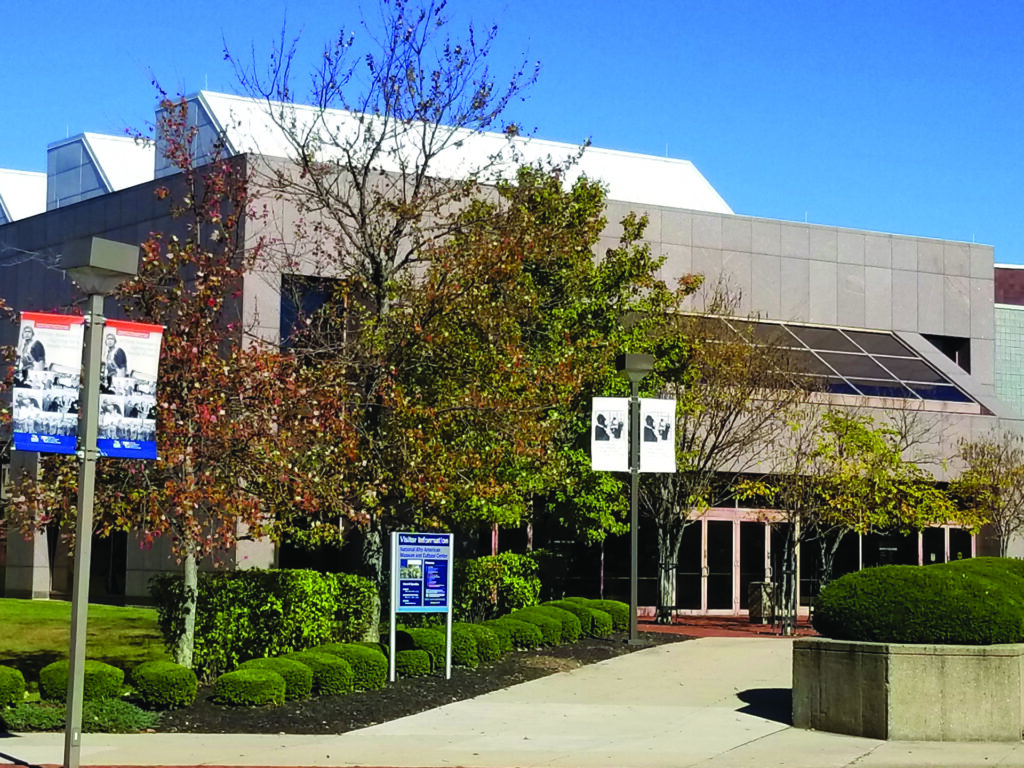
“The museum is adjacent to Ohio’s three Historically Black Colleges and Universities: Central State University, Payne Theological Seminary and Wilberforce University,” Barbee says. “The museum is located on land originally part of the original Wilberforce University campus—the first private university founded and owned by African Americans in 1856.”
The NAAMCC facilities consist of a museum building and a separate administrative building in a former library built with funds from Gilded Age philanthropist Andrew Carnegie. These local ties make the museum a distinctive and significant part of the Wilberforce community. The NAAMCC has welcomed thousands of visitors over the years. The museum has also hosted many dignitaries, such as former President George H.W. Bush, Muhammad Ali and Wynton Marsalis.
Displays and Exhibits
The museum is the permanent home of one of the nation’s largest collections of Afro-American materials, featuring 350 manuscript collections, thousands of photographs, a hide coat worn by a Buffalo Soldier, Gregory Hines’s tap shoes, artifacts representing the Black Arts Movement of the 1960s and much more.
Rotating special exhibits include “African Art: Form, Function and Fraught Histories,” on display through Nov. 2, 2023. Although often misunderstood by the West, African art had an enormous impact on the world. While Africans created objects for culturally specific functions, their aesthetics challenged Western society and shaped its perceptions.
“African Americans Fighting for a Double Victory” is also on exhibit now through 2025. Guests can explore how African Americans served the United States in the military and on the home front during World War II. Discover the stories of the Tuskegee Airmen and Wilberforce-area veterans. Learn more about African American World War II veterans’ impact on the advances in Civil Rights that happened during and after the war.
The stories of 30 Ohio African American women who were influential in the arts, education, political and social movements can be seen now through 2025 in “The Queens of the Heartland” exhibit, which explores these pioneering women through panel text and three-dimensional objects.
Other exhibits are getting upgrades. “The NAAMCC recently acquired pieces from the estate of renowned Marvel Comic artist Billy Graham,” Barbee says. “He was the first Black artist at Marvel Comics, first working on the Luke Cage comics. Later, he co-created the original Black Panther series, breaking the trend of white artists developing Black superheroes. These and other items from our collection will be featured in an updated version of our ‘Behind the Mask: Black Power in Comics’ exhibition, which will reopen in spring 2024.”
Deep Roots
The NAAMCC is more than a museum; it’s a community partner, co-hosting many meetings and events annually, including the opening reception of the Dayton Contemporary Dance Company’s Black Tour performance earlier this year.
In May, the NAAMCC welcomed the Bishop Reverdy C. and Emma S. Ransom Foundation regarding the renovation of the Ransom home, which recently received a $749,999 grant from the National Park Service Historic Preservation Fund’s History of Equal Rights Fund (HPF). Later this summer, the museum will co-host a reception in partnership with the National Park Service for the reopening of the Charles Young Buffalo Soldier National Monument, and the museum will be the site for the fourth annual Black Farming Conference in September.
The NAAMCC also collaborates annually with the Wright State University Department of Public History. WSU students have assisted with collections processing and the development of NAAMCC exhibits over the past eight years. Sometimes, the collections go to the people; Barbee says the NAAMCC and the Dayton Metro Library will announce traveling exhibits and programming for neighborhood branches this fall.
