

Oakwood Schools Recognized for Innovative STEM Education
When most imagine a kindergarten classroom, they may see a group of five-year-olds learning how to count by five or how to spell their favorite colors. At Oakwood Schools, though, those as young as kindergarteners are learning about STEM, helping set them up for a society that is increasingly dependent on technology and science.
Oakwood City Schools is a public school district located outside of Dayton, serving the Oakwood suburb. Known for academic excellence and strong community support, the district includes Harman and Smith Elementary Schools, Oakwood Junior High and Oakwood High School, offering some of the area’s best academics, arts and athletics. These academics, though, took a further step in a society that puts increasing importance on science, technology, economics and Mathematics. This year, the school has received the Emerging STEM Credential from the American Association of School Administrators (AASA) and JASON Learning. “This recognition reflects the passion and collaboration of our staff, as well as our commitment to providing students with learning experiences that prepare them for the rapidly changing world,” says Neil Gupta, superintendent of Oakwood City Schools.
The Emerging STEM Credential, developed by AASA, The School Superintendents Association and JASON Learning, is a national recognition that identifies schools taking innovative, systemic approaches to science, technology, engineering and math education. Rather than focusing solely on test scores or specific programs, the credential assesses how effectively a district integrates STEM thinking across grade levels and subjects.
The review process measures schools against a national standard, assessing factors such as curriculum design, teacher collaboration, student engagement and real-world learning opportunities. For Oakwood, earning the credential affirmed the district’s strengths while offering guidance on how to further align its teaching practices with premier STEM education models. It serves not just as an award, but as a roadmap, according to Gupta. “The certification process provided us with valuable insights into our current work with STEM compared to a national standard,” he says. “It highlighted both our strengths and areas for consideration in future growth and alignment. This guidance has become a roadmap for our future, providing momentum to continue innovating and collaborating on STEM learning experiences across the district.”
While STEM may conjure images of rigorous, uncreative days doing math problems and testing hypotheses, Oakwood schools aim to make STEM a field that not only allows for creativity but encourages it. Likewise, STEM is not just an idea or field to study. “For us, STEM goes beyond science, technology, engineering and math. It is about sparking curiosity, fostering creativity, encouraging collaboration and building critical thinking, communication and compassion,” Gupta says. “In Oakwood Schools, STEM is not a single program or a set of classes but a mindset we embed into every level of learning.” In elementary grades, students learn through hands-on exploration, including building, experimenting and problem-solving in ways that spark curiosity and confidence. Lessons are designed around what the district calls the “five Cs,” collaboration, creativity, communication, critical thinking and character. According to Gupta, these skills become the foundation for deeper learning in later years.
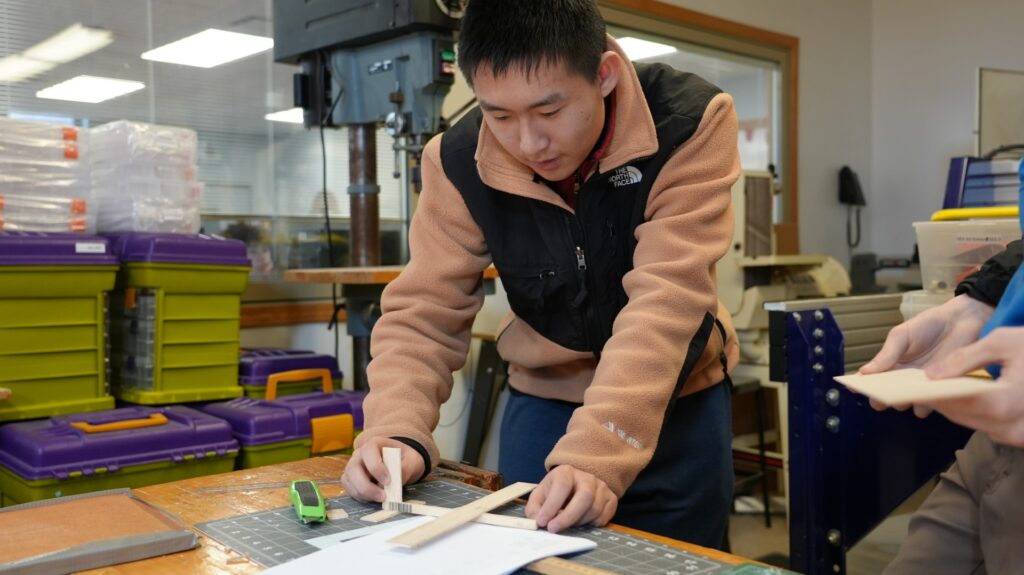
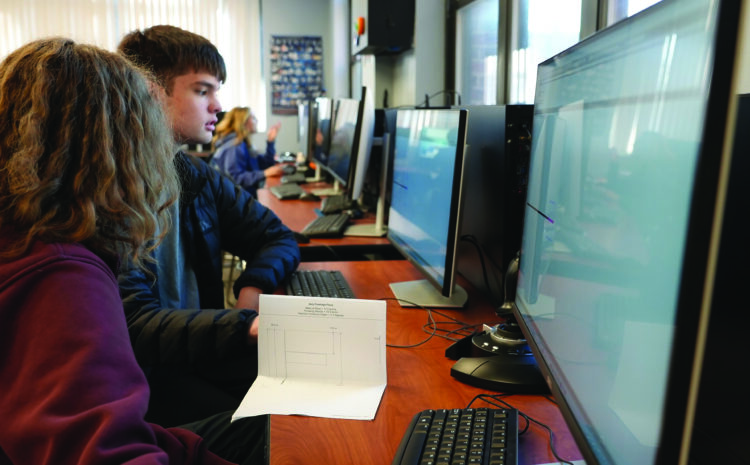
By middle and high school, students can take part in Project Lead the Way, a nationally recognized Career and Technical Education program that allows them to take courses in engineering, computer science and biomedical science. Oakwood High School also offers specialized classes, including aerospace engineering, allowing students to apply STEM concepts to real-world challenges.
Beyond the classroom, Oakwood students have opportunities to expand their STEM experiences through the Centerville-Kettering-Oakwood Career Technical Compact, which provides pathways into career technology programs and professional certifications. This approach ensures that every student, no matter their interests, can find a meaningful connection to STEM learning that prepares them for college, careers and life.
This mindset is one that Oakwood schools try to instill in its students from an early age. Much like language learning, it is often said that it is easier to grasp STEM concepts when introduced at a young age. By starting their students out young, Gupta and the rest of the staff and Oakwood schools hope that students are well-positioned as they continue their education and eventually enter the workforce. “Exposing students to STEM at a young age strengthens their critical thinking and encourages deeper exploration,” he says.
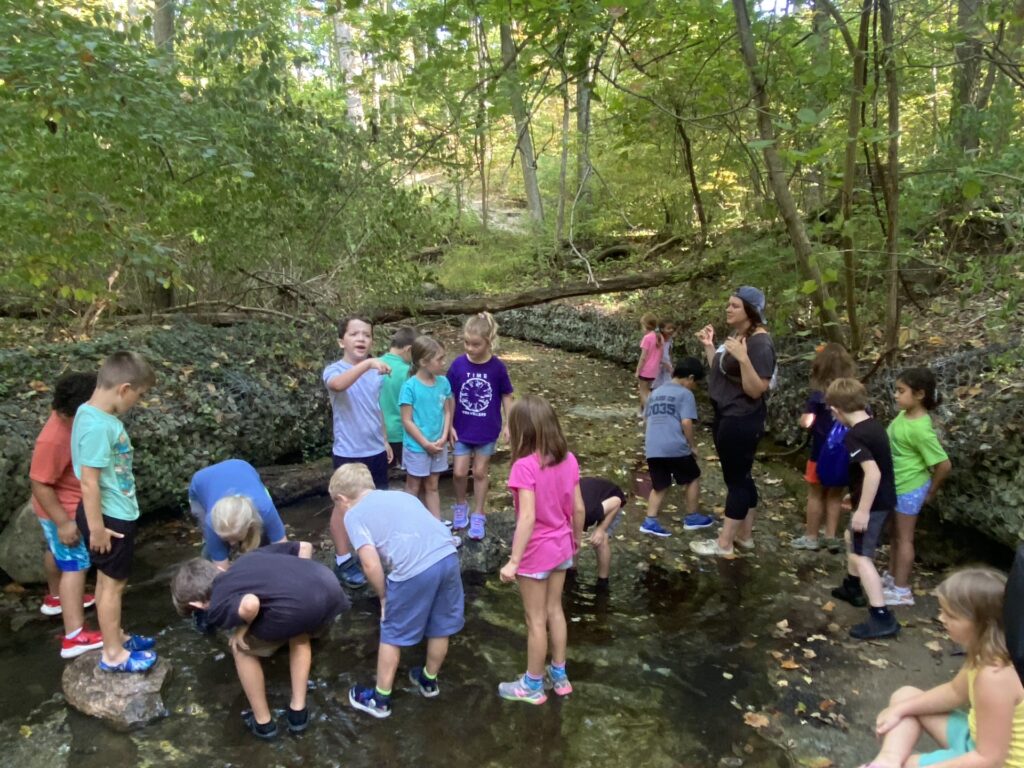
That investment in curiosity is already shaping the way Oakwood students learn and how teachers approach their classes. Across the district, classrooms are becoming spaces where exploration is more than simple memorization. Teachers work together to design lessons that connect disciplines, showing students how math, science and creativity intersect.
Gupta says that approach reflects a broader vision for education in Oakwood: one rooted in both tradition and transformation. “We want our students to see learning as an active process, not a passive one,” he says. “STEM helps them understand that they can create solutions, not just consume them.” As Oakwood continues building its STEM programs, the district’s focus remains simple: empowering students to think critically, collaborate and stay curious in an ever-changing world. According to Gupta, “It builds on the great work already happening in our schools and helps our younger learners develop skills that lay the foundation for future success in all areas.”
