


Though not as well-known as the Wright brothers or Charles F. Kettering, these woman inventors are an important part of Dayton’s history.
From pop-tab cans to ice cube trays, everything good was invented in Dayton—or by someone from here. Still, even the most hardcore Dayton history buff might struggle to name a female inventor from Dayton off the top of their head.
In honor of Mother’s Day, meet three Dayton-based female inventors—though market demands, prejudice and general circumstances kept them from becoming household names, their legacies have endured.
Iula O. Carter (1926-2021)
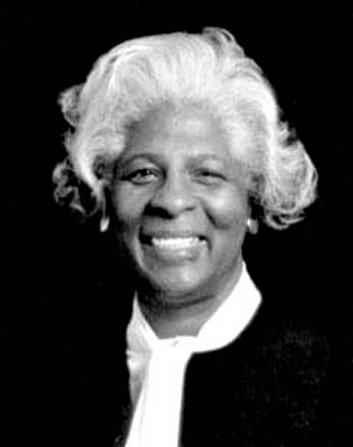
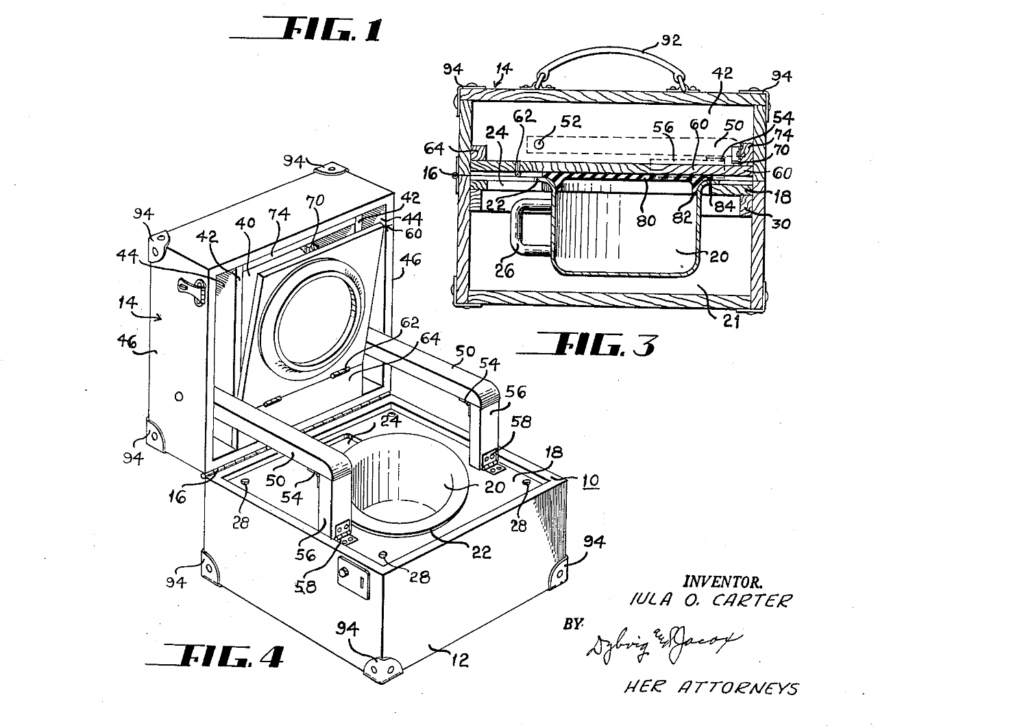
In 1960, Iula Carter received a patent for a portable nursery chair, which folded into a suitcase when not in use. (The chair was inspired by frequent road trips with her six children from Dayton to Middletown to go swimming—as an African American family in the 1950s, the Carters had to drive close to 30 miles to visit the public pool.) Though she never managed to sell the chair in department stores as she had hoped, Carter continued to innovate throughout her long life, inventing an airplane rescue parachute in the 1980s and writing a book called I Want to Be an Inventor. Carter was inducted into the Dayton Region Walk of Fame in 1996.
Jennie L. Bornstein (1856-1942)
Dayton resident Jennie Bornstein received patents for four different menstrual products, including a “catamenial sack,” patented in 1895—a leak-resistant garment that held the cloths then used to absorb menstrual flow. One year later, in 1896, Johnson & Johnson introduced the disposable sanitary napkin, although it took a while to catch on.
Electra C. Doren (1861-1927)
A librarian who oversaw the Dayton library’s adoption of the Dewey Decimal System in the late nineteenth century, Electra Doren pioneered the first mobile library with her book wagon service, opening up library access to factory workers and Miami Valley residents who lived in rural areas. She was also an active advocate for women’s suffrage and began the archive that became the Women’s Suffrage Collection at the Dayton Metro Library.
Today, the library carries on Doren’s legacy with its Outreach Program, which brings the library to preschools and retirement communities.