


Local financial experts give top tips for monitoring wealth
As we reflect on the future, investors will once again take the time review their personal goals and evaluate the steps they need to take in order to achieve financial success. Moving into 2023, we spoke with several local financial experts who shared some of their top Do’s and Don’ts.
John VanWeelden, president, VanWeelden Financial Group, says a goal without a plan is just a dream.
“When it comes to retirement, we believe it’s critical to begin to develop a comprehensive retirement plan prior to your actual retirement. Such a plan should incorporate each of the most critical areas of retirement planning: investment, income, tax, health care, Social Security, Medicare, survivorship and estate planning. It’s important to walk out the door knowing exactly how your retirement finances will play out. It’s equally important to review and update your plan annually, leading up to and throughout retirement, because things are always changing,” VanWeelden says.
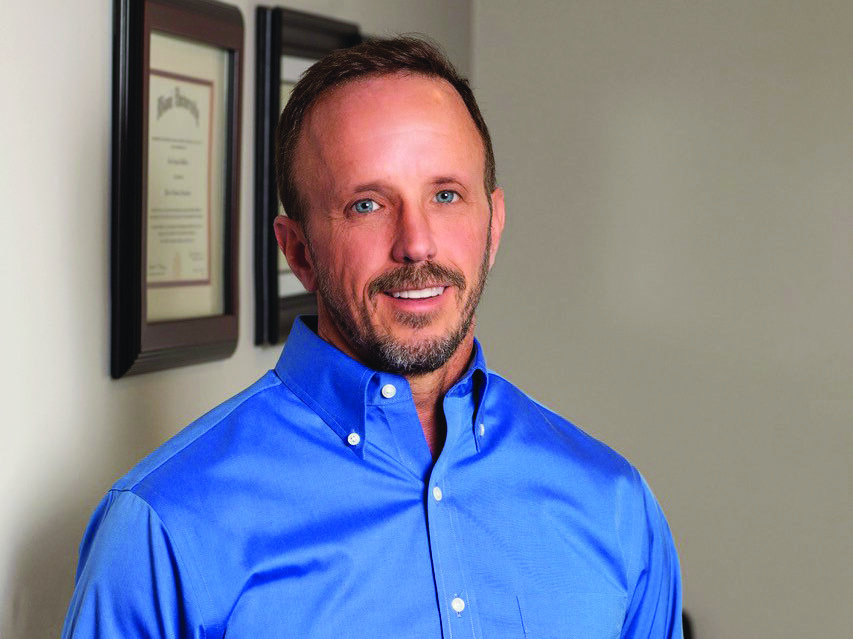
VanWeelden suggests these Do’s and Don’ts for those who are retired or soon to retire:
- Do focus on long-term tax planning. You’ll be retired for 30 years. Without the proper advance planning, taxes will likely be your No. 1 expense during retirement.
- Do focus on minimizing volatility. It is a much better determinant to long-term retirement investing success than average rate of return, which is what most people focus on.
- Do make sure to coordinate all your planning in a truly holistic manner. Every area affects every other area. Focusing only on investments is extremely short-sighted.
- Don’t focus only on minimizing your short-term tax liability. Think long term.
- Don’t focus solely on the average rate of return as a litmus for investment success. Volatility is actually much more important as you transition from the accumulation and growth phases of investing to the preservation and income phases.
- Don’t focus solely on investments. This is very short-sighted. Every area affects every other area, without exception.
Jason M. Katz, wealth adviser and principal at Bartlett Wealth Management, says securing a healthy financial outlook always starts with organization and a financial plan.
“The first step I would take is to write down your goals for what the future looks like for you and your family. These goals can include things like lifestyle expenses, travel expectations, housing, gifting and charitable intentions. The following steps are part of building a financial plan and include organizing your financial life, building your balance sheet and understanding how your financial resources can be used to achieve our goals,” says Katz.
Financial success requires good habits, a goals-oriented mindset and intentionality, he says.
“Most people, left to their own devices, will not achieve success because our society is built around consumption and not saving. Another huge factor in people who achieve financial success is having a trusted adviser who is not only knowledgeable and competent, but also holds you accountable,” Katz says.

Katz’s top recommendations when it comes to Do’s and Don’ts:
- Do make your financial plan a priority.
- Do seek out a fee-only adviser that focuses on serving you as opposed to selling products.
- Do craft your plan according to your values and vision for your family.
- Do involve your family in the financial planning process
- Do revisit the financial plan often as life and goals change over time.
- Don’t select an investment product; instead, select an investment adviser.
- Don’t overspend: A comprehensive financial plan will guide you as to the guardrails of your spending.
- Don’t buy and sell stocks based on emotions or the 24-hour news cycle
- Don’t time the market. “Time in” the market is a much more successful strategy than “Timing” the market, which involves predicting the short-term swings.
DAYTON ›› Ask the experts
Rachel Rasmussen, MBA, CFA®, CDFA®
Foster & Motley Wealth Management
fosterandmotley.com
What is wealth management to Foster & Motley?
Wealth management is more than a collection of numbers on a page. At Foster & Motley, it’s about helping you live your most meaningful life. From tax and estate planning to charitable giving and investments, we help set financial goals so you can enjoy your success today and into the future. No matter how complicated it might feel—perhaps you’re selling a business or need a plan to pass your wealth to your family and community—F&M is with you every step of the way.
Why does Foster & Motley include two credentialed advisers in every client relationship?
Your wealth journey includes all the complexities life throws at you. Foster & Motley serves as your personal wealth partner to navigate all of it, with a financial planner focused on tax, retirement, estate planning and more, paired with an investment manager working to put your money where it will work hardest for you. We believe that combination is essential to ensure your short-term and long-term goals are covered with a disciplined, integrated approach that keeps those goals in sight and on track.
How does Foster & Motley help maximize the power and impact of charitable giving?
Our financial advisers are on top of new opportunities to turn a client’s passion into positive real-world impact while maximizing the tax benefits of giving. For instance, the state of Ohio now allows a state income tax credit for contributions to a Scholarship Granting Organization (SGO). This means your tax dollars can support an education-based charity rather than going into Ohio’s general fund. Tax laws around charitable giving are constantly changing, and we are here to help.
Ashlee Walton, CFP®
Senior Financial Planner
James Investment Research
jamesinvestment.com
Can I avoid paying surcharges on Medicare Part B and Part D?
If you have had one of the allowed “Life Changing Events” and will have lower income in the future, you might be able to request they forgo charging the surcharge. If not, you can remove or decrease the surcharge by lowering your income. The surcharge is calculated each year based on your income from two years ago, so strategically mapping your income over all of retirement can help lower total Medicare surcharges paid.
Can I use an inherited IRA to complete a Roth conversion?
The short answer is no. Roth conversions can only be made from your own IRA. The exception to this rule is if you inherited the IRA from your spouse since this can be treated as your own IRA.
Should I use a donor advised fund (DAF) when giving to charitable organizations?
If you make substantial annual donations to charities, you may want to consider using a DAF. If you typically claim the standard deduction, “bunching” your donations for the next few years into the current year can allow you to deduct more of the donated amount by itemizing deductions this year. Alternatively, if you are making a large annual donation to offset your income tax liability, a DAF can allow you to spread out the transfer to the charities over this year and future years.
Tyler Lang, CFA
President & CEO
Journey Advisory Group
journeyadvisory.group
How to I know if you have my best interest in mind?
Your investment adviser should be a fiduciary. A fiduciary must put your interest as a client ahead of his or her interest. They must also disclose their fees, how they’re compensated and any conflicts or potential conflicts of interest. A fiduciary should be paid in a way that completely aligns their interests to yours.
What is your investment approach?
The investment portfolio should be customized to your goals and risk tolerance and not a one‐size fits all “model.” The adviser should take all of your assets into consideration, not just the accounts the adviser manages. The adviser should be able to explain their investment approach and investment philosophy in simple and understandable terms.
What is different about you than other financial advisers?
An adviser should be able to clearly articulate what is different about them and their firm. It is up to you to assess whether those differentiators are important to you. In other words, “Why should I hire you instead of someone else?”
