

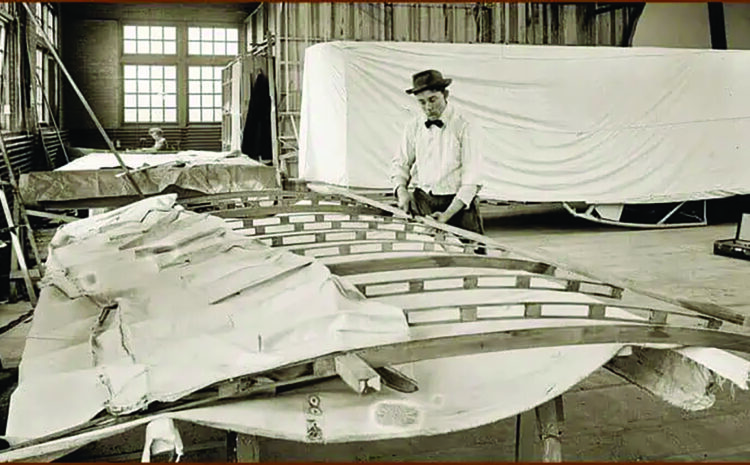
First female American aerospace worker called Dayton home
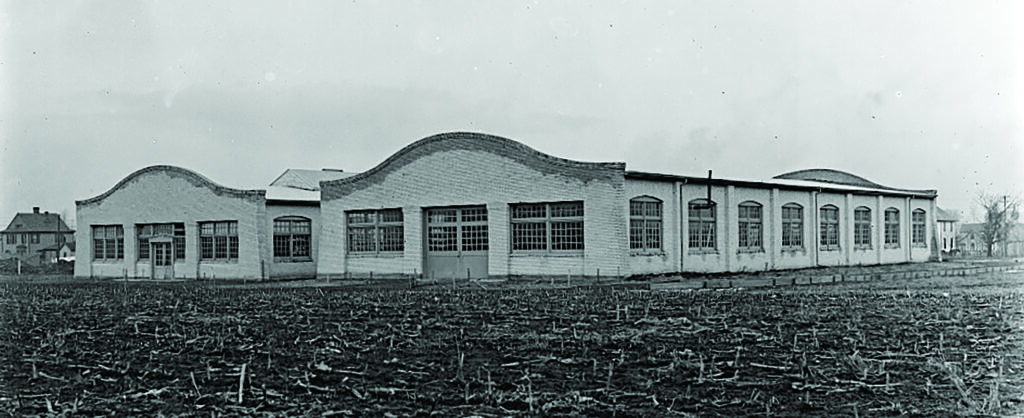
In 1910 and 1911, two odd buildings began to rise a mile and a half west of the Wright brothers’ West Dayton home. Bowed parapets bookended the long one-story structures, their midsections arching like the crooks of serpents’ spines. Wide windows reflected the rural world outside.
This was the Wright Company factory, America’s first airplane factory. But it was also home to another first: Here, out amongst the cornfields, Ida Holdgreve, a Dayton, Ohio, seamstress, turned a page in women’s history.
The Typo
In 1908, Holdgreve, a 27-year-old single woman from Delphos, Ohio, moved some 85 miles south to Dayton. Around two years later, in 1910, she answered a local ad: “Plain Sewing Wanted.” But the paper got it wrong. Wilbur and Orville Wright, two Dayton brothers, were, indeed, hiring a seamstress, but the sewing they needed was far from plain. “Well, if it’s plain,” said Holdgreve, “I can certainly do that.”
The brothers, in fact, wanted someone to perform “plane sewing” at the newly built Wright Company Factory. But in 1910, that term was as novel as airplanes themselves. A typesetter could have easily mixed up the spelling. And while Holdgreve lacked experience with “plane sewing,” so did the rest of the world. She got the job. Holdgreve put on a long work dress, pulled up her hair in a loose top knot, and went to work.
Corn Country
The Wright brothers built their factory in a cornfield 3 miles west of the downtown area. The setting hearkened back to Holdgreve’s home, Delphos, a small farming town surrounded by corn.
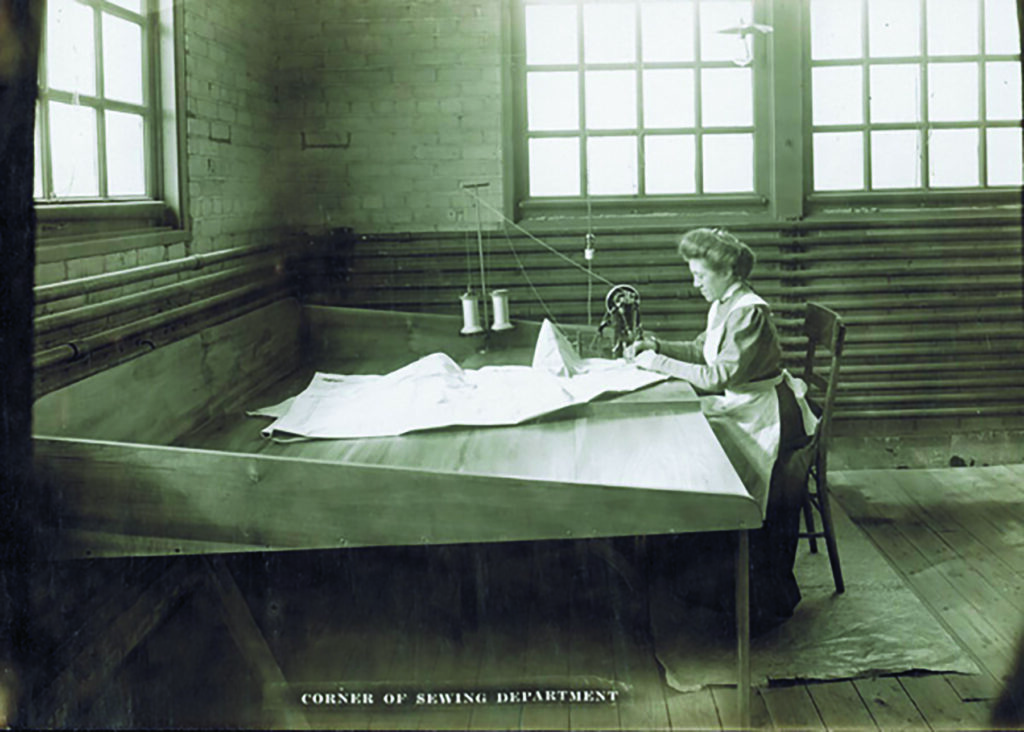
Out amongst the Midwest maize, sewing at a wide wooden table walled in by the hiss of heat pipes, Holdgreve fed her machine two large spools of thread. Laboring alone in the southwest corner of the Wright Company factory, surrounded by the thrum of motors, the clamor of hand-started propellers, she sewed light cream-colored fabric for airplane wings, fins, rudders and stabilizers.
“When there were [airplane] accidents,” said Holdgreve, “I would have to mend the holes.”
The End of an Era
“Both boys were quiet,” said Holdgreve. “Orville wasn’t quite as quiet as Wilbur. At different times I talked with Orville and got acquainted.”
Orville was notoriously shy, so Holdgreve must have made him comfortable. And at the time, Wilbur, the duo’s mouthpiece, was engaged in the brothers’ infamous “patent wars,” so perhaps his mind was elsewhere. The constant legal battles seemed to weaken Wilbur, and in late April 1912, only two weeks after his 45th birthday, he contracted typhoid fever. One month later, on May 30, 1912, Wilbur died at home. Holdgreve worked for the older Wright brother during the last year of his life.
After Wilbur died, Orville was left to run the Wright Company alone. Not only was he grieving his brother, his closest friend, but he was also in physical pain from his 1908 airplane crash at Fort Myer, Virginia. Orville “seemed somewhat lost,” noted Wright Company manager Grover Loening (who had just graduated from Columbia University with the first-ever aeronautical engineering degree). After Wilbur died, Orville dragged his feet on business matters and stopped attending Wright Company factory board meetings.
On October 15, 1915, having lost both his brother and flair for business, Orville sold the Wright Company. All told, the firm manufactured approximately 120 airplanes in 13 different models. But Holdgreve wasn’t done with the airplane business.
World War I
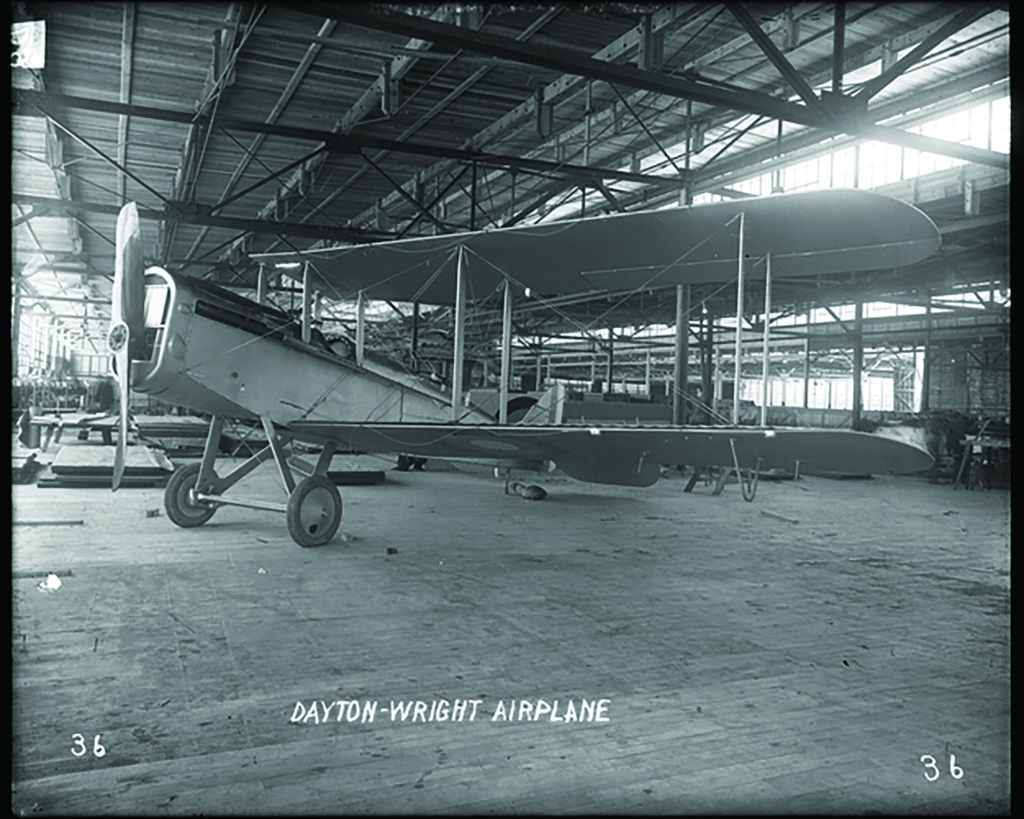
In 1917, Dayton industrialist Edward Deeds co-founded the Dayton-Wright Airplane Company and enlisted his good friend Orville Wright as a consulting engineer. During World War I, Dayton-Wright produced thousands of planes. At the company’s Moraine plant, Holdgreve supervised a crew of women sewing the fabric for the De Havilland DH-4 and DH-8 airplanes being produced in Dayton. After the war, Holdgreve left the aviation industry to sew draperies at Dayton’s Rike-Kumler Company, the same department store where the brothers purchased the muslin fabric for the world’s first airplane, the 1903 Wright Flyer.
First Flight
Holdgreve lived out her days in Dayton. At age 71, she retired from sewing to care for her sister. (At age 75, neighbors could see her cutting her lawn with a push mower).
Years later, an 88-year-old Holdgreve fulfilled a lifelong dream. While the spry woman hand-sewed some of the world’s first airplanes, she had never flown, so she climbed aboard a twin-engine Aero Commander with a local pilot. “I couldn’t hear so well up there,” said Holdgreve after flying over the Wright Company factory in West Dayton. “The clouds look just like wool.”
The occasion made national news. “You know,” said Holdgreve. “I didn’t think they would make such a big thing out of it. I just wanted to fly.”
Unearthed
On September 28, 1977, Ida Holdgreve died at age 95. After more than a century, the Wright Company factory still stands, albeit barely, as it was marred by fire in March 2023. In recent years, Dayton Aviation Heritage National Historical Park, the National Aviation Heritage Alliance, and other organizations have sought to preserve the famous factory. In 2019, the buildings were placed on the National Register of Historic Places.
The National Park Service still hopes, one day, guests will walk the old Wright Company factory floor, imagining the thrum of motors, the clamor of hand-started propellers. Here in the first American airplane factory, Holdgreve, the sole woman on the factory floor, sewed alone in the southwest corner. Unbeknownst to her, Ida Holdgreve was making history. She was the first female American aerospace worker.
