

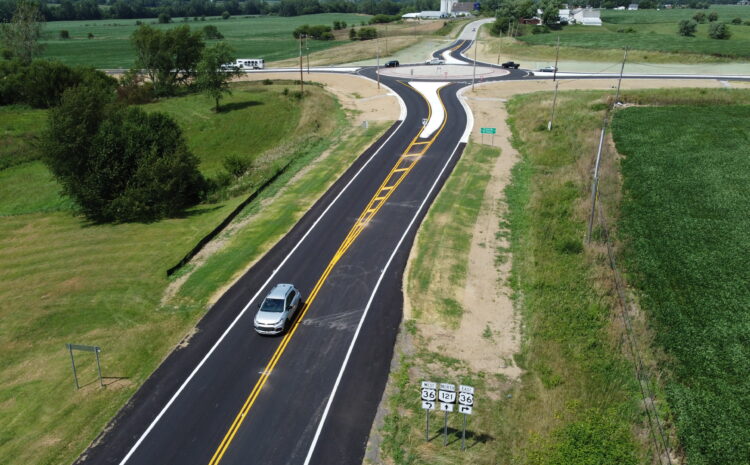
Miami Valley Regional Planning Commission’s new plan helps the Miami Valley become safer
Regional transportation planning rarely grabs headlines. People often drive themselves or take the bus and return home without much thought of the infrastructure that allows them to move from place to place.
In the Miami Valley, the Miami Valley Regional Planning Commission (MVRPC) helps shape how safely and efficiently the region moves. While the agency coordinates various projects, MVRPC has its eye on the future, developing a forward-looking plan to guide transportation investment through 2050 and beyond.
At the center is the 2050 Long Range Transportation Plan (LRTP), a 20-plus-year strategy that directs how public funds will be invested in roadway, transit, bikeway, pedestrian and transportation alternative projects. Updated on a five-year cycle, the LRTP reflects extensive input from local governments, engineers, business leaders and residents.
“MVRPC’s mission is to foster collaboration among communities, to identify, plan and implement projects that contribute to the advancement of our region,” says Brian O. Martin, MVRPC executive director.
“These plans have engaged a variety of partners and stakeholders to develop strategies and goals to improve transportation for all, advancing our region.”
Safety is embedded throughout the LRTP, but it is also the primary focus of a newly completed complementary Safety Action Plan, developed with support from a federal Safe Streets and Roads for All (SS4A) Planning Grant. This plan provides a data-driven framework for reducing fatal and serious injury crashes for everyone who uses the transportation system whether through driving, biking, taking transit, etc.
The plan was developed to be a resource for communities to help identify their high-risk locations, prioritize safety interventions and guide investments. One of its most significant recommended strategies is prioritizing improvements on the High Injury and High Risk Networks. These are corridors and intersections where crash data show the greatest concentration of severe incidents or where roadway features and the surrounding environment increase the risk of crashes occurring.
“MVRPC is here to support jurisdictions who are ready to take action in their pursuit to improve the roadway safety of their communities. This plan is a call to action because safety is not negotiable,” Martin says.
These recommended improvements include traffic calming and speed management strategies that aim to reduce the severity of crashes and create safer streets. Targeted improvements to intersections, road geometry, signage and surface conditions address common causes of roadway crashes. What’s more, closing gaps in sidewalks and trails, upgrading bicycle facilities and improving transit access should strengthen protection for other vulnerable people on the move.
In addition to infrastructure improvements, communities are encouraged to adopt education campaigns to target distracted, impaired and aggressive driving to help reinforce not just infrastructure changes but also behavioral strategies as well. “Roads can be designed and improved to be safer but it is the responsibility of the driver to follow the rules of the road and avoid unsafe driving habits,” Martin says.
Together, MVRPC hopes the Long Range Transportation Plan and the Safety Action Plan will provide a clear roadmap for the Miami Valley’s transportation future. Combining a path for near-term action and long-term transformation by combining quick-build safety projects with long-term improvements. Safety enhancements may also be integrated into routine maintenance, allowing communities to steadily improve conditions without waiting for major reconstruction.
