

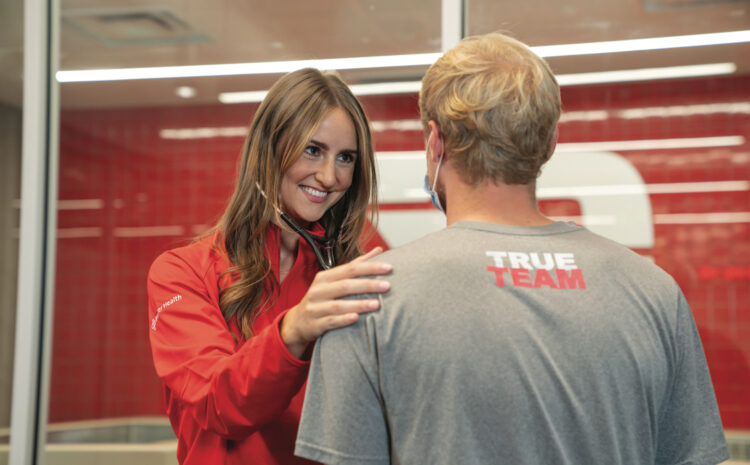
Sports medicine a tool to maintain a healthy lifestyle
Ah, summer! After a long winter of staying indoors or braving the elements, summer brings out our desire to run, golf, swim and hike. But pursuing these activities can lead to injury, and that’s where sports medicine can become an important tool for keeping athletes of all ages and abilities playing their best.
“You don’t have to give up your healthy lifestyle,” says Dr. Andrew Razzano, a shoulder and sports medicine surgeon with Beacon Orthopaedics & Sports Medicine. Instead, he encourages gradual progression into new activities.
“We see a lot of pickleball injuries,” he says, noting the growing popularity of the sport. He also sees many patients who plan an active vacation, such as a trip that incorporates a great deal of hiking, and then return to find that they have daily pain. These individuals “are trying to be healthier,” he says in support of trends toward greater activity. Unfortunately, sometimes that brings on an injury or an overuse condition. “If the pain is affecting day-to-day activities or if the pain gets worse, reach out [to a sports medicine physician] sooner,” he advises.
Dr. Aloiya Kremer, a sports medicine physician with Premier Orthopedics, agrees. She recommends an increase of no more than 10% per week when starting a new activity. This will help avoid overuse injuries, like tendinitis, as well as the very common sprains and fractures that might accompany challenging exercise and sports. Avoiding being sidelined by injury is particularly important as we age. “For arthritis, exercise is the best thing [people] can do long-term, because it creates a better environment in the joint,” she says.
Younger athletes are not immune to injury when it comes to summer sports. Razzano sees an increase in injuries to the ulnar collateral ligament (UCL), a band of connective tissue in the elbow, among high school athletes who play baseball or other sports requiring an overhead throwing motion year-round. Severe cases can lead to the need for a reconstruction of the ligament, also known as Tommy John surgery. However, this is a last resort for these types of problems.
Overuse problems among young athletes “are on the rise because we’re playing year-round,” says Razzano. Athletes may move from school and select leagues right into community or recreational leagues without ever resting or pursuing a different sport. This is also true of knee injuries as a result of repeated side to side actions.
Kremer also sees this problem, and she points out that the best preventative is rest and rotating into different sports. Playing a different sport will preserve muscle mass and conditioning while reducing the motions that can lead to overuse injuries.
For all athletes, Kremer also recommends the “low hanging fruit” of getting a good night’s sleep and good nutrition and hydration to stay in good health for desired activities.
This special section is brought to you by: