

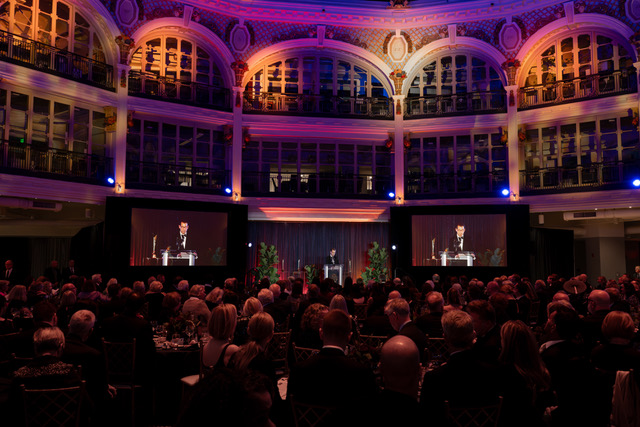
For more than 20 years, the Dayton Literary Peace Prize has promoted unity through storytelling
Chapter 1: Dayton Promotes Peace
When ethnic factions erupted into conflict following the dissolution of the former Yugoslavia, Dayton became the unlikely setting for international peace talks that sought to end the Bosnian War. United Nations Ambassador Richard Holbrooke chose Wright-Patterson Air Force Base to host the peace talks, simultaneously removing distractions and security complications found in larger metro areas while silently underscoring the United States’ military might. It was effective; leaders from the warring groups remained sequestered in Dayton until November 21, 1995, when the Dayton Peace Accords were finalized, effectively ending a conflict that had killed more than 100,000 people and displaced millions more.
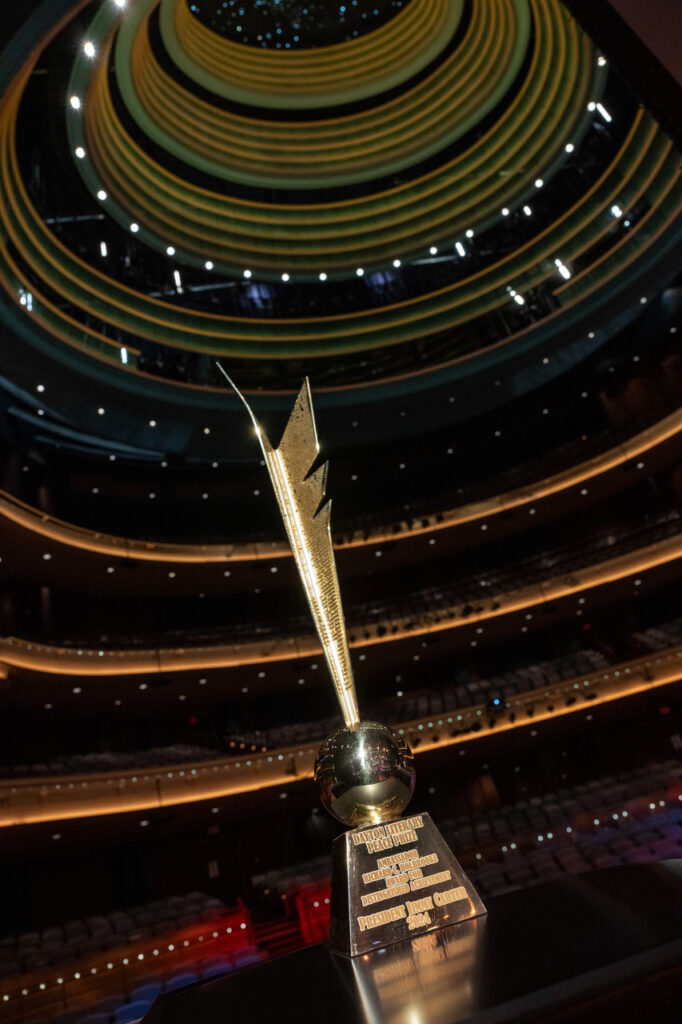
To commemorate this achievement, the community established the Dayton Peace Prize in 1999 “to recognize individuals who contributed to the peaceful reconstruction of a society torn apart by war,” according to the organization’s website. The prize evolved in 2006, and today, the Dayton Literary Peace Prize(DLPP) nominates adult fiction and nonfiction books published within the past year that connect their readers to global cultures, peoples, religions and political points of view. “The first and only annual U.S. literary award recognizing the power of the written word to promote peace” offers a $10,000 prize to the winning authors in both the fiction and nonfiction categories.
Chapter 2: Book Reports
It’s a long road for a title to go from nomination to achieving the prize. “We employ a rigorous selection process that rewards authors of outstanding literary achievement,” says DLPP Executive Director Nicholas Raines. “The Dayton Literary Peace Prize places authors at the center of our work, and we provide one of the nation’s largest celebrations of writers. We honor both emerging and established voices whose work advances connection and compassion.”
DLPP chooses a team of “First Readers,” a diverse set of individuals tasked with reviewing hundreds of nominated books. “Our judging is regarded by those in the literary community as one of the fairest and most thoughtful and altruistic among the numerous awards,” Raines says. “Each First Reader is responsible for reading and evaluating six books, and every nominated book is read by three First Readers.
After the First Readers rank their favorites, the six highest-ranked books in each category are sent to four final judges, two reading fiction and two nonfiction. “Our final judges read and evaluate the selections and determine which of the books best fit our criteria,” Raines says. “The judges come to a consensus on the winners and runners-up in each category.”
Nominated authors who make it to this final stage find themselves among peers who not only are motivated to tell a good story, but also to reveal some shared slice of humanity. Jordan Ritter Conn, a DLPP 2021 runner-up for his nonfiction work The Road from Raqqa, says being a finalist was an honor as someone for whom books bridged gaps between cultures and identities.
“When I saw all of the books the DLPP has awarded, I saw books that made me kinder and more curious, that filled me with empathy and love, that pushed me to want to righteously stand up on behalf of others’ humanity,” Ritter Conn says. “I have my life changed by books all the time. And so many of the books that have changed my life are books that were honored by the Dayton Literary Peace Prize.”
Chapter 3: Ripple Effect
At a time when it feels as if people are at their most discordant, the DLPP can renew a collective faith in humanity by celebrating different histories, perspectives and cultural identities. Kevin Riley, former editor of the Dayton Daily Newsand the Atlanta Journal-Constitution, chairs the DLPP board. He says forging connections among communities is important work, and what the DLPP does best is shine the spotlight on literary works that demonstrate humans have a lot more in common than they are led to believe.
“In the solitude of reading a book we learn to understand and appreciate others,” Riley says. “The rancor of politics and the flood of news can’t do that. Peace begins with us understanding each other as human beings, no matter how huge our differences seem to be. The Dayton Literary Peace Prize calls attention to and supports the work of authors who do that.”
Prize-winning authors like Wil Haygood support that sentiment. Haygood took home the Ambassador Richard C. Holbrooke Distinguished Achievement Award in 2022 for his body of work “that told the often-hidden story of America and of how our nation came together with the contribution of diverse voices,” he says. His stories detailing the lives of such historical figures as Adam Clayton Powell, Jr.; Thurgood Marshall; Sammy Davis, Jr.; Sugar Ray Robinson; and Eugene Allen—people who helped shape America as citizens recognize it today, though their stories might not always appear in history books.
“When the Dayton Literary Peace Prize bestowed upon me the Holbrooke Award for the body of my work, it not only told me that my muscular focus in telling these stories was well worth it, it also lifted these figures themselves up into the mainstream where they always belonged,” Haygood says. “The significance and imprimatur of the award carries with it a beautiful honor that still leaves me in awe at having received it.”
The DLPP attracts attention from different parts of the world, and the prize brings eyes to the Gem City—not unlike the Peace Accords themselves.
“It has become clear that the literary world sees this prize as important. We’re the only literary award in the country who focuses on awarding literature that is specific to stories that deepen our understanding of peace, conflict and the human experience,” Raines says. “Our winners have come from all over the world, and we’ve had people from around the country join our board. Besides our numerous events in Dayton, we’ve presented our authors to audiences in Cincinnati, multiple venues in New York City and Atlanta.”
“This is no longer a Dayton award. Like so many things Dayton has created and invented, it belongs to the world,” Riley says. “We should embrace that and take it to the world.”
GET INVOLVED
With live events, DLPP pushes the messages in its nominees beyond the printed page. “We’ve added more opportunities for these events, and this year was our most robust program year ever,” says DLPP Executive Director Nicholas Raines. “We’ve learned that audiences want to interact, and they respond to authors who wrestle with the compelling issues of our time. Literature has always done what politics cannot. We are here to make sure it keeps doing that.”
Student Author Series: Former winners return to Dayton each fall to meet with students and teachers. Participants attend author talks, Q-and-A sessions, and book signing events. Teachers of member schools get access to related curriculum, and the schools receive a classroom set of 25 books provided through the DLPP Fly with the Doves Membership program.
Community Conversations: Perhaps considered one of the Gem City’s largest “book clubs,” Community Conversations invite members of the public to read DLPP titles and join the author for lively discussion during free events.
Dayton Literary Peace Prize Library Consortium: Consisting of librarians from school, university and public libraries, the Consortium makes available DLPP-nominated and -winning works at various library locations. The libraries promote the prize through displays, linking their patrons to the Dayton Literary Peace Prize webpage and newsletter, and advertising the various events connected to the prize. The Ohio Public Library Network also publicizes the winning authors and their works.
Support the DLPP: In addition to consuming works by DLPP nominees and sparking curious conversations, those looking to further support DLPP’s mission can make a monetary contribution via the website. Thanks to record attendance at the 20th anniversary black-tie awards gala, another fundraising opportunity takes place at this year’s event announcing the 2026 winners. The gala is set for the weekend of November 7–8, 2026. Visit the website for details and ticket information.
2026 DAYTON LITERARY PEACE PRIZE FINALISTS:
Winners of the Dayton Literary Peace Prize will be announced in September 2026. The Dayton Literary Peace Prize Foundation will honor Ann Patchett, the Richard C. Holbrooke Distinguished Achievement Award recipient, and the winners and first runners-up at an awards ceremony in Dayton the weekend of November 7–8, 2026.
Nonfiction
● By the Second Spring: Seven Lives and One Year of the War in Ukraine by Danielle Leavitt
● Free: My Search for Meaning by Amanda Knox
● Mother Emanuel: Two Centuries of Race, Resistance, and Forgiveness in One Charleston Church by Kevin Sack
● Original Sins: The (Mis)education of Black and Native Children and the Construction of American Racism by Eve L. Ewing
● The Jailhouse Lawyer by Calvin Duncan and Sophie Cull
● The Prosecutor: One Man’s Battle to Bring Nazis to Justiceby Jack Fairweather
Fiction
● Bad Bad Girl by Gish Jen
● Outside Women by Roohi Choudhry
● The Antidote by Karen Russell
● The Sunflower Boys by Sam Wachman
● Too Soon by Betty Shamieh
● Wild Dark Shore by Charlotte McConaghy
