

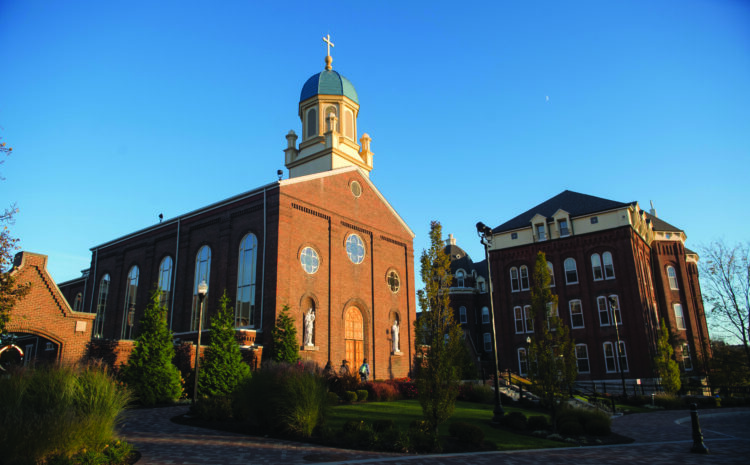
Local schools introduce new programs, campaigns and buildings to the Miami Valley
Many colleges and universities are moving forward this year with new projects to create learning opportunities for their students and the community.
Air Force Institute of Technology
The Air Force Institute of Technology (AFIT) hosted 10 undergraduate interns this year as part of the University Consortium for Applied Hypersonics summer program. According to a news release on the AFIT website, “the goal of the program is to create a strong workforce to meet future hypersonic-related science and technology needs in the Department of Defense and industry.”
This year is the first time that AFIT has participated in the program. AFIT is considered a special partner because of the importance it places on academic programs that have a focus on high-priority defense research. Students that are pursuing degrees in the various STEM fields including aerospace, electrical and mechanical engineering, physics, math, and computer science came from different schools across the nation to participate in this program.
Internship sponsors, Lori Stiglitz and Matt Akers from the Joint Hypersonics Transition Office, were presented the interns’ research projects at the end of the program.
“Partnering with AFIT to expand the hypersonics workforce at this level has produced significant outcomes that will impact future hypersonic programs,” said Stiglitz in the news release. “It is rewarding to team up with quality academic institutions as we collectively tackle future hypersonic technology challenges.”
The University of Dayton’s first building dedicated to visual and performing arts, the Roger Glass Center for the Arts, will be commissioned in December 2023, with its first performances set for early 2024. The building will elevate the arts on campus and provide greater connection with the Dayton community through concerts, dance and theater performances, and visual art exhibits featuring students, faculty, visiting artists and community members.
The building is named after the lead donor to the project, the late Roger Glass, who was well known for his philanthropy throughout the Dayton area and for being president and CEO of Marion’s Piazza. The $45 million, 51,000-square-foot center will include flexible space for theater, dance and performance technology students to experiment and innovate; a 400-seat concert hall that can be acoustically tuned to groups ranging from the orchestra to smaller ensembles; and a visible and accessible art gallery.
The center also will provide custom-built experiential learning space for student-managed media such as Flyer Media. Flyer Media encompasses student-run media properties on Dayton’s campus, run out of the Department of Communication, such as Flyer TV, Flyer News, Flyer Radio and Flyer PR.
Pat Enright, director of Flyer Media at the University of Dayton, says, “The building is special for our students because we will have upgraded facilities and they’ll get access to state-of-the art production equipment. It’s also the first time since we formed Flyer Media that all our properties will be combined under one roof.”
The project has already provided a number of student opportunities for experiential learning, which will only continue after the center opens.
“The possibilities for collaboration are unlimited, as well as collaboration efforts with the other tenants of the building: the music, theater and visual arts departments,” says Enright.
Sinclair Community College has been selected this year to join a new national center focused on creating a much-needed space for IT training. According to a press release, “The National Information Technology Innovation Center (NITIC) will work with employers, community colleges across the country, and others to prepare highly skilled technicians through credential programs that take two years or less to complete.” The NITIC focuses on IT education. As technician jobs in STEM-enabled industries continue to grow at double the pace of average U.S. job growth, IT training becomes more in demand.
In the release, Kyle Jones, who serves as the chair and professor in Sinclair’s Computer Science and Information Technology Department, said, “Sinclair Community College is proud to join this innovative effort, which will play a crucial role in America’s tech economy.”
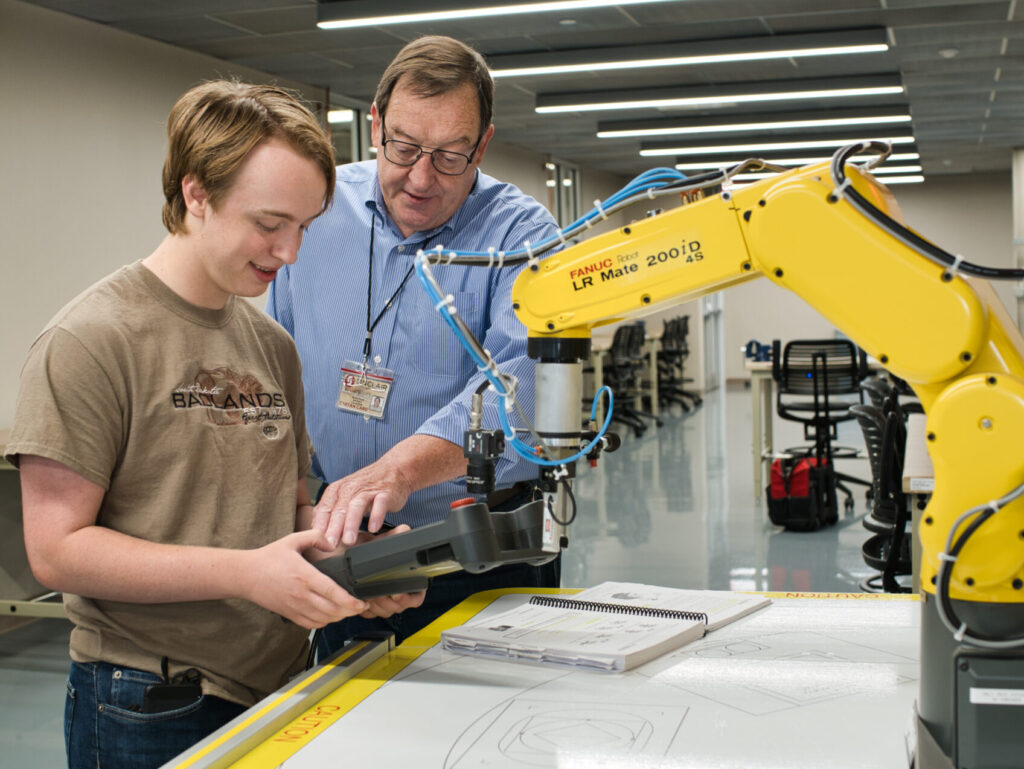
Some key components of the NITIC include the development of a national Business Industry Leadership Team to align future community college curriculum with employer demand, scaling up relationships at super-regional levels to national collaboration, the creation of an IT Innovation Network to benchmark best practices and emerging ideas to advance IT education nationally, the promotion of recruitment best practices to increase the participation of women, underrepresented minorities and veterans in IT careers, and more.
“This initiative aligns with Sinclair’s mission to find the need and endeavor to meet it by providing our students with a world-class education and ensure they are well-prepared for the ever-evolving landscape of information technology. We look forward to collaborating with the NITIC partners in this endeavor and making a significant impact on the future of IT education and innovation,” said Jones.
Miami University Regionals is set to launch a new Cybersecurity and Networking major in the early 2024 spring semester. According to a news release, this new major will expand the choices for majors in the Computer and Information Technology (CIT) Department and ultimately meet the growing need for workers in the field of cybersecurity.
This degree is available for students to earn completely online. Students who earn a Bachelor of Science in Information Technology with this major will be qualified for vital IT jobs such as cybersecurity analysts, ethical hackers, network administrators, information assurance specialists and more.
Central State University has partnered with Akron Law this year to announce a degree partnership to create a smoother system for students to secure both a bachelor’s degree from Central State and a Juris Doctor (JD) from Akron Law in just six years instead of the habitual seven years. The partnership is commonly referred to as a three plus three (3+3) degree program.
According to a news release, Central State becomes the sixth college to have a 3+3 program with Akron Law and the first Historically Black College or University (HBCU) in Ohio to have a 3+3 partnership with any law school.
Eligible Central State students can apply the first year of law school courses at Akron Law to satisfy the graduation and degree requirements at Central State, and concurrently apply the first year of Akron Law courses toward a JD degree granted by the University of Akron.
Any Central State student may apply for inclusion in the 3+3 program at the same time they apply for admission to Central State or anytime while enrolled at Central State.
Central State will have discretion to select which majors will be eligible for this program.
Cedarville University’s School of Education and Social Work has launched a teaching and learning program called Symbiotica. According to a news release, this lab gives middle childhood education majors the opportunity to instruct in a real classroom setting on-campus for fifth- and sixth-grade homeschool students in the local community. The goal of this lab is to provide homeschooled students with instruction from future educators who will, in turn, be provided with valuable teaching opportunities.
Teaching will include the typical classes of a middle childhood student, such as mathematics, science, social studies and English language arts. Cedarville students will provide their own planned lessons and teach with their Cedarville faculty members present in the classroom.
Ruth Sylvester, professor of education and one of the two founders of Symbiotica, says, “What’s so important is that we use methodologies that are appropriate to the classroom and engaging for these children instead of just having the teacher stand and lecture.”
Symbiotica has already met with incoming students to pre-assess each child to plan instruction.
“What’s so exciting about Symbiotica is that we get to see our students in their element early on,” says Sylvester. “Before they’re fully teaching in their content areas, we get to plan very closely with them. We get to see how excited they are to enact one of their purposes for coming to Cedarville.”
Clark State College has established a scholarship through the Clark State scholarship program to honor the late father of Nina Wiley, vice president of student affairs. According to a news release, in recognition of the new scholarship an awards case housing the many accomplishments of Clark State’s Phi Theta Kappa (PTK) chapter, Alpha Nu Lambda, was named in Wiley’s honor.
Wiley has proudly served as PTK advisor for five years now. “The students I have met and the relationships that have been built inspire me to do more. Helping to remove barriers for students is more than a job, it is my passion,” said Wiley.
The Bobby Fisher scholarship is now available to Clark State students who are enrolled in the business program. To be eligible for the Bobby Fisher Scholarship, students must be pursuing a degree in business or management, hold a minimum grade point average of 2.5 and be a resident of Clark County.
The Bobby Fisher Scholarship was awarded this year to student Gina Woodruff, who is pursuing a degree in Human Resource Management. “Going to college while working and taking care of a family is a huge undertaking, but I am up for the challenge,” she says.
Wittenburg University welcomed 10 new professors to its academic ranks this year. According to a news release, the award-winning faculty has already been recognized nationally for superior classroom teaching. The university’s newly hired professors include: Gypsy Schindler, assistant professor of art; Timothy Swartz, assistant professor of biology; Collin Johnson, professor of practice and supply chain management; John Gulledge, assistant professor of English; Alan Ledford, associate professor, program director and master of sport administration; Sunday Ngwobia, assistant professor of computer science; Theresa Wilson, visiting assistant professor; Libby Hainrihar, assistant professor of music and director of choral activities; Jessica Johnson, professor of practice, nursing resource center and simulation laboratory coordinator; and Kristina O’Meara, professor of practice.
“Once again Wittenberg has attracted incredibly talented and curious teacher-scholars to join our faculty,” says Provost Brian Yontz, professor of education.
Wright State University introduced new features to campus that increases access for disabled students. According to a news release, the university’s Office of Disability Services and the Division of Inclusive Excellence established two new features that highlight Wright State’s ongoing commitment to a positive, productive learning environment for students of all abilities and backgrounds.
The renovation and reopening of a portion of Wright State’s tunnel system now allows for disabled students who live in Hamilton Hall to have easier access to the Student Union. This portion of the tunnel system had been previously closed for decades due to safety concerns.

“An amazing amount of work has gone into making the tunnel both accessible and safe, including installed cameras and access controls so that only people that live in Hamilton Hall will be able to access the residence,” says Tom Webb, associate vice president of accessibility.
Wright State also opened the Disability and Neurodivergence Cultural Center in 023 Student Union.
“We are excited to see this become a resource for our students. There are only 18 in the entire country, and we are the second in Ohio,” says Webb.
The center’s goal is to provide disabled students a safe space to share their experiences, regardless of their disability, develop educational programming and social opportunities for students, and find ways to further weave their unique culture into the fabric of the Wright State campus.
Miami University has been ranked third in the country for excellence in undergraduate teaching among public universities this year, according to U.S. News & World Report. According to a news release, among all universities, it is ranked 11th for undergraduate teaching programs.
The university also is near the top both overall and among national public universities in Learning Communities (sixth public, 17th overall), Undergraduate Engineering Programs No Doctorate – Mechanical (fifth among public universities excluding military institutions, 17th overall), Undergraduate Engineering Programs No Doctorate (seventh among public universities excluding military institutions, 30th overall), Study Abroad (ninth public, 34th overall), and Undergraduate Research/Creative Projects (10th public, 41st overall).
Miami University also was named in Best Value Schools – National Universities, Top Performers on Social Mobility – National Universities and Undergraduate Computer Science Programs.
Kettering College has initiated a community health worker training program this year. According to a news release, groups of students in the college’s Community Health Worker Training Program gathered the first week of September for an all-day skills lab in their simulation center. The hands-on lab for 19 students included Narcan training, how to stop a bleed and treat a wound, how to take vital signs and how to perform CPR on adults and infants.
All the students live in the communities they will be serving, and they all share a common goal to help however they can with their new skills.
