


Sports wagering will be state’s largest expansion of gambling
Some have placed the immediate economic impact at $3 billion a year. Others have placed it as high as $12 billion. I certainly wouldn’t want to be a sports handicapper trying to figure out an over/under line. But you can bet the rent on one thing: When sports gambling starts in Ohio in January, it’s going to be big.

“We’re not in the business of projecting what will happen,” says Jessica Franks, director of communications at the Ohio Casino Control Commission, “but I will tell you this: When we launch on Jan. 1, it is going to be the largest expansion of gaming in Ohio’s history and we believe it will be the largest simultaneous launch of sports gaming in the U.S.”
Ohio is sport crazy—especially when it comes to its professional and college teams. Soon, you’ll be able to place a wager on your favorite Ohio team at a brick-and-mortar sports book, or even a sports bar. Imagine heading to a sports bar for some wings and a few brews while watching a game you have placed $50 or $100 on. If you win, it could pay for the expense of an entire afternoon of entertainment.
Under House Bill 29, three types of sports gaming will be available: Type A, or online gaming using a website or phone; Type B, or physical sports books at specified locations; and Type C, or wagering at sports book kiosks, which will be tied to sports bars and other liquor licensed establishments that are for-profit, have a recommendation from the Ohio Lottery and are also existing Lottery Sales agents.
The locations of physical sports books have certain requirements based primarily on a county’s population.
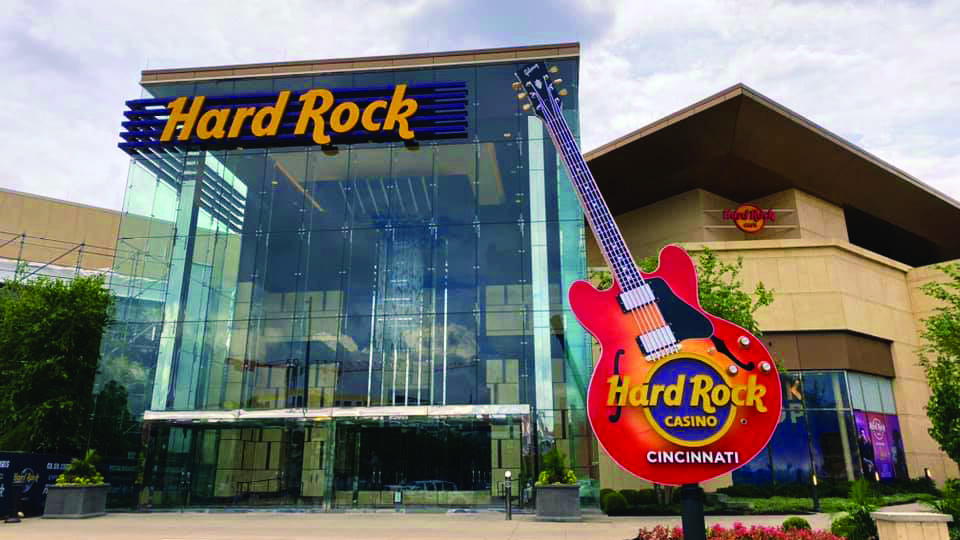
“The legislation also gives preference to Ohio professional sports teams as well as existing casinos and racinos,” says Franks. “So Belterra Park, Miami Valley Gaming, [Paycor] Stadium, Cincinnati Reds [Great American Ball Park] and the Hard Rock Casino, all of those are eligible for the licensing of a physical sports book.”
Naturally, these establishments are all looking forward to the addition of sports gaming at these large venues.
“It provides another gaming amenity for our current patrons and synergizes with our existing best of class entertainment options,” says Robert Wamsley, director of compliance at the Hard Rock Cincinnati Casino, who adds that the sports book will offer wagering on all collegiate and professional level organized sports. “Retail will take have to take place on site in Ohio, however mobile wagering will be geofenced to the boundaries of Ohio.”
There is no limit on the amount you can wager at a physical sports book. Retail wagers will be paid in cash while mobile wagering funds will be dispersed to an account on file, adds Wamsley.
“The number of sports books are also limited to up to five per county or less, based on population,” adds Franks. “So Hamilton County, Franklin County and Cuyahoga County are each eligible for five spots books.”
Naturally, the counties surrounding Hamilton will all have their own limits based on population.
The third kind of sports wagering at retail kiosks, which will be perhaps the largest expansion, is a part of what is being defined as a sports lottery. Under House Bill 29, a Type C Sports Gaming Host license will allow companies to install kiosks that can accept wagers of up to $700 per week from any adult. The kiosks will be owned by separately licensed sports betting proprietors.
In addition to a licensing fee, qualifications for a kiosk include being a lottery retailer in good standing, while holding a D-1, D-2 or D-5 liquor permit. They also have to partner with a company that operates the machines under a Type C proprietors license, issued by the Casino Commission, which has already approved the first 200 licenses, including 17 at bars and restaurants in Southwest Ohio. And that is just the first wave. Expect many more approvals in the months to come.
“It may seem a little complicated, but the host is the lottery location, while the proprietor is the company running the sports kiosk,” says Danielle Frizzi-Babb, director of communications at the Ohio Lottery. “Once the host receives the license, they contract with a proprietor to run sports betting at their location.”
So how does it work for the casual bettor? Not all the details are ironed out as yet, but it’s close to how Keno currently works at many bars or restaurants.
“For instance, our retailers will be able to cash prizes up to the reportable limit ($600),” says Frizzi-Babb.
Over that, you might have to head to a lottery office.
“We do have other options, like online with our mobile cashing app,” says Frizzi-Babb. “We already have multiple cashing options for our players.”
While the cashing out options will be better determined after actual licensure, “we are asking that Class C players have as many cashing options as possible, which could include cash, debit cards, crediting an account or even a mail-in option.”
Only four different types of kiosk wagers will be available, including spread wagers, over/under wagers, money line wagers and parlay wagers with no more than four components.
“Obviously, we are ecstatic,” says Marty Angiulli, owner of Martino’s on Vine, which has already been approved for kiosks. “Sports gaming will add to our business exponentially. People will be able to place a bet, then watch while they also buy drinks and food.”
Kiosk wagering will help many of establishments like Martino’s realize revenue that was lost during COVID shutdowns.
“When COVID hit, we decided to remodel,” says Angiulli. “We now have more than 80 televisions and with the wagering, we are planning to add even more.
“We also have an advantage over telephone wagering, because to bet with them, you need an account. We have the ability to pay most tickets on site, so that’s another plus.”
Angiulli also says the licensure process was simple, and applauded the state, the Ohio Casino Commission and Ohio State Lottery for the work bringing the program to fruition.
“I filled out the form, paid the fee and was approved,” says Angiulli. “It was just that simple.”
A portion of the tax revenue realized by sports gaming will go toward creating a dedicated source of funding for education, prevention and treatment for problem gambling, adds Franks of the Ohio Casino Control Commission.
