

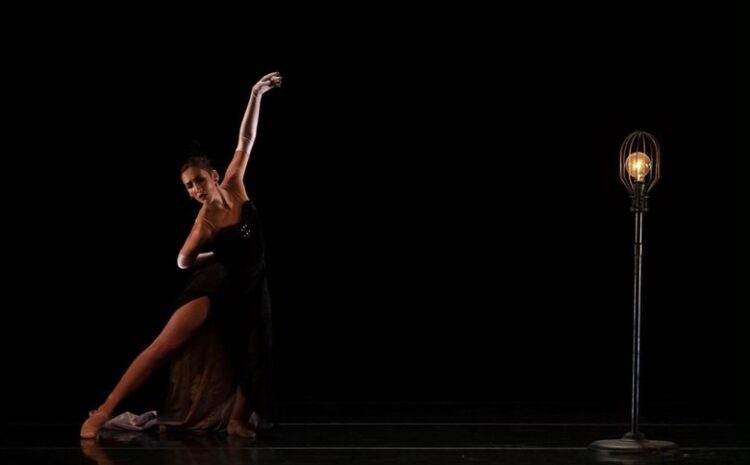
New CEO at Dayton Performing Arts Alliance ready to tackle challenges and push the organization to new limits
Since assuming leadership of the Dayton Performing Arts Alliance in August, Patrick Nugent is leaning into his academic background to help him assess and strengthen the unique arts collaborative.
Nugent received an undergraduate degree in classics and theology from Xavier University and his doctorate in history of Christianity from the University of Chicago. He came to Dayton from the Windy City this past summer after serving as vice president of development with the Lyric Opera of Chicago, where he built the infrastructure for a 10-year, $650 million comprehensive campaign, organized a $10 million emergency fundraising campaign during the pandemic, initiated the opera company’s first-ever advocacy strategy and bolstered its major gifts program.
Nugent’s first course of action upon assuming the helm of Dayton’s triad organization—which features the Dayton Ballet, Dayton Philharmonic Orchestra and the Dayton Opera—was a “listening tour.”
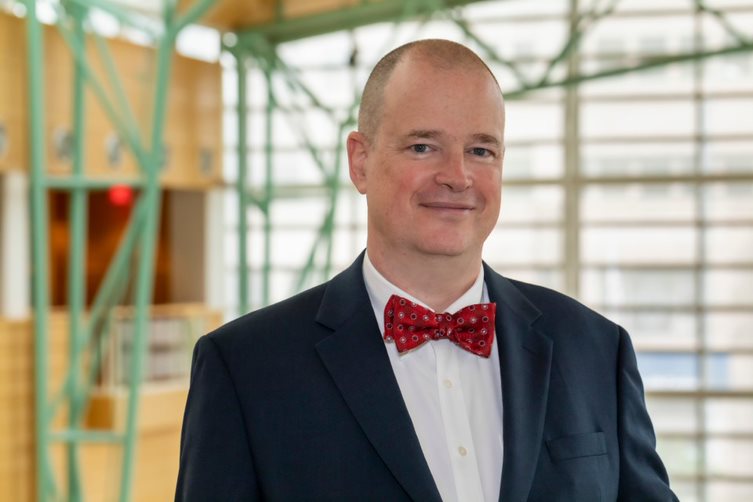
“I spent my first 90 days having as many one-on-one meetings as possible with a variety of donors, board members, civic leaders, nonprofit partners—and, of course, my own colleagues here,” he says. “That listening process will ultimately become a co-creating process of a five- to seven-year vision.”
As CEO, he says his primary roles are fostering culture and developing strategy. Measurable outcomes, such as revenue, expense and audience goals, flow from culture and strategy, he says.
“I have been articulating five aspirations from the beginning,” he says. “One, continuing and completing the journey to becoming a single, integrated organization working together toward a shared purpose. Two, that shared purpose is ultimately helping as many people as we possibly can to fall in love with these art forms. Three, the arts are for everyone; DPAA will be the place where this is concretely true. Four, we must listen deliberately and relentlessly to our customers. All of them, including the ones we haven’t attracted into the concert hall yet. Five, we cannot properly serve our community unless we reflect our community,” he says.
One of Nugent’s biggest challenges is not unique to DPAA or the rest of the community. He says one of the most surprising aspects of his move to Dayton was the racial and geographic divide between residents. However, he says the arts can be used to bridge those cultural chasms.
“I intend to make the DPAA a major force in crossing and healing that divide however we can manage to,” the Washington, D.C., native says. “That divide is everywhere, but here, it’s geographically and psychologically very stark. It doesn’t need to be. We need to learn to talk with each other, listen to each other and work with each other. I believe that the performing arts can be major catalysts for that, but it will only happen with deliberate, persistent, compassionate effort.”
To that end, the organization recently applied for $2.5 million through the Dayton Region Priority Development & Advocacy Committee to assist with expenses ranging from $30 million to $50 million for a new campus at the former Wright Company Factory site on West Third Street. The project would become DPAA’s new headquarters for administrative offices and staff, professional ballet company, ballet school, youth orchestras and after-school education programs. There would be space for other nonprofits’ art and health programs.
The new location would complement other investments in that gateway to West Dayton, including the new $12 million, 24,000-square-foot Dayton Metro Library branch that’s set to open to the public soon. The move wouldn’t necessarily mean that the ballet, orchestra and opera performers wouldn’t grace the stage at the Schuster Center or other Dayton Live venues. Rather, it would be expanding the platforms to increase accessibility to the arts as part of a broader community strategy.
“We are putting inclusion, diversity, equity and access at the center of our activities and relationships,” Nugent says. “That’s demanding and complicated and creative. We aspire to reflect and embody the community we serve.”
Educational programming is also under the microscope to identify ways of improving outreach.
Education “is the most important thing we do, if we’re serious about our purpose to help as many people as possible fall in love with these art forms,” Nugent says. “Our immersive programs—youth orchestra, ballet school and in-school ‘Q the Music’—need to be expanded to include instrumental and vocal instruction, and they need to expand geographically as well.”
Nugent says he’s also keen to commission new works, like the upcoming Dayton Opera performance steeped in local flair that will premiere in February at the Schuster Center. The English-language Finding Wright full-length opera traces parallel narrative threads that begin with the discovery of the exceptional Katharine Wright, younger sister of Orville and Wilbur, by 21st-century Charlotte “Charlie” Tyler, a young, recently widowed aerospace engineer and academic. As Charlie learns more about the extraordinary events of Katharine’s life, she finds a path toward understanding, connection and healing.
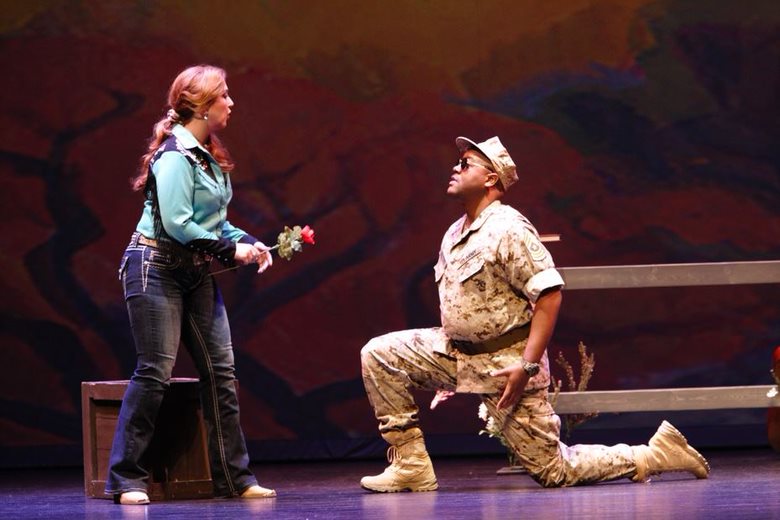
“If you’ve never seen an opera, this is a perfect entry point, because the music is gorgeous, the story is accessible and the language is English,” Nugent says. “And if you’re a longtime opera fan, it’s a great opportunity to see how opera remains a living, growing, powerful way to tell stories with music and theater. Our Juneteenth celebration (June 17-18) pays homage to another great Dayton cultural giant, the African-American poet Paul Laurence Dunbar.”
Nugent also lauded the return of Dayton Ballet’s Nutcracker to the stage in December, following its absence during last year’s COVID-19-riddled holiday season. Other highlights Nugent recommended for the current season include the Philharmonic’s East Meets West concert Jan. 7-8, featuring a mixture of classic and modern music, plus a solo performance by principal clarinetist, John Kurokawa.
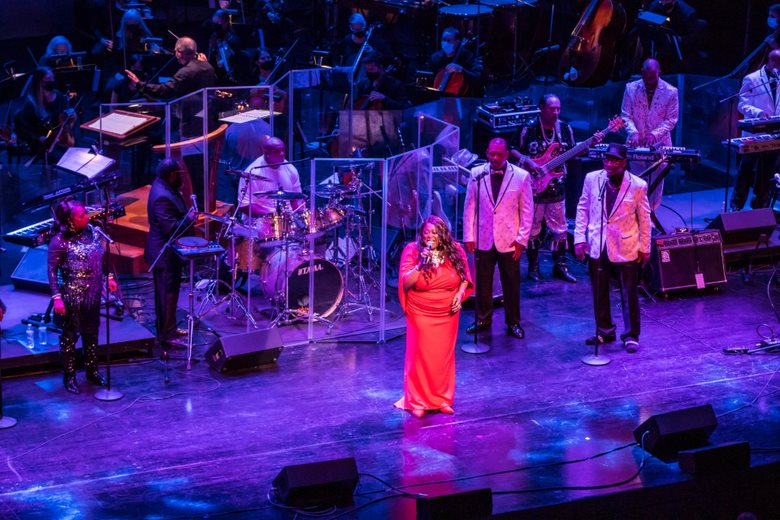
“And of course, if you’re unsure about dipping your toes into classical music with a live orchestra, our SuperPops and Rockin’ Orchestra series are fantastic ways to start, pairing the Philharmonic with familiar contemporary music,” Nugent says.
Nugent and his wife, Mary Kay Rehard, have been immersing themselves in the Dayton scene, in particular diving into the eclectic local restaurants in the region and hitting the trails at Five Rivers MetroParks’ facilities—a gem that helped seal the deal for the couple’s move to Ohio. Nugent says he’s glad to call Dayton his home and looks forward to contributing his own innovations to the city’s storied past.
“Dayton is a marvelous community, and we look forward to exploring it more and more,” he says. “I’m deeply grateful for the three brilliant artistic directors at DPAA, the lovers of music and dance who are gradually coming back to performances, and the generous, loyal subscribers and donors who make it possible for us to put these performances on stage and immerse children and youth into the joys of music and dance.”
