

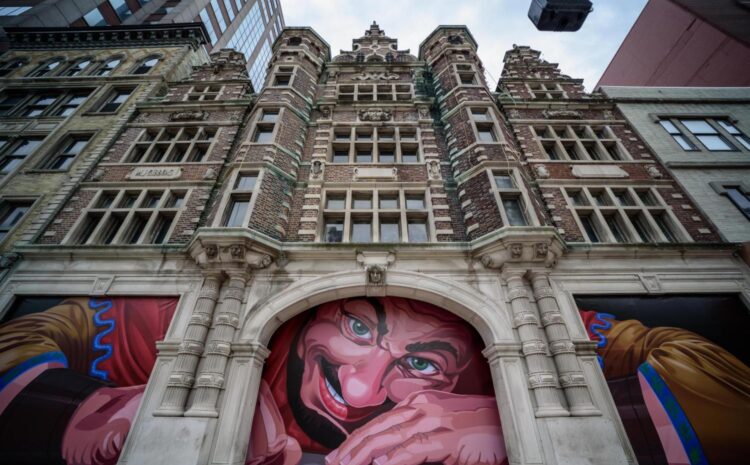
The historic arcade is being revitalized by a trio of development groups and the support of the city.
For almost 30 years (from 1990 to 2019), the Dayton Arcade sat vacant. The once-bustling space became a ghost town, gathering dirt and crumbling. Several attempts to revive the space, which was built in 1904, burned hot and fast, the longest iteration lasting from 1980 until 1990.
Now, a collaboration between real estate developers Cross Street Partners (based in Baltimore, Md.), Model Group and McCormack Baron Salazar hopes to make new history with the “most transformative project in America,” according to The New Localism, a national urban development thinktank.
The plans for the Dayton Arcade come in two phases: First, the South Arcade will be transformed into an innovation hub, restaurant and retail spaces, public event venues, and 110 apartment venues, which include a provision that puts income restrictions on a portion of the units, ensuring affordable housing for artists and entrepreneurs.
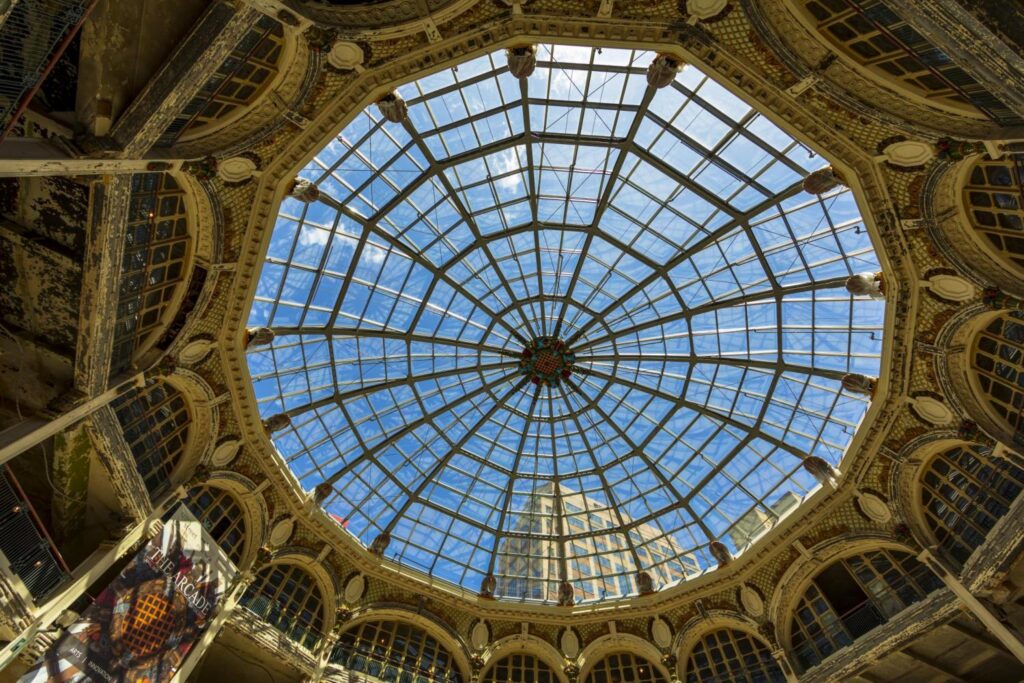
The second phase, the North Arcade, will include a shared commercial kitchen program, marketplace retail and restaurant environment, and micro-lofts for hospitality user space, according to the Dayton Arcade website.
“Waking the Giant,” a documentary on the Arcade produced by PBS, explains the journey, which ends on an uncertain note with the beginning of COVID-19 . We know now, though, that the work on the Arcade is coming to a head.
“Understanding the pandemic was as challenging as the pandemic itself,” Dave Williams, the senior director of Dayton’s Cross Street Partners, says. “We’re considered essential workers so construction did not stop. We just had to figure out how to keep going.”
The revitalization of the Arcade is part of a bigger picture and goal of the Dayton community. While downtown Dayton continues to transform formerly vacant properties into adaptive reuse mixed-use spaces, official hope that breathing life into the historic Arcade will call back residents, jobs and visitors to the city’s center. The Arcade is just one facility that’s part of a nine-block redevelopment plan, which also includes the city’s recent Levitt Pavilion addition and plans for renovating the Dayton Convention Center. Each piece of downtown’s renaissance is a link to existing and future development.
“[Dayton Arcade’s] architecture and the fact that it was a mixed-use development [make it so unique],” Williams says. “The more that happens, the more vibrant downtown gets [and] the more exciting it becomes , [revitalization will] sort of feed upon itself.”