

How Dayton spawned the sound of summer
“Pshhh!” “Tsssk!” “Fwshawww!” However you spell it, it’s the sound of summer: the peal of a pop-top cracking a cold can.
The pop-top, the umbrella term for the various tab openers that have graced the crowns of cans over the last 60 years, is a patently American invention. It can be heard at cookouts and concerts, block parties and ball games. But it wasn’t heard at all until Ermal “Ernie” C. Fraze, a Dayton inventor, found himself at a 1959 picnic, peeved and unable to open his beer.
As legend has it, Fraze was picnicking in Dayton when he forgot his church key, the small, double-edged metal tool found in many kitchen drawers. One side is triangular tipped for piercing metal cans, the other rounded for opening bottles. (The bottle-opener side resembles the handle of an old-fashioned church key; hence, the name.) Without a church key, Fraze got creative and used the fin of his car to open his can. But he was exasperated that he needed a separate tool to drink beer. So, he began dreaming of a self-contained opener.
The pop-top may seem like a simple invention. But it took over 150 years for the gadget to finally cap our cans.
Of Cans and Their Openers
In 1810, English inventor Peter Durand patented the first tin-coated iron cans. Early cans, a niche item, were opened with a chisel and hammer. As the commodity caught on in the mid-19th century, American inventor Ezra J. Warner, spotting a need, designed the first can opener: a blade that sawed a circle around the lid’s rim, leaving a sharp metal edge in its wake. Patented on January 5, 1858, Warner’s invention aided Yankee troops during the Civil War. Sixty-eight years later, on May 20, 1926, Charles A. Bunker invented the modern can opener.
But these openers removed the can’s entire lid, which is necessary for opening, say, beans, but gratuitous when cracking a beer; for that job, a church key suffices. And that’s why, in 1959, while picnicking in Dayton, Fraze was peeved when a church key stood between him and his beer.
The Dayton Picnic Fiasco
In the 1950s, when opening a beer, drinkers punctured a triangular hole in either side of a can with a church key. One hole for drinking, the other for airflow.
Had Fraze remembered his church key at that 1959 picnic—had he never been forced to wield his car fin as a can opener—we might not have the modern pop-top. But the owner of Dayton Reliable Tool Company, a machine tool business, did forget his church key, and while the episode maddened him at the time, it had him uttering that age-old inventors’ creed: “There must be a better way.”
Tinkering with the pop-top, Fraze found his answer in a rivet, the small metal pin that bolts the pop-top to the lid of the can. When lifted, the bolted-down pop-top tab is transformed into a lever that breaks a prescored metal sipping hole near the edge of the can—right near the lip, where the drinker sips—making an unmistakable sound. Unlike the push-in-fold-back tab we know today, the first pop-top design, the zip-top (also known as the slip-top and snap-top, among other names), was a pull-off tab; it was detached from cans and thrown away. As Fraze recalled in a 1987 speech, it was after drinking an after-dinner coffee at The Pine Club, the storied Dayton steakhouse, that he awoke in the middle of the night. Overcaffeinated in the predawn darkness, he solved the riddle of the pop-top.
“I personally did not invent the easy-open can end,” Fraze told The New York Times in its July 6, 1963, edition. “People have been working on that since 1800. What I did was develop a method of attaching a tab on the can top.”
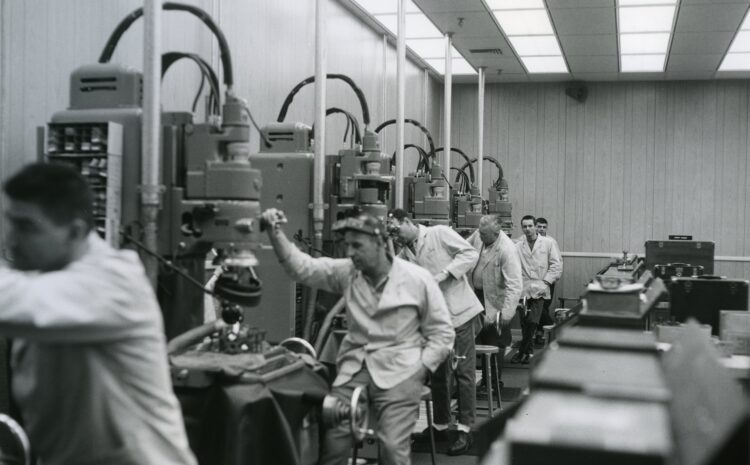
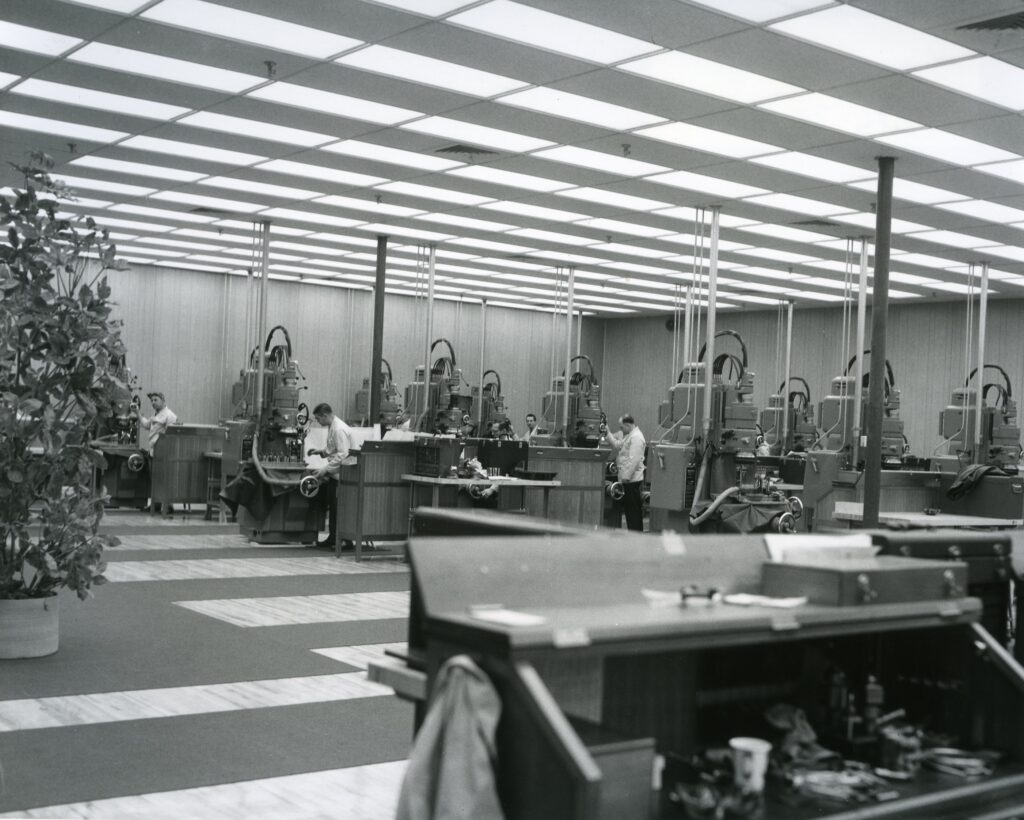
Fraze, who leveraged both his equipment and business connections at Dayton Reliable Tool, sold his first pop-top design, the zip-top, to the Aluminum Company of America (Alcoa). Alcoa then fastened Fraze’s invention to Iron City Beer cans. From the early 1960s to the early ‘70s, the zip-top was the world’s go-to tab. Still, the pull-off zip-top left consumers holding a razor-sharp piece of detached aluminum, wondering where to trash it. Those who lived during its heyday may remember the zip-top and the havoc it wreaked well.
Zip-top Cons
In the ‘60s and ‘70s, Fraze’s zip-top littered the streets and sidewalks and beaches of America—so much so that the invention found its way into Jimmy Buffett’s 1977 tropical-rock hit, “Margaritaville.”
I blew out my flip-flop
Stepped on a pop-top
Cut my heel
Had to cruise on back home
But Fraze’s zip-top created problems beyond litter. On September 14, 1974, The New York Times reported, “The accidental swallowing of tabs and rings from beer and soft drink cans is becoming a serious medical problem. Beverage consumers swallowed the aluminum pull tabs and rings, which lodged in the esophagus, or gullet, and required emergency surgery for removal … immediately after the tab is pulled many people drop the metal ring through the slot into the full can before drinking the contents. This is the procedure that many environmentalists have advised the public to do as a means of reducing the litter problem and protecting wildlife.”
Tab Trials
In the mid-1970s, to address the zip-top’s health hazards, planetary threats (and Jimmy Buffett’s blown-out flip-flops), Coors debuted the short-lived push-tab can, a dubious device that had drinkers, often inebriated, poking their fingertips through a sharp two-holed metal can (again, one hole was for drinking, the other for airflow). Formed by pushing down a circular piece of prescored metal, the sharp holes of the push-tab had unlucky drinkers imbibing beer infused with fingertip blood.
Finally, in 1976, Daniel F. Cudzik, an engineer with Reynolds Metal Co., patented the “Stay-On-Tab,” the push-in-fold-back tab we use today. Instead of ripping the pop-top off, the drinker breaks the prescored metal sipping hole, then folds the tab back, allowing it to “stay on” the can. The following year, 1977, Ermal Fraze patented his version of the “Stay-On-Tab,” the “Easy-Open Ecology End.” Soon, a nasty patent battle ensued, that ultimately fell in favor of Cudzik.
Still, Fraze was the progenitor of the pop-top, the forefather of the modern tab. After his invention changed the world, he remained chief executive of Dayton Reliable Tool Co. until his death on October 26, 1989.
Today, his company, now known as DRT Holdings, is focused on metal packaging, custom machining and the aerospace industry. Still headquartered in Dayton, DRT has 10 facilities worldwide.
Thanks to the ingenuity of Dayton’s own Ermal “Ernie” C. Fraze, we now find ourselves, ice-cold can in hand, listening to the sound of summer: “Pshhh!” “Tsssk!” “Fwshawww!”
