

All-boys, all-girls or co-ed Catholic school education provide different benefits
In the Archdiocese of Cincinnati, there are a host of options for where to send your kid to Catholic school. Across 19 counties in western and southwestern Ohio, there are 110 schools in the Archdiocese that serve more than 40,000 preschool through grade 12 students. It can be difficult to know what will be best for your child, but weighing the benefits of an all-boys, all-girls or co-ed experience can help narrow it down.
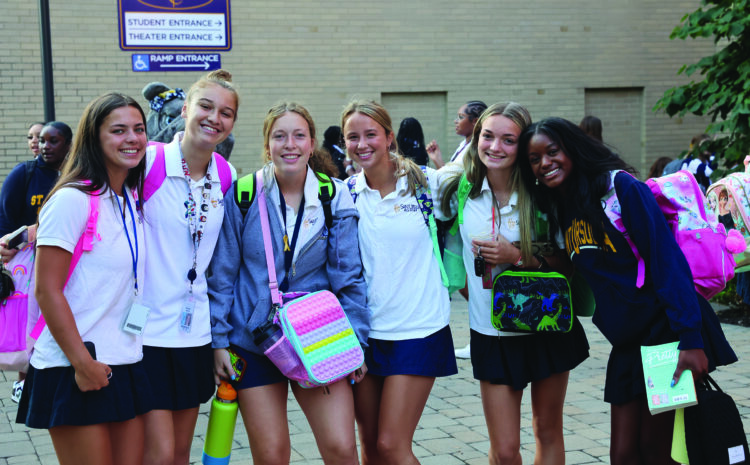
An All-Girls Education
Lelia Keefe Kramer is the president of St. Ursula Academy, an all-girls Catholic school in the Walnut Hills neighborhood of Cincinnati. Kramer says that Cincinnati has a lot of great options for all-girls, all-boys and co-ed Catholic schools, which is “really rare.”
At St. Ursula, though, the students are receiving unique opportunities. “Every girl that attends St. Ursula has the ability to be a leader, whether it’s a club or organization,” Kramer says. “That speaks to their ability to learn leadership skills.”
Kramer says the girls are encouraged to branch out in elective classes and can ask staff members to start clubs. Recently, a few freshman students asked Kramer, who used to work in corporate America, if she would moderate a Women in Business club. A year later, the club has 50 members.
Starting in the fall, St. Ursula will be partnering with the University of Cincinnati to have a professor visit to teach a college course on entrepreneurship. The girls will receive three college credits for this course.
St. Ursula matriculates 100% of their students to college and, on an average annual basis, the students receive about $20 million in scholarships, according to the school.
As compared to a public school, Kramer says the biggest value of a Catholic school education is the “faith formation.” Kramer, who attended St. Ursula and sent her daughters there, knows this firsthand.
“That looks different to many girls,” Kramer says. “The girls do a really great job embracing what works for them spiritually, and we offer the opportunity for the girls to really blossom as faith-filled young women.”
An All-Boys Education
La Salle High School, on the northwest side of Cincinnati, is an all-boys Catholic school. Its president, Mike Overby, is a ‘91 graduate of the school, as is the director of Campus Ministry, Chris Winiarski (‘96). They know the value of La Salle for young men in the area.
At La Salle, the students receive “a deeper understanding and response” to their “cognitive, social, emotional and spiritual needs.”
There is also a “refined focus” on the needs of La Salle students to equip the teachers and staff to respond in both learning and spiritual engagement best practices for the young men who attend the school.
Overby and Winiarski share that the value of a Catholic school education, specifically an all-boys education, is that it is based in the Catholic faith, it is a high-quality alternative to public education and there is a vast alumni network, many of whom work at the school. At La Salle, 41% of the staff and 88% of the leadership are alumni. Additionally, nearly 61% of the full-time staff are male, which helps in the goal of teaching and fostering good men.
There are retreats each year for the students, and all students must obtain 60 hours of community service as a graduation requirement. Mass, prayer service and reconciliation are also offered throughout the school year. Additionally, La Salle has a mentorship program, where every student is paired with an adult staff member who the student can talk to, receive guidance from and help hold them accountable outside of the classroom setting.
“[This is] helping them reach their full potential in mind, body and spirit,” Overby and Winiarski say.
A Co-Ed Education
Chaminade Julienne High School in Dayton serves as an example for co-ed education, especially as it’s coming up on its 50th anniversary of becoming co-ed. The staff, mirroring the student body, is also about 50% male and 50% female, according to its president, Dan Meixner, an ‘84 graduate of the school.
“The benefits of a co-ed educational experience, particularly in a Catholic school, are that students can learn best when they’re learning with and from other students whose life experience isn’t necessarily the same as theirs. For us, that includes socioeconomic, racial and gender diversity,” he says.
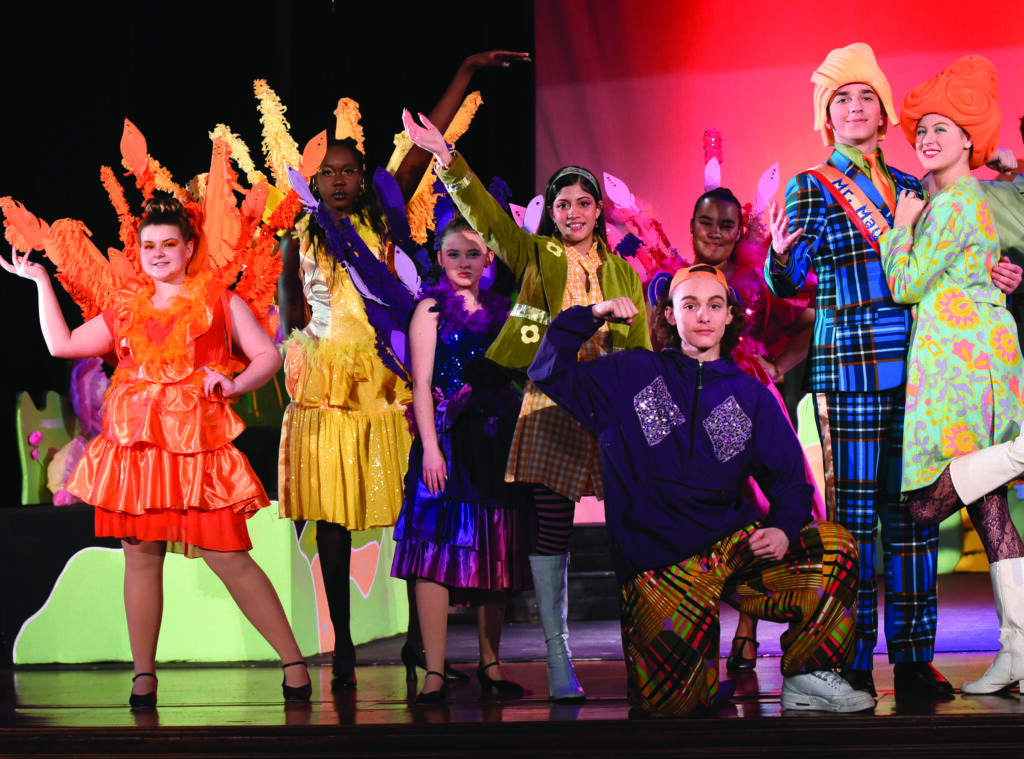
Chaminade Julienne attracts students from 52 zip codes around Dayton and 75 different elementary schools. “That diverse experience is one of the elements of excellence for us,” Meixner says.
Despite the diversity of students, they all share a common commitment to a continued education after high school. Chaminade Julienne matriculates 97% of its students to college, which can be attributed to the environment the school has created. The school has a college and career counselor, who the students begin to talk to as freshman. Part of the school’s mission statement is to “create lifelong learners.”
Meixner acknowledges that there is “empowerment” in a single gender school like St. Ursula Academy and La Salle High School, but at Chaminade Julienne, he says, “Most of our effort is focused on building community with all of our students and then customizing that to meet the needs of each individual student.”
Making the Choice
Each schooling option has its unique benefits, but the common theme is faith formation.
“The idea of being in a place in which faithful life is nurtured and grown is very important,” Meixner of Chaminade Julienne High School says.
Overby and Winiarski share La Salle High School’s personal and student-centered approach, which helps their students reach their full potential in body, mind and spirit.
Kramer, of St. Ursula Academy, says, “When you’re looking through the lens of Jesus, it is easier to be patient and grace filled and I think that makes a Catholic institution really special whether you’re Catholic or not Catholic.”
If this aligns with your goals for your child’s education, you won’t have to second guess where you send them, whether it’s all all-girls, all-boys or co-ed education.
