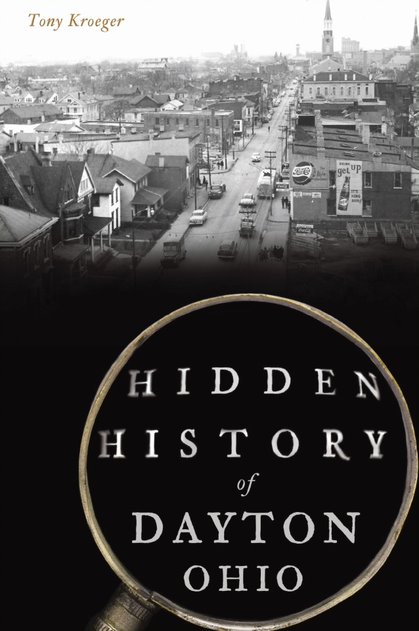

New book explores Dayton history uncovered in buildings and infrastructure
The story of Dayton’s community is as long and meandering as the rivers that shaped its early borders. Rumors and myth have shaped the region’s collective understanding of its past as much as photographs, documents and other physical evidence support or dismantle those tales. Hidden History of Dayton, Ohio, a new publication by local resident Tony Kroeger, seeks to identify those truths and legends that exist in architecture, streetscapes and other artifacts of urban planning. His book also adds important context to decisions that forever changed the landscapes and lives of Daytonians.
Hailing from Cincinnati and educated at Miami University and Clemson, Kroeger moved to Dayton from Greenville, South Carolina, to take a role in the planning division for the city of Dayton. Now the division manager for the department he devoted the past 15 years of his career to, Kroeger decided to codify the lessons absorbed from previous supervisors.
“I was very lucky when I started at the city of Dayton that I worked with bosses who loved [history],” Kroeger says. “It’s easier to identify the big names and big events in Dayton’s history, but they showed me all these other places with interesting stories behind them. That was hugely influential for me, to have been impacted by those guys.”
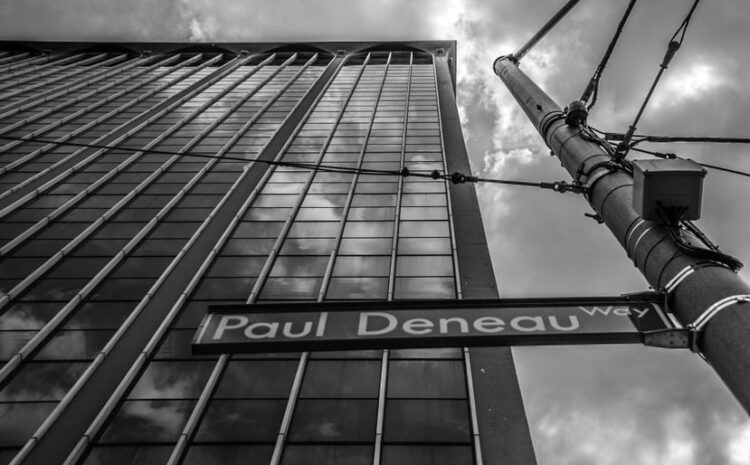
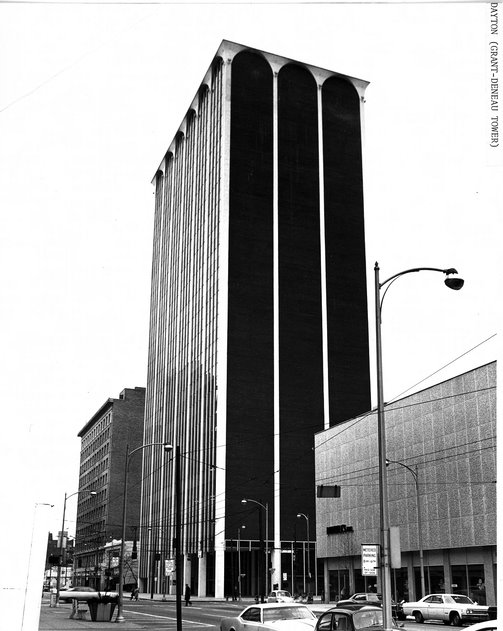
Kroeger remained a somewhat casual historian and storyteller, making presentations at local Pecha Kucha events. Pecha Kucha, or PK as it’s colloquially known, are community-driven presentations meant to be brief interludes on various topics. Each presentation’s brevity is enforced by a 20-deck slideshow in which each slide automatically advances after 20 seconds. Kroeger’s roughly six-minute-40-second presentations about Grant-Deneau Tower and “Dayton Obscura” were posted on the local PK website and caught the attention of Arcadia Publishing, based in South Carolina.
Tapped to pull together a larger collection of similar stories for Arcadia’s The History Press, Kroeger decided a book devoted to these little-known artifacts would be a productive application for his acquired knowledge.
“At a certain point you realize, ‘I know all these cool stories; what am I going to do with them?’” he reflects. “You can make connections for people about these places and reveal the stories behind them.”
Armed with institutional knowledge passed from within the walls of his office and supplemented with the wealth of historical artifacts from the Dayton Metro Library and Dayton History, Kroeger began assembling his city’s legacy as told through its buildings and infrastructure. As he dove into each strategized move investors and city staffers made that shaped Dayton’s skyline, Kroeger says the lessons of the past still ring true in his current role. “When you start to think about the collective impact and see the city through this longer view, and the domino effect of all these other choices people made, you start to realize every little decision you make [as a public servant] has long-reaching impacts,” he says. “You need to think through every decision completely and consider the longer-lasting impact of any development.”
From its very foundation, city leaders’ choices influenced the city’s future. The area was rich in limestone, and thus many historical buildings (such as the chapel at Woodland Cemetery) are built with limestone. Former limestone quarries still pockmark the regional landscape. Workers in downtown Dayton drive down grid streets that city founder Daniel Cooper platted in 1803. Remnants of the Miami-Erie Canal, which took more than 20 years to construct and was only in use a short time before being superseded by railroads, are scattered throughout the region’s landscape. Kroeger scrutinizes these relics with historical context to help the reader understand those decisions and their far-reaching effects.
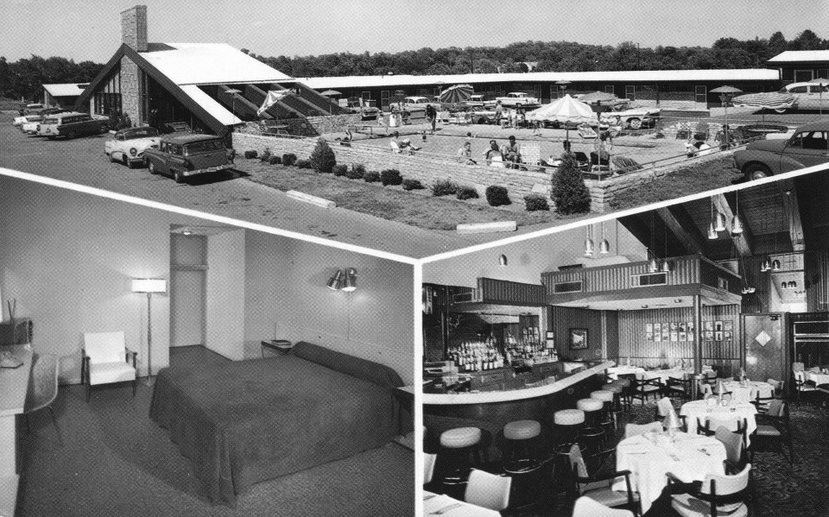
One of the most interesting and challenging periods in Dayton’s history—from an architectural and community planning aspect—is the midcentury legacy. Societal pressure to invigorate the city with modern structures begins to change the landscape. Monochromatic buildings from this timeframe reach into the sky with concrete and right angles and other Brutalist characteristics. New office towers climb upwards with 20, 22, 23, 27 and 30 stories. It was the drive for “urban renewal” during this time period that made the biggest impact.
Blighted properties were razed. Streets became wider, gobbling up homes and marginalizing non-vehicular travel. Highways ripped neighborhoods apart. “White flight” spurred disinvestment in the center city and fed sprawl in growing suburban neighborhoods. Even the iconic Dayton Arcade eventually succumbed to its own “mall-ification,” stippling the Flemish and Italian Renaissance architecture with mauve and turquoise accents.
People today have come to recognize what enduring hardships those modernization efforts had on communities—particularly in high-poverty areas and people of color. It is easy to castigate urban renewal and its proponents, but Kroeger’s narrative places those people and their decisions into historical context. “City leaders looked around at all the new stuff being built in the suburbs and people fleeing for those destinations,” he says. “Suddenly, everything around [downtown] feels old, antiquated or cramped.” Malls, suburban housing developments and office parks were competing with existing infrastructure, and city leaders found their central business district wanting.
The societal pendulum has swung in the opposite direction, at least for the time being. A renewed interest in historical properties and an attraction to cities’ density of amenities has stimulated economic growth in downtowns across the country. Downtown Dayton has enjoyed more than $1.5 billion in development projects over the last decade. But tastes change, priorities shift and new threats arise every generation.
Urban planning challenges still exist today. Balancing the needs of the community with opportunities to generate income will continue to keep civil servants like Kroeger on his toes. Despite the ups and downs over the years, Hidden History of Dayton, Ohio remains “a love letter to Dayton,” Kroeger says. “This was [written] out of love for the city and, I hope, contributes something to the knowledge base beyond the big headlines and prominent names. I hope people who read this see how history impacts their city in their daily lives.”