

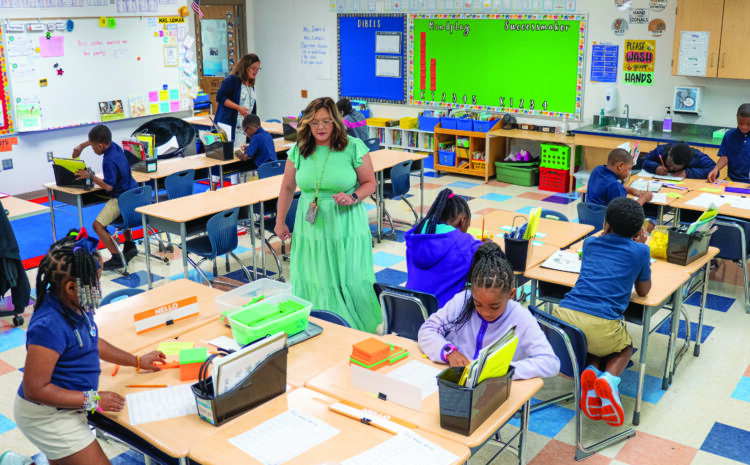
DPS adopts double teaching model as apart of COVID-19 recovery plan
The COVID-19 pandemic was felt in all aspects of life, but local schools took an outsized hit that many have not fully recovered from. As schools shut down in the spring of 2020, reopening became difficult. Many districts across the country struggled with creating plans for a full recovery that prioritized the needs of students, families and faculty.
In the Dayton Public School District, the district began formulating plans in 2021 for how to equitably bring all district schools back to where things were before the COVID-19 pandemic struck.
Alex Kincaid, director of Public Information for Dayton Public Schools, says, “After a year of disrupted learning due to the pandemic, it was crucial for the district to help students recover academically and get back on track.”
The district began the process of hiring about 100 new teachers, with the idea of doing something different. Now, each first, second and third grade classroom has two teachers.
While the benefits of the new double teaching model are plentiful, one clear and immediate plus is the reduction in the number of students per teacher. With two teachers in each classroom, it allows one teacher to specialize in math, and the other to specialize in literacy. Both teachers operate simultaneously, working with students in the classroom at the same time.
Classes are divided in half, one half working on math and the other on literacy, and then they switch. Each teacher gets to work in a more hands-on environment, working directly with students. Teachers get to work with both sections of students, switching which half of the class they work with after each lesson.
“The small group format allows students to be more engaged and allows teachers to provide more individualized attention,” Kincaid says.
With only one year of using this model, student growth has increased significantly. In many instances, growth has surpassed national averages and norms for grade levels. The model is designed to benefit students, but to also provide assistance to teachers, allowing them to work with smaller groups of students in a more learning-oriented environment.
The model is currently funded with funds from the Ohio Elementary and Secondary School Emergency Relief Fund, as a part of the district’s COVID-19 pandemic recovery plan. Kincaid says, “If it continues to be successful, it is likely that the district will continue to implement the model even after ESSER funds expire.”
