

Museum brings family fun to Bradford’s rail heritage
Due to its unique position where rail lines bifurcated heading west, the western Ohio village of Bradford became one of the most important junctions in our national railroad system. Trains could switch and take the northern route to Chicago and beyond, or they could switch and take a more southernly route toward St. Louis. In fact, Bradford was so strategic to the country’s Eastern rail system that at one time it was known as Union City Junction.
The Bradford Ohio Railroad Museum celebrates that history through interactive and family-friendly displays that make learning about Bradford’s rail heritage fun.
“The museum is located in the Bradford National Bank Building that was under construction in 1920 when the Bradford fire burnt down many of the businesses in the city,” says Larry Heisey, a trustee of the Bradford Ohio Railroad Museum (BORM). “We were founded in 2002 but moved into the building in 2006 to preserve and teach Bradford’s rail heritage to all ages.”
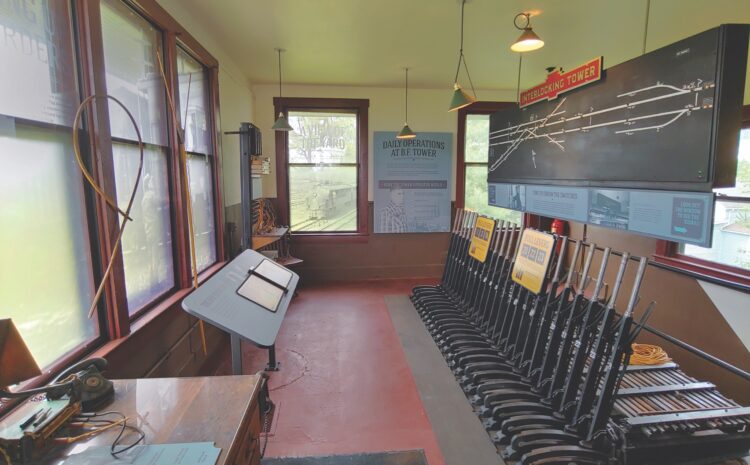
All three floors of the building feature interactive exhibits. The museum also includes the BF Tower, built in 1925 to replace an older tower called the BJ tower, both of which were used to control switches out of the large rail yard.
This museum is a treat, even for people who don’t have much interest in railroad history. The exhibits are award-winning, with the displays at both the three-story museum and the BF Tower winning awards as Best Exhibits in Ohio from the Ohio Museums Association. The museum is also incorporating new exhibits and is embarking on a new K-3 STEM curriculum, according to Marilyn Kosier, another trustee of the museum.
Heisey, who grew up just outside of Bradford, has a unique insight on both the museum and the village. Understandably, he has some favorite exhibits.
“The railroad might have left here in the ‘70s, but it literally built the town,” says Heisey. “And a large percentage of people in the town worked for the railroad.”
Because the lines separated at Bradford, a large rail yard facility grew. Rail employees would have to switch cars and reassemble trains heading both east and west.
“And because they were all coal fired back in the day, the engines all had ashes and cinders, which would have to be cleaned to get them ready for their next journey,” says Heisey. “Steam engines also are very complex machines, so they needed regular maintenance.”
While the museum celebrates industry, it also champions the cultural aspect of the rail industry and rail travel.
“One of my favorite displays is the Hobo Exhibit,” says Heisey. “It really teaches you about the life of the hobos who rode the rails. They were surprisingly well organized—it was a way of life. They also had their own language and would tell each other where they could get meals or articles of clothing.”
If you haven’t been there yet, this summer is a good time to visit. Sept. 9, the BORM is hosting its annual Railroad Heritage Festival, a family-friendly event that features food, rides, music and a variety of different attractions.
“We want to invite everyone to come to the museum and also encourage them to become members,” says Heisey. “We are always looking for volunteers, too.”
