

Best Schools 2023: Passion and purpose help students achieve their own success stories at Chaminade Julienne Catholic High School
Chaminade Julienne Catholic High School is celebrating its 50th anniversary and the school’s success story will continue throughout the 2023-2024 school year as the CJ community honors the past, celebrates the present and inspires the future—one student at a time.
Leading students to discover their “spark” is something Andy Taube has a passion for in his position as college and career coordinator at Chaminade Julienne Catholic High School. He defines a spark as a deep interest or passion that gives young people a sense of purpose, energy and joy in life.
“Helping our students identify and foster their sparks leads to greater academic, developmental and post-high school success,” Taube says.
He says planning ahead is a key part of students’ success in discovering their passion and taking an active role in shaping their future.
“Part of the reason I love doing this program is because I get to start talking to students about what their dreams are for their life, and when you start talking about that, you can almost see the light come on in them, and you can feel the excitement. So, having these conversations and helping students think beyond where they are right now creates an opportunity to talk about the importance and value of what they are doing, and where they are going, and that can drive success,” Taube says. “You can’t get somewhere if you don’t know how to get there.”
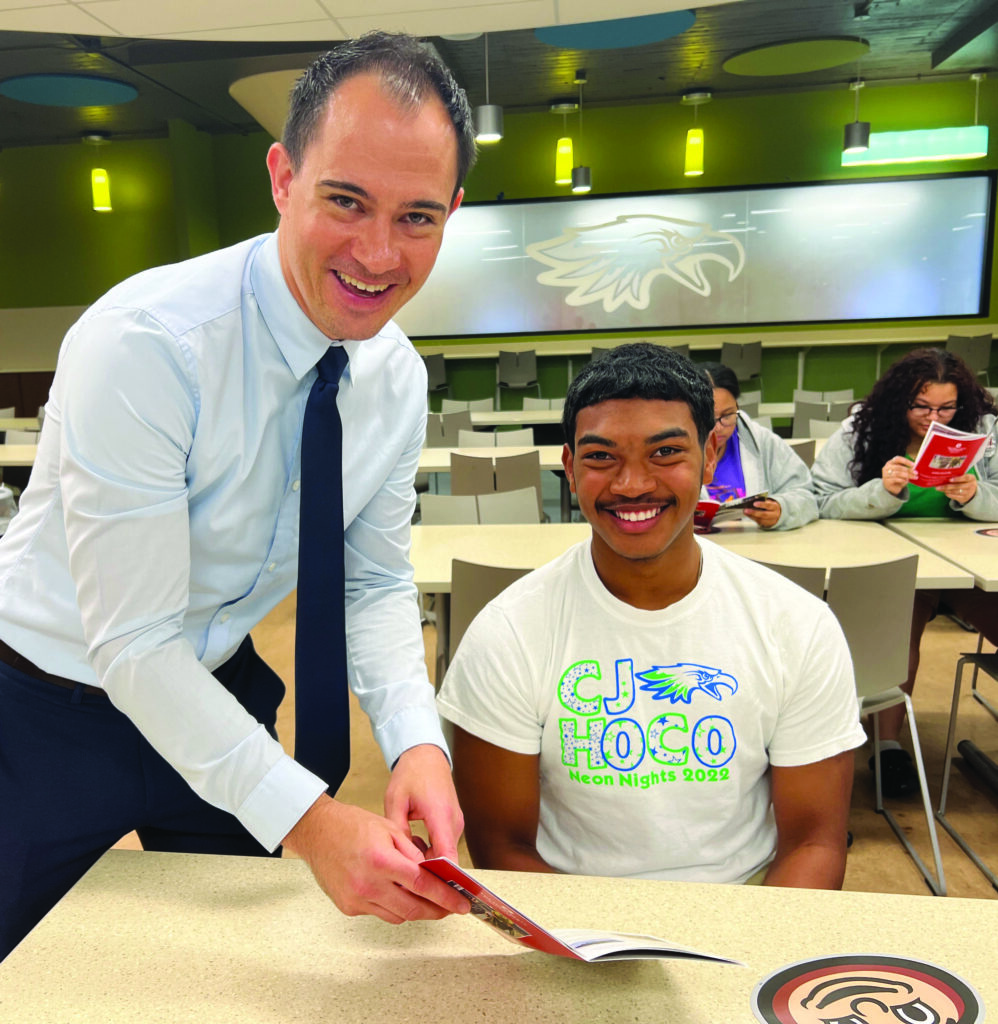
Post-pandemic, teachers found that students had countless questions about “What comes next? In order to better assist students with these big questions, and to help foster their growth and provide ongoing guidance, Jama Badinghaus, chair of the school counseling department, developed the concept for the position of college and career coordinator. Taube started in his position last year.
“My hope is to create a space for students to explore a deeper sense of vocation and that students will graduate more confident in who they hope to be for the world, not just what they intend to do in it,” Badinghaus says.
The program helps students better understand themselves, and explore how their individual gifts, talents and interests align with college and other post-secondary opportunities. Beginning the process early in a student’s high school career allows them to flourish not only in high school and college, but throughout their careers.
“One of the hopes for the program, through the activities I do with students, and the information I provide, is that I can help them create their road map for where they want to go, and without doing that, it’s easy for kids to get lost. There’s just so much information out there, and it can pull kids in so many different directions,” Taube says.”
Through the college and career-readiness initiatives at CJ, Taube is able to directly assist students and families with the often-complex realities of the college admissions processes such as FAFSA preparation, scholarship applications and the decision-making process to help students achieve the success stories they dream of.
With a focus of educating the whole person and thriving as part of a community, another program that is taking off at CJ is the SOAR program.
In order to create a space for the important life lessons of social and emotional learning, self-discovery, understanding others, and building fellowship, community, and meaningful relationships among one’s peers, the school counseling department—assisted by Carlos Stewart, director of mission and inclusion; Karen Long, ECHO counselor; and Libby Harbaugh, Spanish teacher, department chair and moderator of Students in Action—implemented the SOAR program.
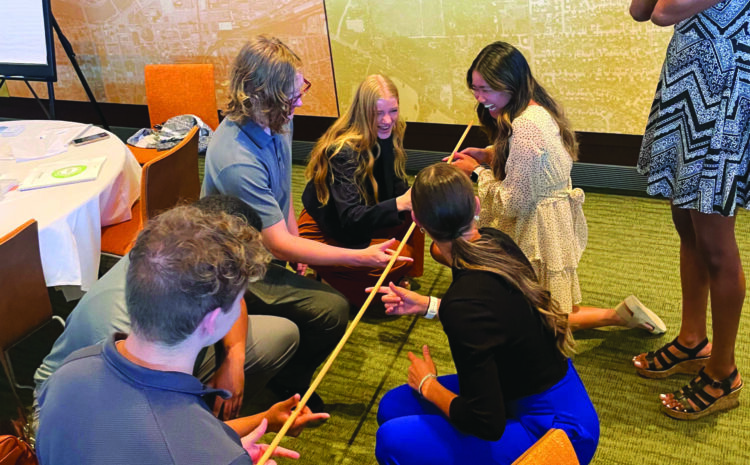
“This is our second year for SOAR. We piloted the program last year. Essentially, how it works is we have divided all the students in the building into small communities made up of about 20 students, and it’s a group of students from each grade level, so we have students in grades 9-12, and this year, there are two adults from the building in their group as well,” Badinghaus says.
By the end of this year, students will have an opportunity to participate in approximately eight “SOAR days” with their SOAR group. Students come to the group at different stages in their high school journey. The program encourages community between classes, gives students a chance to learn from their peers and provides various leadership opportunities. On average, the SOAR groups meet on a monthly basis.
“In those times, it’s a special period that’s designed for students to address more social-emotional or non-academic curriculum. The time is divided into a few different goals,” Badinghaus says. “There’s an element of fun, community-building and fellowship that exists in that space. There’s also some skill-building that’s included in that curriculum, so it’s looking at helping them develop some of the core competencies of social-emotional learning, and things like self-awareness, decision-making skills, relationship skills and executive-functioning skills.”
Also, in the group, there’s time for dialogue and reflection. There are a number of different themes that touch on social issues, or issues that are relevant to young people within society.
The topic for each session varies, but overall, the goal is to encourage students to learn more about themselves and one another in order to teach empathy, compassion and respect. There are icebreakers, discussion questions and activities that help to lead the discussions.
This year’s topics have covered active listening, group dialogue, the power of play, the importance of our name and what we stand for, and how to prioritize what matters most.
The program fosters an appreciation and understanding of the value of each person’s perspective, and how that impacts who they become in the world.
“Students will be able to go out into the world and value voices different from theirs, build their own communities because they see value in that, and open their minds to understanding and continuously learning what it means to love and respect all people,” Badinghaus says.
The goal for the program is for students to learn and understand how to treat and care for others, and it enables them to demonstrate that care through not only their actions, but their faith.
