

Kettering’s arts and cultural center blasts into 2024 with fresh renovation, programming and events
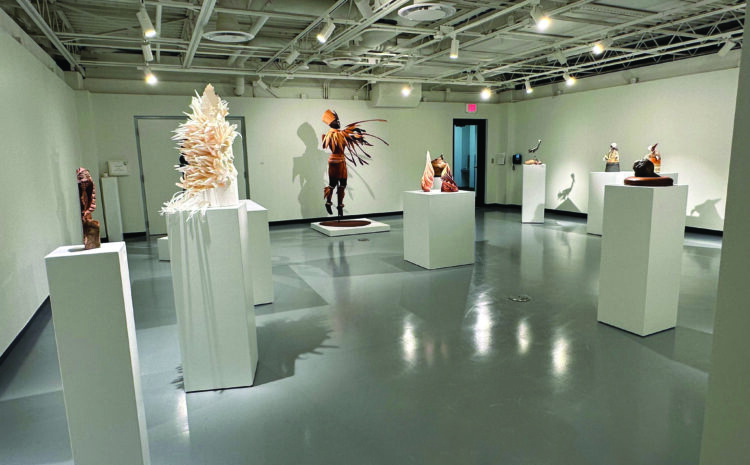
One of the special amenities the city of Kettering offers its residents and guests is a robust art space—Rosewood Arts Center. Rosewood presents more than 400 classes annually for youth and adults, as well as contemporary art gallery exhibitions, theater performances, artist studios and special events, including the annual fine arts festival Art on the Commons.
Humble Beginnings
“Rosewood Arts Center exists because of the forward—and practical—thinking of Kettering leadership,” says Shayna V. McConville, division manager of cultural arts for the city of Kettering. “For decades, at least since the 1960s, art classes, exhibitions and performances were happening all over Kettering, from classes in the Rose E. Miller building, to exhibitions at the City Government Center, to the Theatre Under the Stars amphitheater behind Fairmont High School.”
In the early 1980s, a handful of Kettering City Schools were decommissioned to match the decrease in population, and the city saw an opportunity to centralize programming that was already offered through the recreation department and the Kettering Arts Council.
“We began leasing Rosewood Elementary in 1983, and it transformed into Rosewood Arts Center for its first full year of operations in 1985,” McConville says.
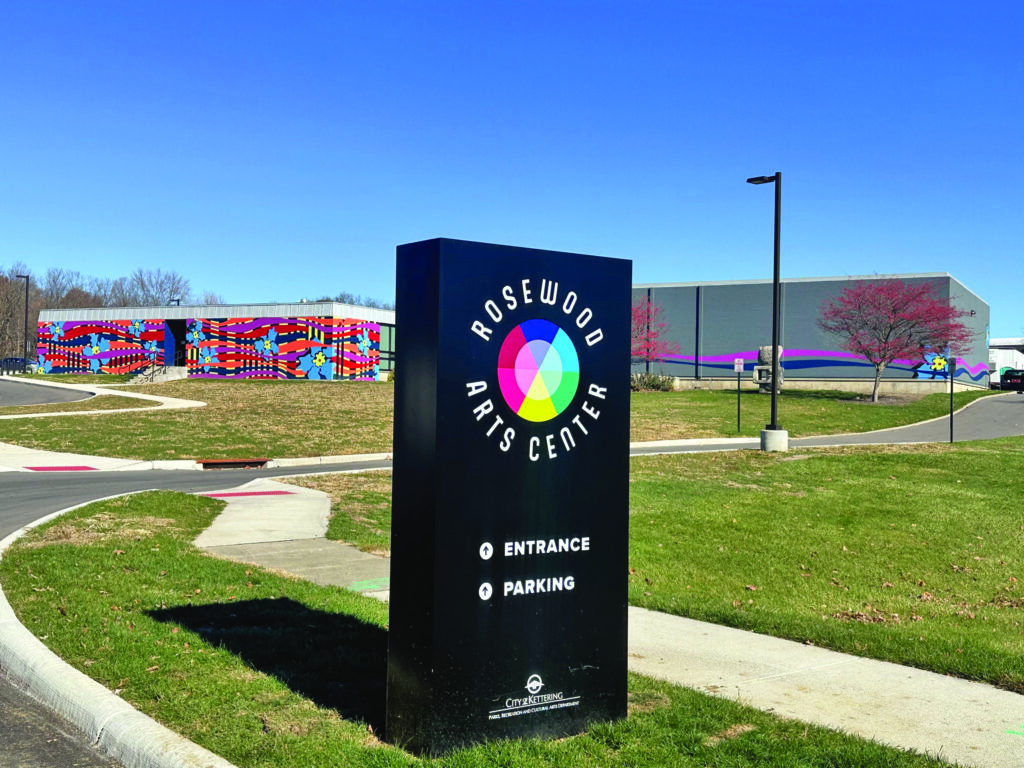
Today, visitors will find Rosewood located within a repurposed 1965 elementary school, designed by Kettering architect Eugene Betz, located at 2655 Olson Drive in Kettering. Since leasing the space in 1985, Rosewood has provided exceptional arts programming including hundreds of educational programs and classes each year, as well as artist studio spaces, exhibitions, performances and special events.
Sculpting a New Future
Rosewood recently wrapped up a two-and-a-half-year renovation process that was the first major capital improvement program for the arts center. The facility’s facelift included infrastructure improvements (mechanical, electrical and plumbing) and the creation of more efficient and customized learning environments for various artistic disciplines.
“We received a $450,000 Cultural Arts Grant from the Ohio Facilities Construction Commission to begin updates, and a financial commitment from the city and the Kettering Parks Foundation,” McConville says. “Through community and stakeholder feedback and surveys, we expanded educational space for core program areas including youth arts instruction, dance, ceramics, painting and drawing, and specialized spaces for printmaking, glass and metals and created a new performing arts space in the school’s former gymnasium.”
Other tangible attributes of the renovation include air-conditioning (a must-have for displaying delicate works in the gallery space), a new ADA-compliant entrance with direct access to Rosewood’s galleries and beautifully updated spaces and a theater for learning and experiencing creativity.
Local artist and Kettering Arts Council board member Thom Meyer says this investment is important for the community. “My wife and I continue to be involved in promoting both the visual and performing arts through our vocal and financial support. We both sit on boards and committees that present arts experiences for the greater Dayton area,” he says. “The importance of the arts is present in our everyday life. It holds up a mirror for humanity, giving us a better understanding of ourselves, showing both our positives and our flaws. Now more than ever, we need to look at our collective humanity.”
Challenges and Opportunities
Rosewood and its artistic counterparts elsewhere in the community suffered major hits to programming as a result of COVID-19. But thanks to pent-up demand (and perhaps helped along a bit from getting stir-crazy during lockdown), Rosewood has since regained the community’s attention.
“While our planning process was upended, we had already been looking carefully at how to provide our services better to our most in-demand programs,” McConville says. “In fact, since the pandemic, we’ve seen a huge growth in numbers on our class waiting lists, and a more passionate response from many of our students to being involved in our programs.”
McConville says that this demand made the renovation all the more timely, allowing Rosewood to expand its offerings by adding new classes and increasing the number of seats in some of the most popular programs.
The arts center strives to serve its greatest masters—residents of the city of Kettering—while also reaching beyond city limits to connect to more Dayton-area visitors. McConville says it’s important for the organization to create experiences that are accessible to all people, and to reach audiences in meaningful ways.
“This is integral to how we plan and evolve; we depend greatly on feedback from our community, as well as data and surveys, and work with a variety of resident advisory groups to guide our efforts,” she says. “The renovation of Rosewood is a direct result of these actions, particularly in terms of accessibility. Programs such as our public art collection are also direct results of this feedback from residents and stakeholders.”
Meyer says one of the best ways for new guests to connect with the center is to try a class or program before checking out a gallery exhibit. “Even if you’ve never done this before, the experience will show you how approachable art is,” he says.
Looking Ahead
Everything Rosewood is able to offer, and the programs and amenities the space will offer with the renovation, is the culmination of years of conversations with instructors, staff, artists and field trips to peer facilities, observing their best practices.
“It took a long time to make this renovation happen, but it allowed us to really think through the best solutions for our programming and operations,” McConville says. “We are already getting calls from other art facilities around the state asking for advice and information on how we do what we do!”
With the renovation complete, Rosewood will debut Kettering Children’s Theatre productions and all theater education programs in its new, state-of-the-art theater space. “The transformation of our theater with the renovation is probably the most dramatic,” McConville says. “It is a fully equipped, comfortable and professional space to experience the performing arts.”
The newly established glass, metals and printmaking studios will offer a series of classes, workshops and meetings that will bring people of all levels of experience together to learn and inspire each other in the coming months.
Photography fans have more to look forward to in 2024. Rosewood will host two special photography exhibitions in its gallery in conjunction with the FotoFocus Biennial, featuring work from Michael Reese from Atlanta and Cara Lee Wade from Fort Wayne, Indiana.
“These exhibitions were conceived of by Paula Willmott Kraus, our gallery coordinator, who passed away suddenly in November 2023,” McConville says. “These exhibitions hold a great deal of meaning to us, as the gallery program meant so much to Paula, who was one of the most brilliant photographers in the Dayton region.”
Lasting Impacts
Rosewood touches the lives of thousands of people each year, according to McConville. “Every day I witness something that confirms this—like today, as I sat at the front desk for an hour, I watched someone dancing with joy at how a mug turned out when it came out of the kiln, saw a parent’s amazement at her child’s progression in painting and I talked with a husband and wife coming in to see the prints made by Japanese artists on view in our gallery,” she says.
McConville says Rosewood also creates economic opportunities for those who make art to support their livelihood.
“We offer spaces and equipment that many artists do not own, including kilns, an intaglio printing press, photo enlargers, a dance floor and more. Artists regularly work in Rosewood’s studios, focused on continuing their own practice or projects independently,” she says. “We employ more than 60 artists each year, including theater directors, art teachers and studio managers. In addition, we exhibit the work of over 100 artists a year in our gallery, with the majority being regional.”
