

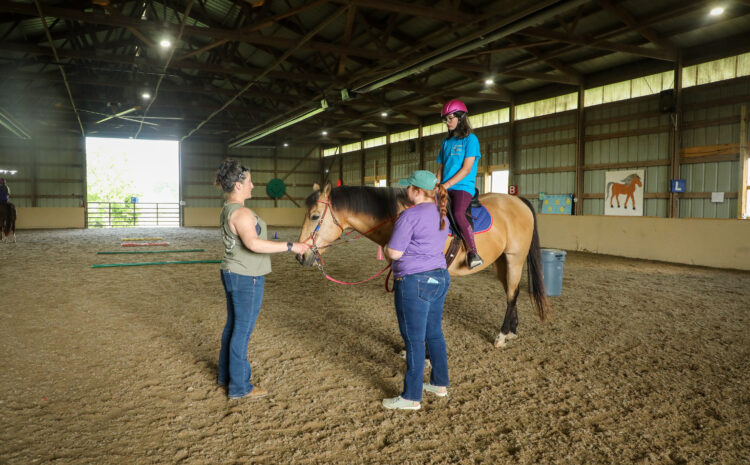
Therapeutic Riding Institute helps individuals with challenges work toward their goals
Deanna Hamm has always loved horses. She started riding as early as 7 years old and even once owned a horse. But when Hamm was an adult, she started experiencing chronic pain and mobility issues and had to stop riding. She would eventually be diagnosed with Ehlers-Danlos Syndrome (EDS), a condition in which one’s body produces collagen that is too fragile and elastic. But Hamm has found her way back to horses, and to improved mobility, thanks to the Therapeutic Riding Institute (TRI) in Spring Valley.
“Therapeutic riding’s been the biggest thing that has helped me [in] improving my mobility,” says Hamm. “Because now I can walk around the house unassisted, which I wasn’t able to do before.”
TRI was founded in 1973 to help people of all ages with a variety of physical, emotional, cognitive or behavioral challenges improve their physical and emotional well-being. It hosts therapeutic riding programs, in both group and individual settings, and summer camps to help attendees reach their goals. While different from clinical therapy, therapeutic riding can improve core strength and balance, enhance cognitive skills and provide a calming, soothing environment in a supportive setting.
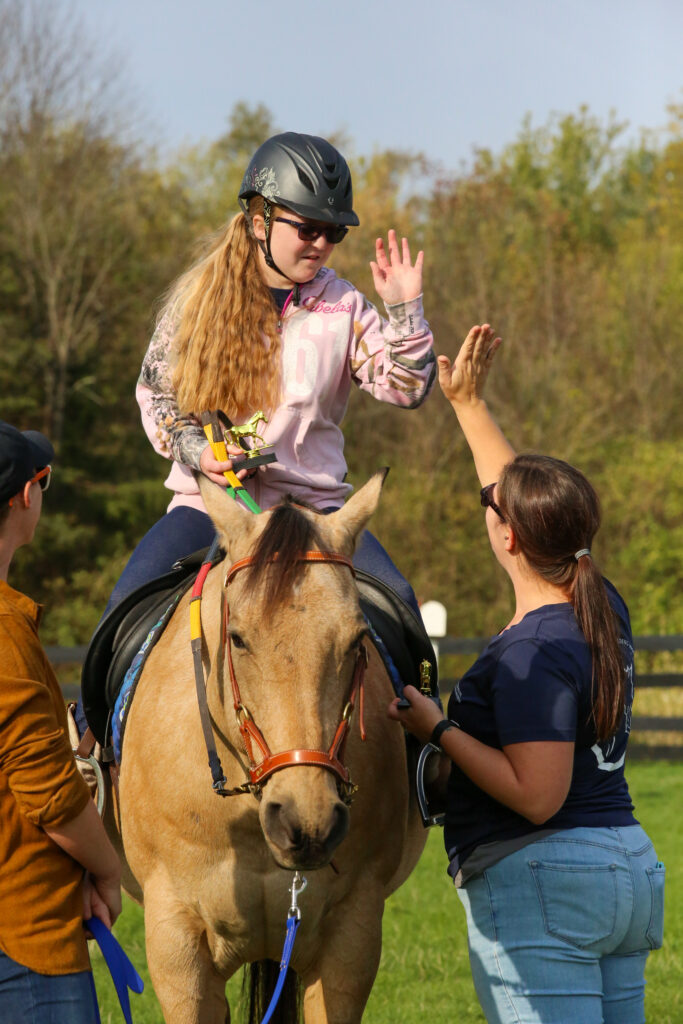
“This is a place where anyone [who] is diagnosed with emotional, physical, cognitive or behavioral [conditions] can come and be able to be as independent and involved in their own skills as possible versus just being told what to do,” says Stephanie Slepicka, TRI volunteer manager, certified therapeutic riding instructor and equine specialist in mental health and learning. “We could provide that by adaptivity, whether it be equipment with the tack, whether it be support from our wonderful volunteers, whether it be having the correct horse to give the correct input and have it be the correct height and be the correct width.”
Slepicka says that each program is tailored to meet the person’s specific needs, whether they be related to autism, ADHD, MS or other conditions.
“I’ve created a regimen [for Hamm] where, knowing that the flexibility and the body strength was a huge concern for her, … we begin every session with about 20 minutes of stretching,” says Slepicka. “And what that has done is helped give her consistency and give her some confidence, too, that I’m just not rushing her into anything, which is the last thing that I want to do.”
For Hamm, who co-founded the nonprofit EDS Awareness with her father, the therapeutic riding has been life changing. “It’s apparent to everybody in my life,” she says, “My fatigue doesn’t kick in as fast as it used to because I’m developing more muscle. I’m able to do more.”
Adds Slepicka, “As I’ve watched her and I’ve watched her ride, … I’ve watched her mobility improve. That’s my job to make sure that I can provide whatever they need for improvement. … I love being a part of that process and watching the wins and I love helping guide them because I don’t do anything. They’re doing the work. I’m just providing guidance and they’re trusting me to do it.”
