

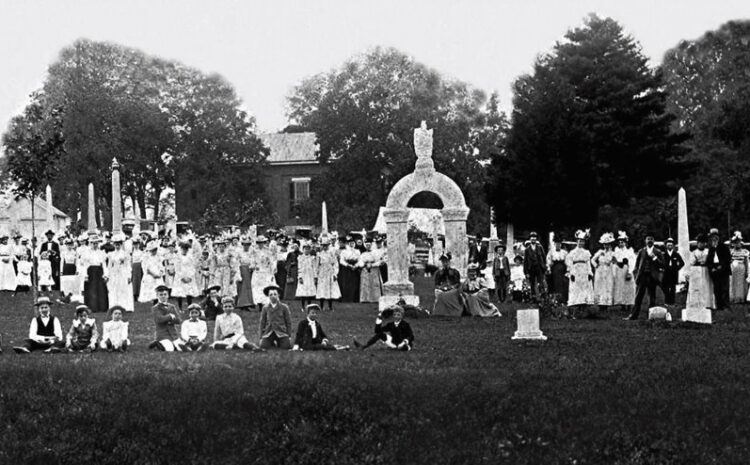
David’s Cemetery embraces its past while looking to the future
The Miami Valley is full of history, and that is particularly true at David’s Cemetery at 4600 Mad River Road in Kettering. The cemetery, which will be celebrating its 200th anniversary in 2026, is in many ways a reflection of the events and changes that have occurred in the region since its founding.
The cemetery was first started in 1826 when Christian Creager, a farmer, was approached by Rev. David Winters, a circuit rider preacher who served area churches. He asked Creager to donate the land for a cemetery and church. Dayton itself was only founded 30 years prior, in 1796, and the population was beginning to grow. And in just a year, construction would start on the Dayton-Cincinnati Canal, which would bring even more growth.
Creager agreed to donate the land, and the cemetery would be named David’s Cemetery after Winters. The first burial was recorded on Aug. 5, 1831.
Between 1891 and 1945, the cemetery would purchase 36 acres of land to keep up with the growing population. During these years, Dayton became a center of industry. In 1890, the city granted more patents per capita than any other U.S. city. John H. Patterson formed the National Cash Register Company in 1884 and Charles F. Kettering would develop the electric cash register in 1906. And the Wright Brothers would invent the airplane in the early 20th century. The cemetery smartly acquired land after World War II, expanding its footprint before the surrounding area became part of the growing suburbs.
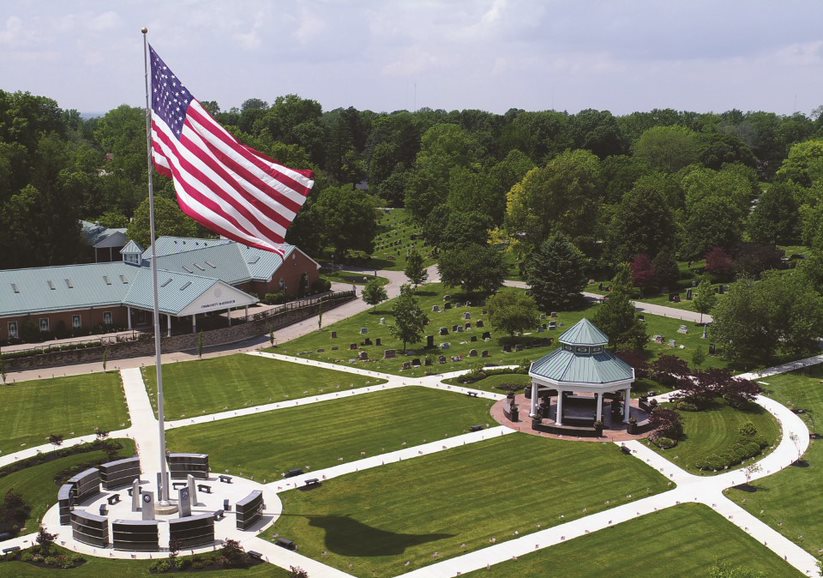
The Dayton area would hit its peak population in the 1960s, but David’s Cemetery continued to adapt to serve those who were here by adding more options. New mausoleums would be added to the grounds in 1983, 1991 and 2008. A cremation scattering garden called the Remembrance Circle was dedicated in 1990. In 2011, the cemetery opened David’s Columbarium to give those preferring cremation another option. And in 2015, Old Glory Plaza, a cremation area that memorializes members of the community, public servants and the beloved military, was built.
Over the years, historic residents of the Miami Valley have chosen to be buried at David’s Cemetery. Residents include Myron E. Scott, who developed the Soap Box Derby and came up with the name Corvette for Chevrolet; Harry Richard Black, who created the Mr. Clean mascot for Procter & Gamble and Smoky the Bear; Alison Clarey, Dayton’s first female surgeon; and Zerbe Bradford, one of the original six members and the primary draftsman of the Deeds Barn Gang. However, Steve Hopkins, the cemetery’s superintendent, says, “All loved ones buried at David’s Cemetery are the most famous to their families.”
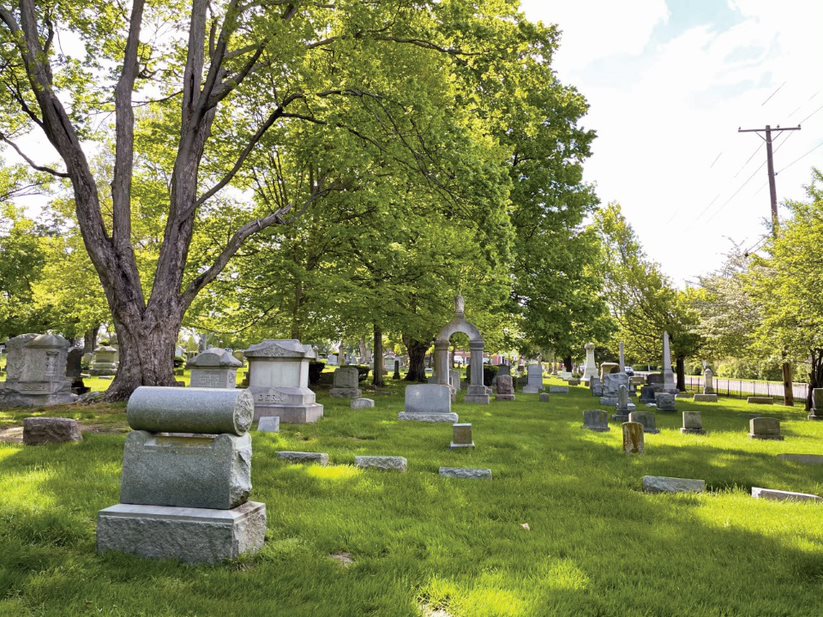
Today, David’s Cemetery covers approximately 55 total acres, with nearly 17 available for future development. It continues to meet the needs of the Miami Valley, offering ground burial, mausoleums, columbariums, ground cremation and a scattering garden.
“While some cemeteries simply record the past, David’s Cemetery proudly embraces its rich history while looking to the future. By evaluating the needs of our cemetery families and evolving burial options, we always keep in mind that our cemetery is for the living,” says Terri L. Schimer, marketing coordinator.
