

Spring Valley Academy brings global experiences to students inside and outside the classroom
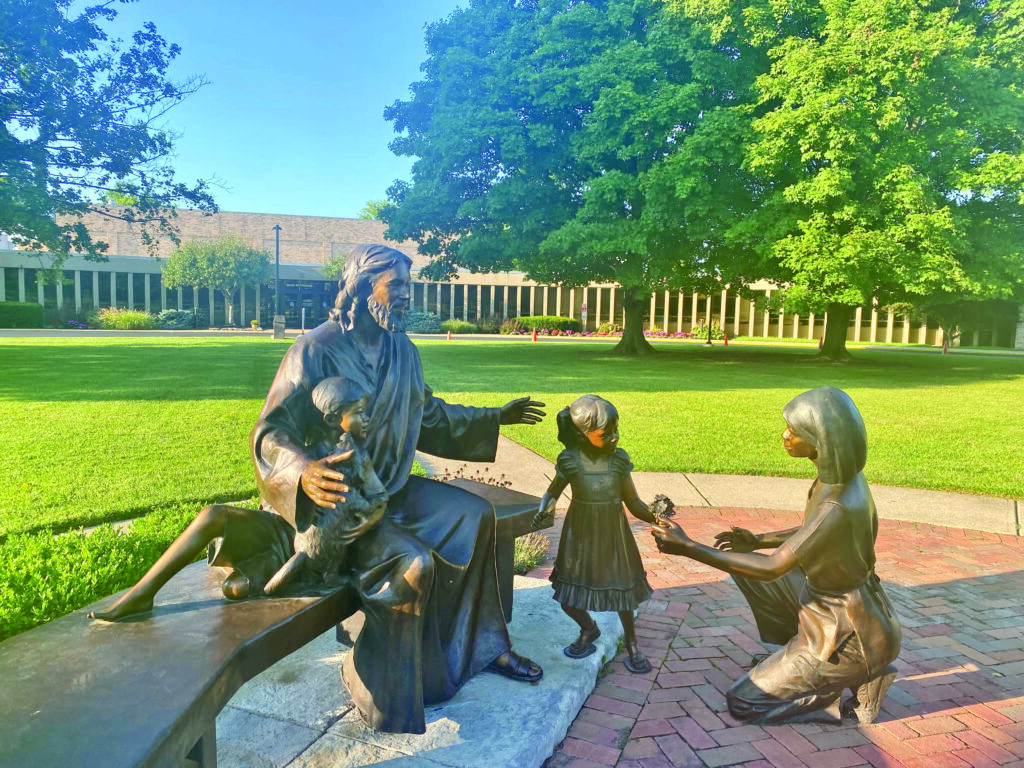
The first chapter of Spring Valley Academy (SVA) was written when local philanthropist Virginia Kettering volunteered at a Seventh-day Adventist hospital during a polio outbreak. She was so impressed with the quality of care offered at the facility that she decided her hometown of Dayton needed its own version. Virginia and Eugene Kettering opened Kettering Medical Center, named so in honor of Eugene’s father, renowned Dayton inventor Charles Kettering.
Kettering Medical Center recruited physicians and staff members from across the county, many of whom were themselves of the Seventh-day Adventists Christian faith. This influx of families to the region put a strain on educational resources, and some families decided to advocate for a new school— one that also valued their faith in the curriculum. “These seven original families were called the ‘Venturers,’ and they banded together to take out loans, and they purchased the land and raised funds to build the school,” says SVA Principal Darren Wilkins.
The original SVA building was finished in 1968, located on 50 acres in Washington Township. “Since then, we’ve seen classroom additions with seven new classrooms and a cafeteria,” Wilkins says. “Then five years ago, another addition opened that includes our new performing arts and worship center. The most recent is the new high school addition that just opened up.”
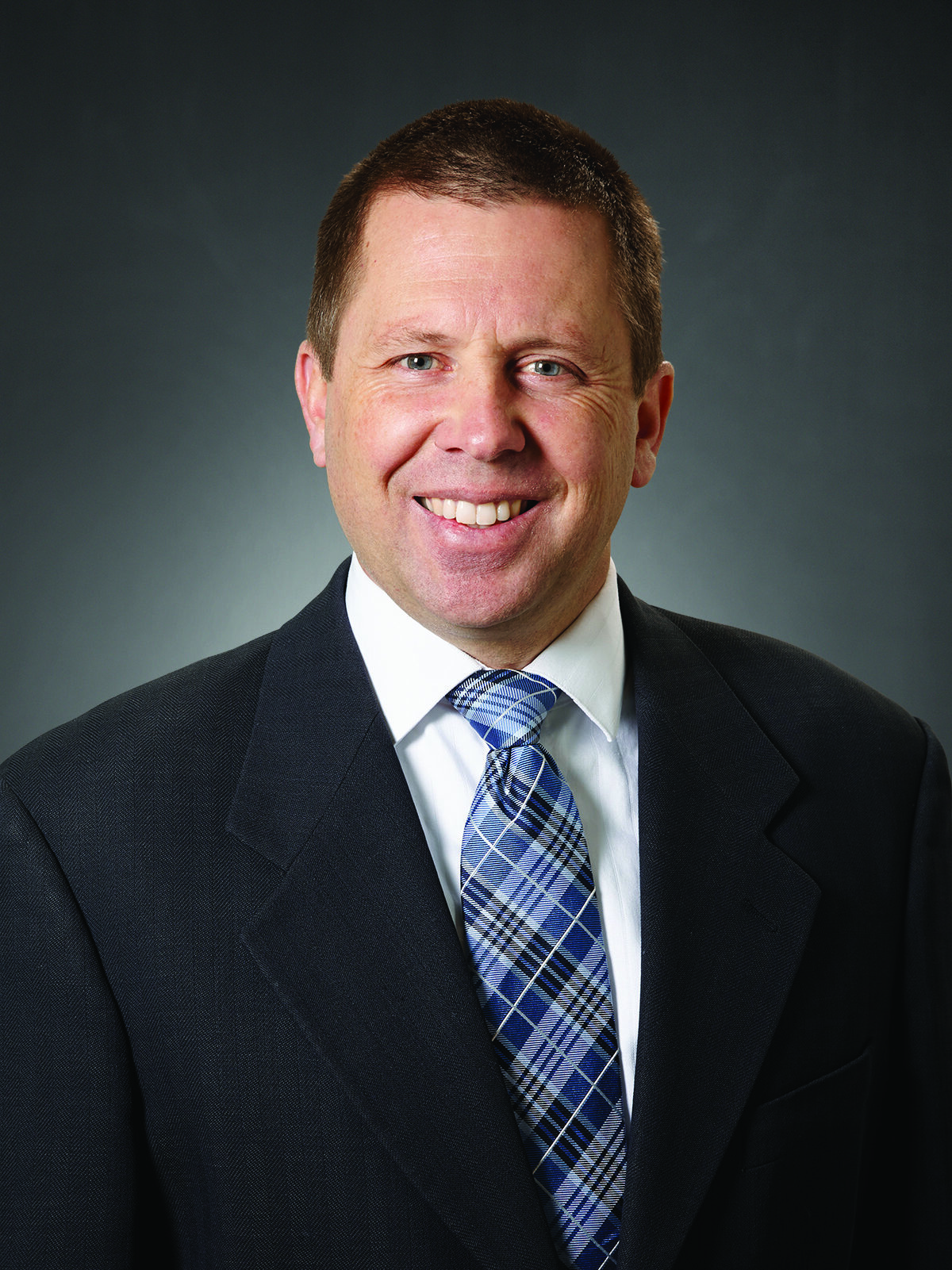
Wilkins says SVA has always hosted workshop sessions and arts education, but now all these offerings are “on another level” with this new special space specifically designed to showcase it. “We’re reveling in that—it’s an exceptional space,” he says. “We put a lot of thought and planning into the acoustics of the place. The new high school building is also very well thought out.”
The design team studied the latest in environmental learning. “Our high school feels like a beautiful university, featuring a commons with a big central atrium and tons of natural light and a mix of different kinds of seating and study area,” Wilkins says. Classrooms are clustered around the common area, and there’s a large rec room. “It’s a special space that’s made a big difference to high schoolers. It gives them an identity as a high school set apart from the first-through-eighth grades. Plus, we needed the additional capacity to grow.”
Wilkins says the next project on the list will be a new gym. “We’ve outgrown the one big gym we have to schedule all our physical education classes,” he says. “In the meantime, we’re putting in a high-end climbing wall in our existing gym to enhance the physical education program.”
WIlkins says the Seventh-day Adventist parochial school system is the second largest in size, right behind Catholic schools. “Education and health care are at the heart of Seventh-day Adventists’ mission to the world,” he says. “SVA is not just a standalone parochial school, it’s part of a bigger system, and we really benefit from that network.”
SVA offers a college prep program with college credit opportunities. The school has a unique partnership with Kettering College that allows students to obtain a bachelor’s degree in general studies while they’re still in high school. “We have what I consider to be an elite music and performing arts department that travels the world. They were in central Europe a couple years ago, and they’re going to be in Ireland next year,” Wilkins says.
Beyond extra-curricular activities, SVA is rich with options for international travel. “High school students have the opportunity to travel internationally every other year with themes of history and mission,” Wilkins says. “Mission trips are really exceptional experiences for students because they’re working with very different cultures.”
He gave an example of one mission trip in which students visited Kenya with two medical teams that provided primary health care to residents of villages there. There was also a dental team, and construction teams working on building a women’s clinic and a girls’ school. Another team was in charge of distributing gravity-fed water systems so residents can have consistent, convenient access to clean water.
“The remarkable thing for our kids is they get to work closely with professionals,” Wilkins says. “The dental team worked with a dentist to conduct lots of extractions. The dentist showed the students how to extract the teeth, drill out cavities, fill cavities and reinsert. By the end of the week, we had two kids who were drilling and filling cavities on live patients.”
He also gave examples from the medical team that had to work on a baby who was badly burned and was not able to receive immediate medical attention. One of the pediatric nurse practitioners was a burn specialist. She had students assisting her through some procedures to treat those burns and infections. “This child would have died without their intervention,” he says. “They get to be in these situations where they’re trusted by real-world working professionals and do real work in real situations. It’s a life-transforming, inspiring situation. Our program really offers some remarkable adventurous inspiring learning opportunities.”
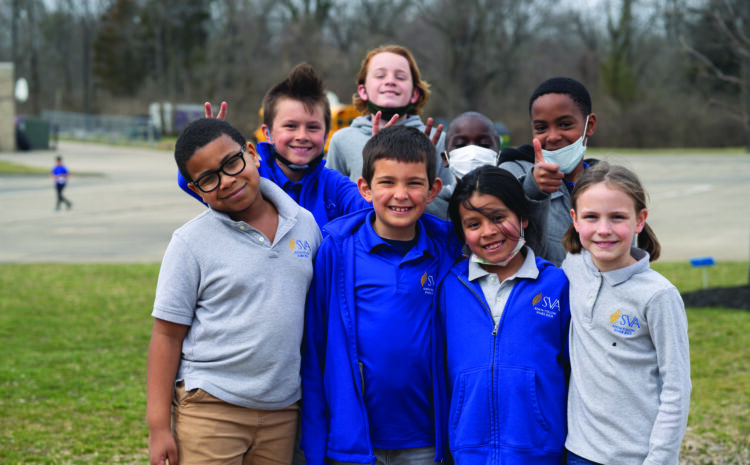
Cultural immersion can be a two-way street, and that’s increasingly the case at SVA. “We have really gone to great lengths to be more accessible to some of our immigrant populations,” Wilkins says. “We have about 45 students that are from refugee families that landed in Dayton from Africa, mostly Rwanda and Congo. Another 45 students at SVA are first-generation immigrants from Latin America.”
Refugee children and their immigrant parents statistically take three generations to get from poverty to white collar careers, and Wilkins says SVA is working hard to compress that timeline to the first generation. “We offer ESL support and have a partnership with Kettering College to help them identify health care careers and graduate debt-free. It’s been super transformative for those families—you get that first kid to a professional career, and it blazes a trail for the rest of the family.”
Not only do the new American students learn and absorb Western culture, their presence at the school lends cultural influence from their homeland that makes a positive impact on the rest of the student body. “That’s something I think is unique about us, we consider ourselves elite but not elitist,” Wilkins says. “There’s been a real transformation in diversity over the past few years. I’m so happy my three sons have had this opportunity to become good friends and rub shoulders with these folks who come from different places.”
