

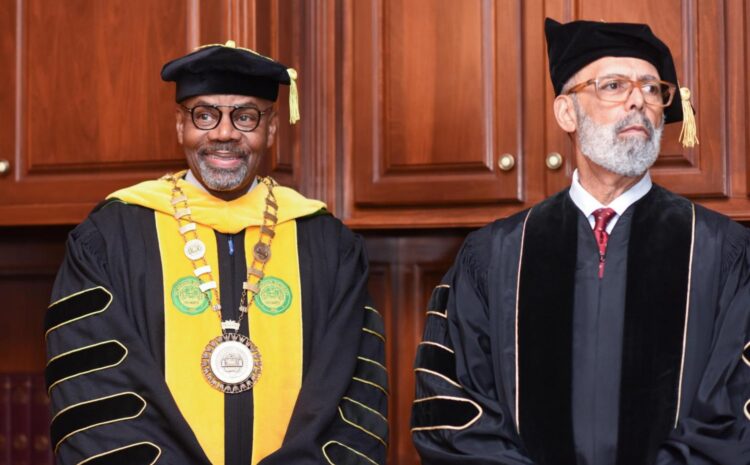
Wilberforce University builds on its legacy, with an eye toward the future
When Wilberforce University was founded in 1856, most African Americans were suffering under the yoke of slavery in the South. Today, more than 164 years later, it is still addressing the sociological and educational challenges faced by African Americans.
At the time, the founding of the first private Historically Black College and University (HBCU) in America was a bold vision of what free people of color who were of African descent imagined for themselves and what they could achieve.
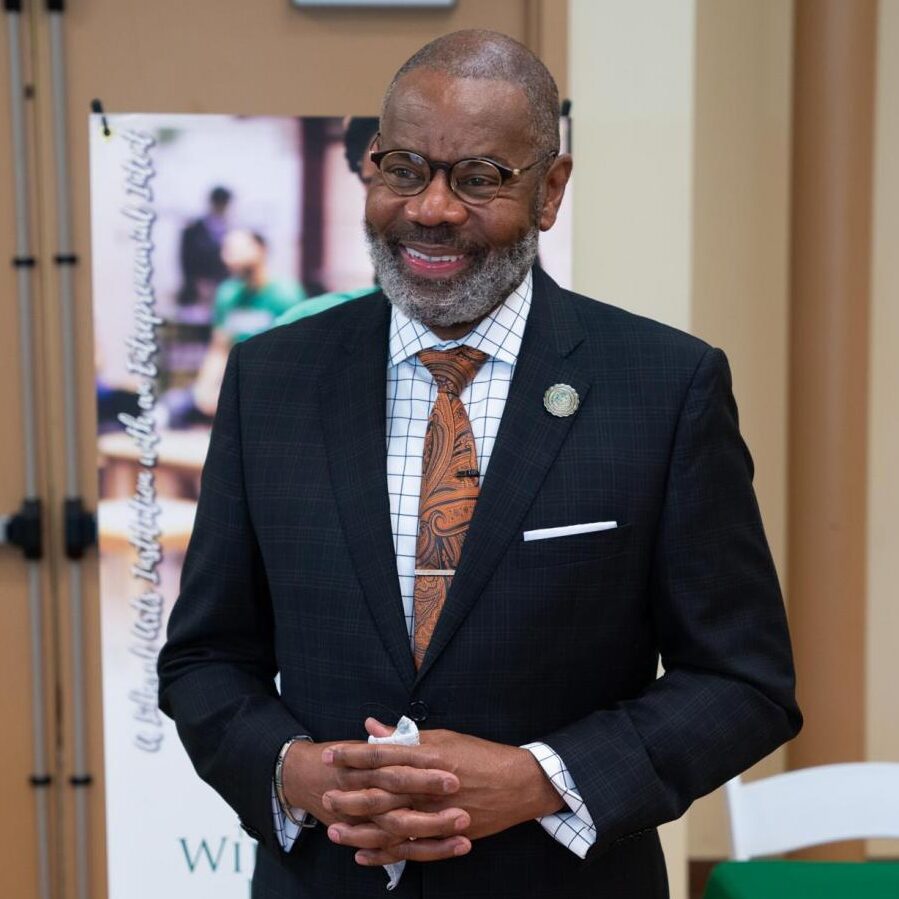
“This sense of group self-determination was a powerful repudiation of the system of slavery,” says Elfred Anthony Pinkard, president of Wilberforce University. “The burden of breaking down the walls of discrimination has always fallen on those who are the victims of discrimination. At Wilberforce University we instill in our students a sense of what is possible in their lives, a commitment to excellence and a determination to be social change agents and thought-leaders.”
HBCUs like Wilberforce are a part of a diverse system of institutions of higher learning in this nation.
“We have women’s colleges, Catholic colleges/universities, Jewish colleges/universities, community colleges, Tribal colleges, Hispanic-serving colleges/universities, liberal arts colleges, research universities and we have African American colleges/universities,” says Pinkard. “This diversity of choice and the ability of African American colleges/universities to provide cultural anchoring and affirmation and opportunities for students to see themselves represented in the faculty and administrators who support them is an important experience for the intellectual, emotional and social development of students.”
HBCUs also provide students with opportunities for leadership development and networking that are so critical to a successful collegiate experience but are not always available to African American students at other institutions.
A four-year, accredited, liberal arts institution with a college-to-career and entrepreneurial intention for students with high potential and unrecognized ability, Wilberforce has 20 undergraduate programs of study and a master’s program in Clinical Rehabilitation Counseling. The university also offers a degree completion program for working adults called the CLIMB Program.
Today, Wilberforce has nearly 500 students enrolled in its various undergraduate, graduate and adult learner programs that offer diverse academic concentrations in areas such as business, communications, computer engineering sciences, humanities, natural science and social sciences. Management, mass media communications, biology and social work are the programs that have the largest student enrollments.
The Re-Imagined Co-Operative and Experiential Learning Program, which adds another vision to the traditional Co-Operative Education Program established at Wilberforce University in 1964, was one of the first Co-Op programs at an HBCU.
Wilberforce has matriculated more than its fair share of entrepreneurs as well as business, civic and community leaders over the years. Dorothy Vaughan, who graduated in 1929, was the NASA computer scientist mathematician featured in the book and film, Hidden Figures. Bayard Rustin, who attended the university in 1937, would go on to become a renowned social justice advocate and aide to Dr. Martin Luther King. Rustin was also the chief strategist of the 1963 March on Washington. More recently, notable graduates include Tiffney Laing, founder and owner of the award-winning, Black history toy company, Bevy & Dave; actor and producer Geno Brooks; Mark Wilson, president and CEO of Chime Solutions; and Marvin White, president and CEO of Aptevo Therapeutics.
“We have been very intentional about articulating a value proposition for the Wilberforce University academic and student engagement experience and establishing a path forward for the university in the 21st century and beyond,” says Pinkard. “While many futurists and prognosticators have been dire in their prediction for small, special-mission institutions like Wilberforce, particularly in a post COVID-19 environment, we are unafraid of risk-taking and innovation and have been rigorous and disciplined in our approach to operational efficiency, fiscal stewardship and responsibility and student learning and engagement.”
