

The National Museum of the U.S. Air Force celebrates 100 years
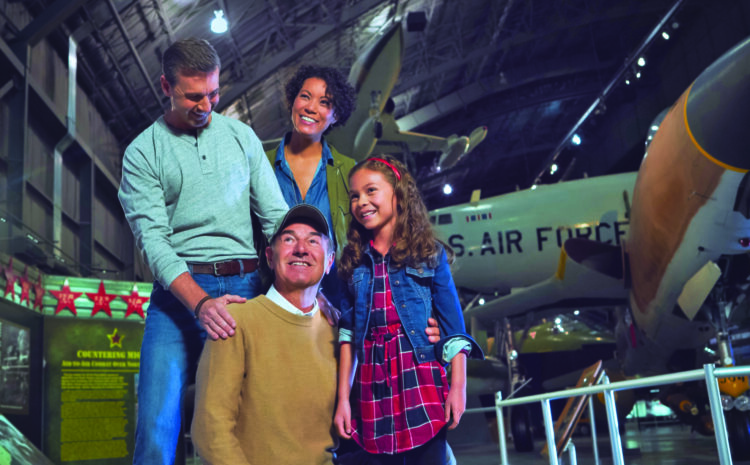
The National Museum of the U.S. Air Force, the world’s oldest and largest military aviation museum, stretches 20 indoor acres across Wright-Patterson Air Force Base. Located some 5 miles northeast of downtown Dayton, NMUSAF preserves over 350 aerospace vehicles and missiles and thousands of artifacts. This year, NMUSAF turns 100, and in celebration of its centennial, these NMUSAF highlights show—era by era—the artifacts that turned the National Museum of the U.S. Air Force from a small engineering study laboratory near an Ohio cow pasture to a world-renowned institution.
Early Years, World War I and the Liberty Engine
On Dec. 17, 1903, Wilbur and Orville Wright, two brothers from Dayton, made the world’s first flight on the windswept beaches of Kitty Hawk, North Carolina. The following year, 1904, the self-funded brothers, tired of hauling their aircraft some 700 miles on costly research trips, moved their aeronautical experiments from Kitty Hawk to Huffman Prairie, a cow pasture 8 miles northeast of their Dayton home, 7 Hawthorn St.
Located some 10 miles southwest of Huffman Prairie, McCook Field, dedicated during World War I, was the site of numerous aviation developments: new aircraft, free-fall parachutes, bulletproof gas tanks, controllable-pitch propellers and night-vision cameras. Soon, it became the site of a new museum.
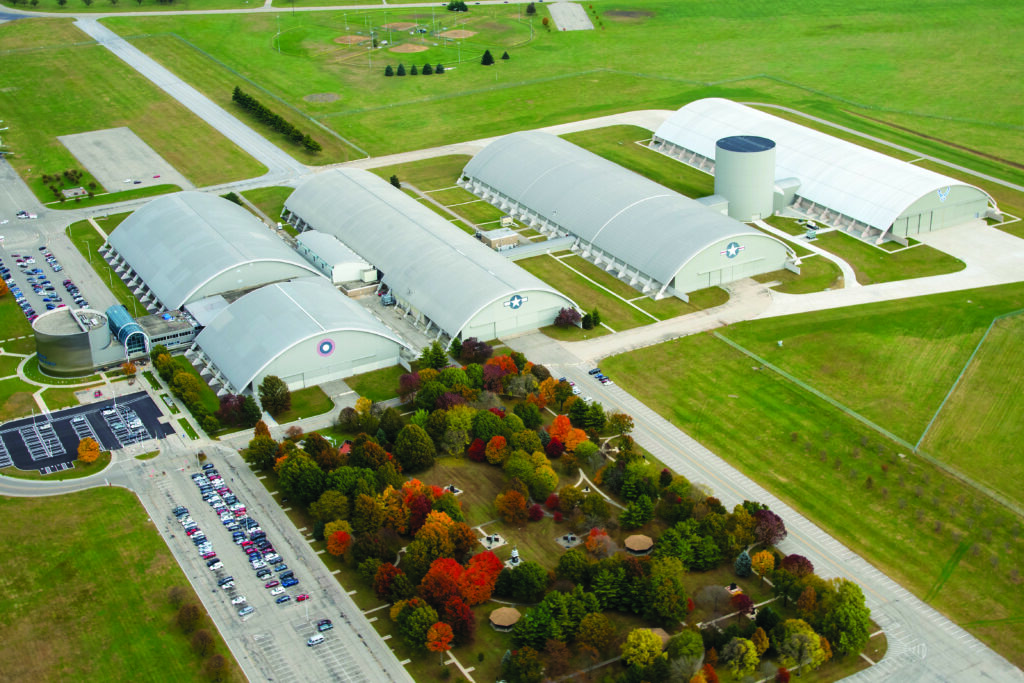
During World War I, U.S. aviation professionals collected aeronautical items from our European allies, so we could build our own American versions for the war effort. These aeronautical items were carried to McCook Field and became the core of an engineer study collection. In 1923, some five years after World War I, this study collection was preserved and became the core of a new Air Force museum collection.
Of all the American aerospace technologies developed during the First World War, none was greater than “the Liberty” aircraft engine. Developed at McCook Field—only a few miles from where the Wright brothers perfected their airplane—the Liberty was a lighter, more efficient and more powerful engine than its predecessors, allowing pilots to fly higher. For some time, in the Early Years Gallery, alongside numerous aircraft, engines and weapons, a Liberty 12-Cylinder, the American engine that helped end the War to End All Wars, could be found.
World War II, The Memphis Belle and Bockscar
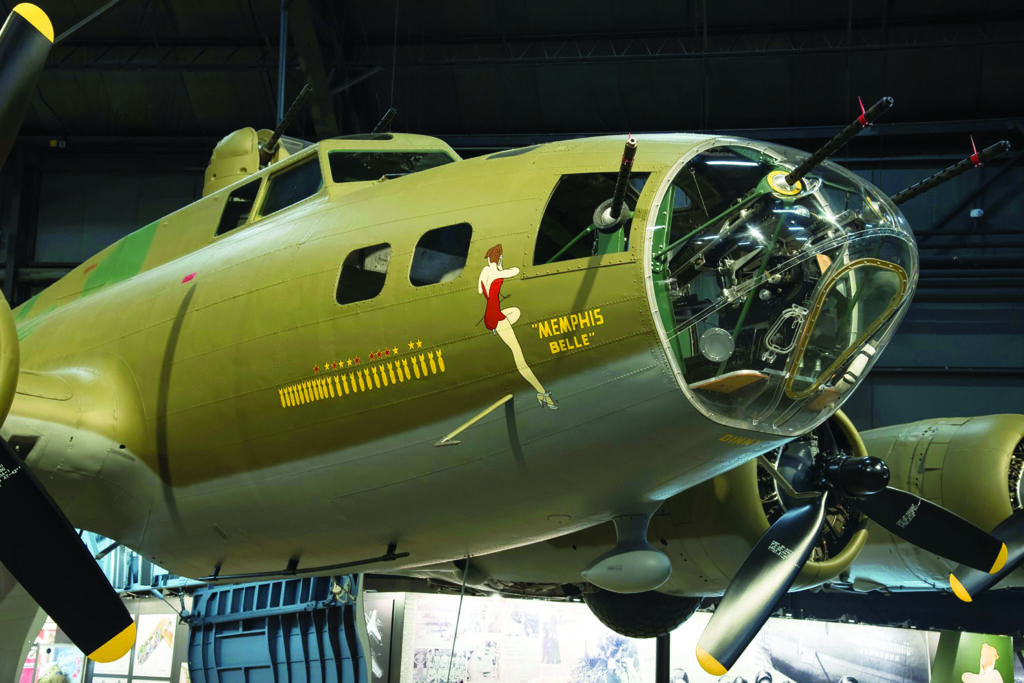
Unfortunately, the War to End All Wars didn’t end all wars. Twenty-three years after Armistice Day, the United States entered the Second World War. At the heart of World War II, amidst the deadly skies of the European Theater, was the Boeing B-17F Flying Fortress. To finish a tour of duty, B-17 pilots had to complete 25 combat missions—a feat so challenging that only one in four crews made it out alive. The Memphis Belle was one of the lucky ones. On May 17, 1943, the B-17 Belle completed its final mission, bombing the German Lorient Submarine Base in France; its crew then returned home for a war bond drive across the country, sealing the plane in the American psyche.
Thanks to two films—a 1944 William Wyler-produced WWII documentary, The Memphis Belle: A Story of a Flying Fortress, and a fictional 1990 Hollywood movie, Memphis Belle—the plane entered popular culture as an enduring symbol of American valor.
On Aug. 9, 1945, two years after the Memphis Belle completed its final mission, and only three days after the atomic bombing of Hiroshima, Bockscar, a Boeing B-29 Superfortress, dropped the Fat Man atomic bomb on Nagasaki. Both planes are proudly displayed in the World War II Gallery.
Presidential Gallery and JFK’s Air Force One
On Nov. 22, 1963, John F. Kennedy’s Air Force One, a Boeing VC-137C known as SAM 26000, carried the president’s body from Dallas to D.C. Aboard this airplane, Lyndon B. Johnson was sworn in as the 36th president of the United States.
SAM 26000, the first jet aircraft custom-built for the U.S. president, flew eight American presidents: John F. Kennedy, Lyndon Johnson, Richard Nixon, Gerald Ford, Jimmy Carter, Ronald Reagan, George H.W. Bush and Bill Clinton. Today, the old Air Force One is on display in the Presidential Gallery.
