

Dayton’s sports medicine experts keep up with the latest in orthopedic technology
Exercise is a key part of a happy, healthy lifestyle—but it carries with it the risk of acute or chronic injury. Anyone who leads an active life might find themselves in need of a visit to a sports physician.
Luckily, the Miami Valley is home to some of the nation’s top-ranked sports medicine and orthopedics programs. And with orthopedic medicine changing quickly, local experts are always working to keep up with the latest in treatment and prevention of sports-related injuries.
Orthopedic Innovation
Recent years have seen new innovations in orthopedic surgery, with advances in robotic-assisted procedures for joint replacement. Kettering Health and Premier Health both began using Stryker Mako robotic technology in joint replacement surgeries in 2020.
“Recently, there have been a ton of new products coming to the market, especially from the sports medicine side of things,” says Joe Stratton, executive director of orthopedic and rehabilitation services at Kettering Health. “There’s tons of people that are really starting to move into the robotics space.”
Stratton says technological advances decrease the average amount of time patients must spend in the hospital—a blessing in a post-pandemic world, where many patients are looking to minimize their exposure to germs.
“A lot of this technology helps us get our patients in and out a lot quicker,” he says. “I think we’ve come a really long way…we’ve shifted probably 95% of our patient population that was inpatient in 2019 to outpatient.”
Advances in sports medicine and orthopedics go beyond surgery. Premier Health’s orthopedics program has expanded its use of orthobiologic injections, sometimes called regenerative medicine, in which patients receive an injection of substances, like platelet-rich plasma or a concentrate made from bone marrow, that occur naturally in the patient’s own body.
Doctors generally offer the injections as a treatment when anti-inflammatory medication and physical therapy have proven ineffective at treating muscle, tendon or ligament injury.
Dr. Jeffrey James, a sports medicine specialist with Premier Orthopedics, says that in addition to helping patients manage pain, orthobiologic treatments can sometimes speed recovery.
“Our patients and athletes are always seeking the most appropriate and often cutting-edge treatments to allow them to improve and return to activity as soon as possible,” James says. “We strive to help our patients and communities by staying up to date with current treatments to best serve our patients and communities.”
Mind and Body
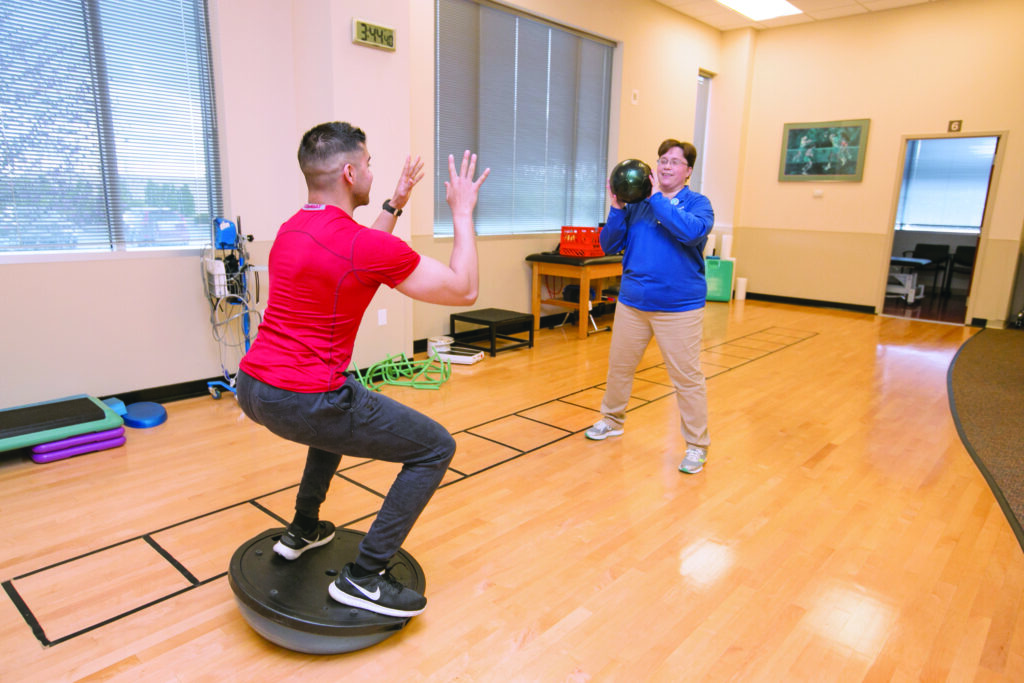
Launched in 2021, the Dayton Children’s Center for the Female Athlete focuses on holistic care for issues affecting female athletes. The center sees patients age 13-18 for mental and physical health services, including nutritional concerns, body image issues and sport-specific injury prevention.
“It’s a multidisciplinary program that involves our therapists, our nutrition team, our psychology team and psychiatric team,” says Dr. Michael Albert, chief of pediatric orthopedics at Dayton Children’s, says, adding that in the near future, Dayton Children’s plans to institute a similar hub for male athletes.
The focus on mental health is a relatively recent shift in the orthopedics landscape.
“I think that’s a fairly new concept: that you center not only the injury but on how to prevent the injury, and on the rest of the body as well as mental health,” Albert says.
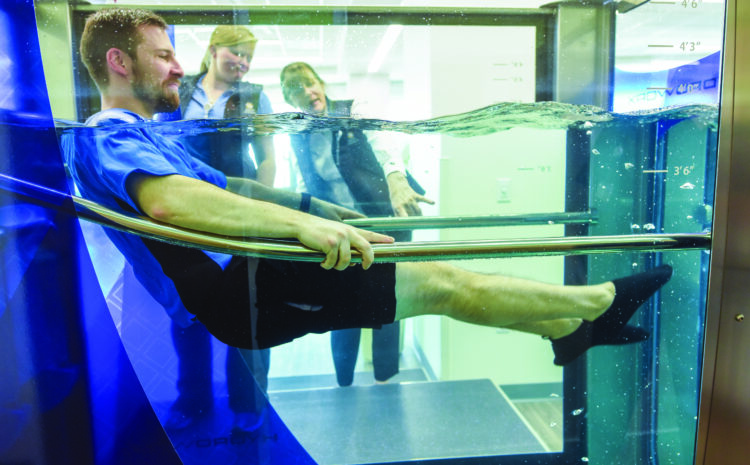
It’s also important to focus on physical therapy and rehabilitation post-surgery. The patient tower at the main campus of Dayton Children’s now has a HydroWorx aquatic therapy machine. Hydrotherapy tools like the HydroWorx machine allow patients to exercise injured limbs or muscles underwater, receiving the benefit of the exercise without undue joint stress.
“Sometimes we’ll take [patients] in after surgery and rehab their other extremities so they don’t get a recurring injury,” Albert adds.
Changing Needs
James says Premier works with patients at all levels—from kids with playground injuries to professional athletes—to find the proper path of care. Premier Health has launched a program for running medicine as well as a cartilage restoration center, offering surgical and non-surgical treatments for cartilage damage.
“Our patients and athletes are always seeking the most appropriate and often cutting-edge treatments to allow them to improve and return to activity as soon as possible,” James says.
More than ever, Dayton’s sports medicine facilities are dedicating themselves to injury prevention—providing resources, treatments and therapies that help patients avoid serious damage in the first place.
“While surgery is at times necessary and recommended, it is not the only answer for orthopedic-related pain,” James says.
As orthopedic medicine changes, patient expectations change as well. Patients are always on the lookout for new treatments, sometimes coming to the doctor hoping to receive a new treatment that they’ve seen on social media.
On the pediatrics side of sports medicine practice, Albert of Dayton Children’s says that in the decades he’s been practicing, he’s noticed a shift in the way families look at the children they’re bringing in for treatment—“every parent thinks their son or daughter is going to be a professional athlete,” he says.
Albert also notes that there’s been an increase in the number of sports available to young people—a factor that’s contributed to the rise in overuse injuries in young patients.
“We see a tremendous amount of overuse injuries in our athletes,” Albert says, “either because they’re doing multiple sports at the same time, or they’re doing the same sport but overdoing it on a daily basis.”
When surgery is needed, it takes a number of people to pull off the procedure and get the patient up and running again—from preoperative imaging and bloodwork before the surgery to the physical therapists that help patients readjust after surgery.
“Orthopedics is pretty big. There’s a lot of work that goes in behind the scenes,” says Kettering’s Stratton. “It’s really neat to see how everybody comes together from all these different specialties to make it work pretty flawlessly on the day of surgery.”
