

From roadways to bikeways to waterways, Miami Valley Regional Planning Commission tries to maintain a healthy balance
Brian Martin grew up on the family farm near Greenville in western Kentucky.
He received his master’s degree in city and regional planning from Western Kentucky University and has spent most of his career in the Midwest, focusing on transit planning, transportation routes, bikeways and pathways, corridor studies, traffic analysis and other regional planning needs.
Early on, he knew the importance of development while at the same time preserving the landscape. It’s a balancing act—allowing progress to attract jobs but also realizing that the living environment is important in attracting residents to fill those jobs.
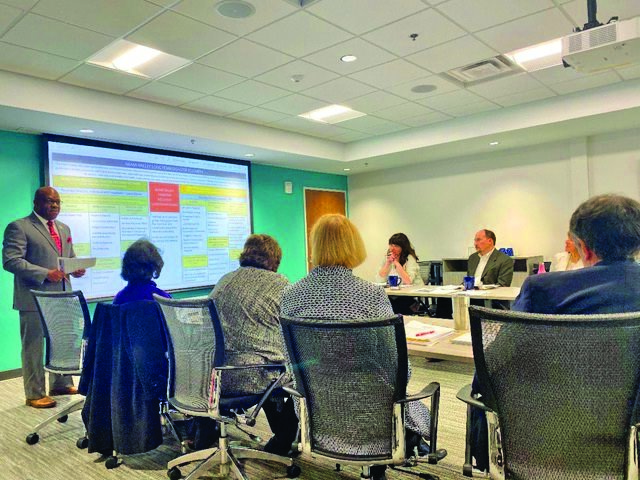
As executive director for the Dayton-based Miami Valley Regional Planning Commission since 2013, Martin oversees a staff of about 25 and works with a 79-member commission that includes locally elected officials, representatives of business and higher education, and nonprofit stakeholders in six counties. Together, they have to collaborate to ensure that the balance between development and quality of life is maintained.
It’s not always an easy job. Throw highly destructive tornadoes and the COVID-19 pandemic into the mix, and it becomes a bigger challenge.
Like many businesses and organizations, the pandemic forced the commission to close its doors for about six weeks in spring 2020, maintaining operations remotely.
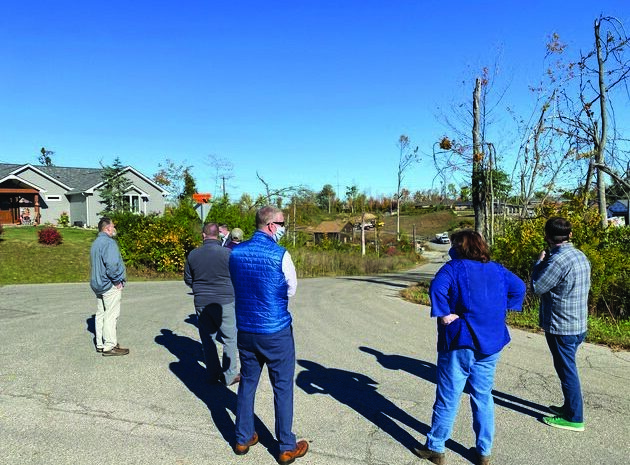
The agency already was dealing with a disaster that occurred less than a year earlier. Nineteen tornadoes—at least one with winds of 170 miles an hour—tore across western Ohio on the night of Memorial Day 2019. More than 500 non-residential properties and 6,000 homes were damaged, including 1,200 homes destroyed or sustaining major damage, according to an Ohio Development Services Agency report. It was the most twisters recorded in a 24-hour period in Ohio history. Miraculously, only one person died.
“We think we’re ahead of the typical recovery,” Martin says 22 months later. “We think the redevelopment planning will be key, also. Through time, those communities will have new development, new housing, new commercial opportunities. That will help them with attracting new residents.”
About 100 structures still need to be rebuilt, many with multifamily apartments. “The majority of single-family owners—those who had insurance and those who didn’t—have been really good” in rebuilding, he adds. Nonprofits, volunteers from national organizations and governmental disaster recovery relief funding aided the affected homeowners, in addition to the community pitching in to help their neighbors, he says.
All of the rebuilding efforts continued in 2020 despite the pandemic. The Miami Valley Regional Planning Commission thus far helped public agencies secure more than $37 million in federal funds to assist with recovery. Additionally, in 2020:
– The commission hosted its first Miami Valley Climate Change Seminar, pre-COVID-19.
– It submitted grant applications to the Environmental Protection Agency for electric vehicle charging stations in Miami, Montgomery and Greene Counties and was awarded funding for 16 stations. In mid-March, 13 of those stations were moving forward with installation.
– Released the sixth edition of the Miami Valley Trails Map & Guide.
Already a giant cooperative agency, the planning commission cast an even wider net during the pandemic, Martin says. It joined with the Dayton Foundation, other nonprofits and educational institutions such as K-12 districts to provide its services and help people work through the tornadoes and health crisis.
“You can’t use our funding for a lot of what they do,” he says. “But we’re planners, so we have know-how and expertise, especially with mapping and data. I saw that as complementary to what we do anyway.”
So for Martin, planning goes beyond where the streets and highways take you. It goes to providing that balance—to ensure a high quality of life in the region.
