

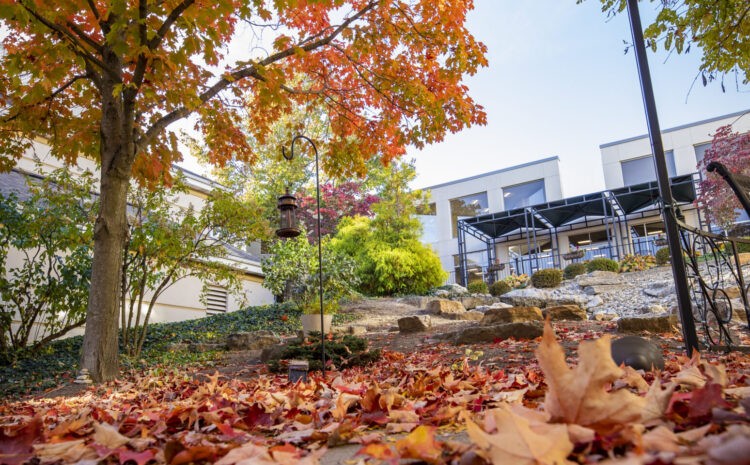
Bethany Village supports both its residents and its employees
Whether it’s the community in which you and your family live or the place where you work, we all want to feel welcomed and supported. Bethany Village, a nonprofit continuing care retirement community (CCRC) in Washington Township, aims to do just that in how it takes care of residents, their families and its staff.
“We provide care with a faith-based philosophy, with the residents being the No. 1 reason for our focus, not the profit,” says Heather Carruth, nurse and STNA (state-tested nursing aide) training program instructor at Bethany Village.
“We believe in taking care of people to end of life. I think that makes us special,” adds Anne Jones, senior living sales counselor.
Based in Lutheran values, Bethany Village is making a difference for those who live and work there.

Levels of Care
As a CCRC, Bethany Village cares for seniors with a variety of needs, from independent living to assisted living, memory support and skilled nursing. The community can then transition residents to different levels of care as their needs change.
“I think attraction to a campus like ours is the full continuum of care – families who have loved ones who live here know that their loved one will be taken care of from wherever they enter our system, our campus, until end of life,” says Jones.
Knowing that their needs will be met no matter what changes can be of comfort to both residents and their families. For example, if a couple lives on campus and one spouse needs more care, they can transition to assisted living while the other lives in independent living, allowing the spouse to be a partner and not a caregiver. This can also be of comfort to adult children, who often find themselves moving into a caregiver role as parents get older.
Oftentimes, “There is a large amount of guilt and anxiety of ‘I’m failing my parent or my loved one if I’m even considering doing this.’ And I really try to stress that yes, I understand that; I’m not trying to diminish those feelings whatsoever, but the fact that you will be able to know that your loved one is safe, they are being taken care of, [allows them] to go back to being the child, not the caregiver,” says Jones.
Bethany Village can do this because of the levels of care it offers. It starts with independent living. “Independent living, at least here at Bethany, they are considered [fully] independent. They’re moving from their current home and into our neighborhood,” says Jones.
If they need assistance with chores like grocery shopping or medical assistance, residents can move into assisted living.
“Depending on the building, it goes from zero to up to five, or there’s three different levels in assisted living. And those levels of care can be fluid. They can go up, they can go down,” says Jones. “At that assessment time, it’s a quick snapshot of what that person needs at that time and can be adjusted then either by staff or by family.”
If more assistance is needed, residents can also transition into memory care or skilled nursing.
Jones assists families during this transition, but she also knows firsthand about these levels of care, as her father resides at Bethany Village.
“He started off in our assisted living memory care, and now he is in the skilled nursing. So he has moved over to a higher level of care,” she says. “I definitely would not want him any place else but here… Staff genuinely care.”
A Caring Education
In a ddition to supporting residents, Bethany Village supports its employees, particularly those who are looking to move into nursing careers. In April, Bethany Village launched its paid STNA training program, helping people become certified state-tested nursing aides. Carruth, who has worked for Bethany Village for 35 years and started there while in high school, teaches the program.
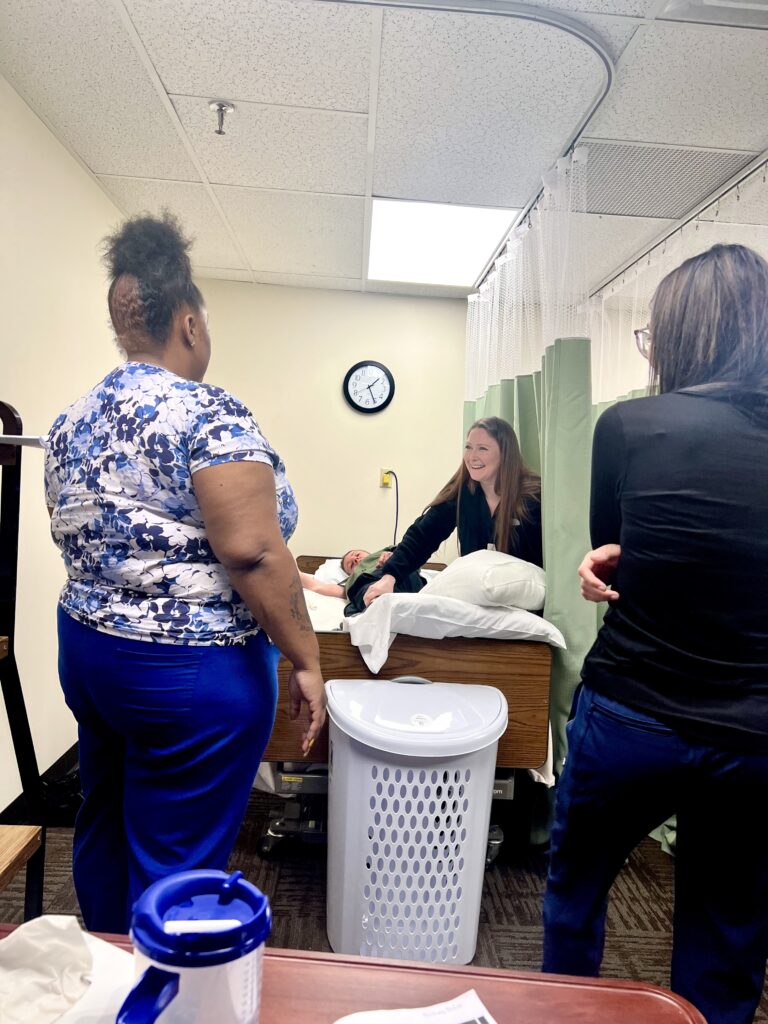
“What led me [to teaching the program] was seeing there was a need during COVID,” she says. “That’s why we decided to offer the program in-house. It seemed like people were getting into the field and not knowing what it took. And the first couple days were shaky when they were getting out of programs. So we wanted to give them the chance to see what it would take to be an aide.”
The program is web-based initially. “It has modules where you follow several residents with different conditions through a storyline so you can see how it would be to take care of somebody passing away or see how it is to take care of somebody that has a mental disorder. It doesn’t really sugarcoat it so [trainees] can understand that’s what you could be facing on a day-to-day situation on the job,” says Carruth.
After the online learning, students get more hands-on with clinical skills. Bethany Village has a lab that allows students to practice their skills to get them ready for their test.
Bethany Village has led six classes through the program so far, with each class having on average six students.
Carruth says that Bethany Village’s commitment to faithfully caring for residents is woven throughout the program.
“This is their [residents’] home is the No. 1 thing. We are here to do a job, but it’s more like we’re invited in to help take care of them and we’re part of their team. And swhile we’re not their family, sometimes you start taking care of people and feel like you’re part of their family,” says Carruth.
That same care for its staff is what led to Bethany Village creating the STNA program.
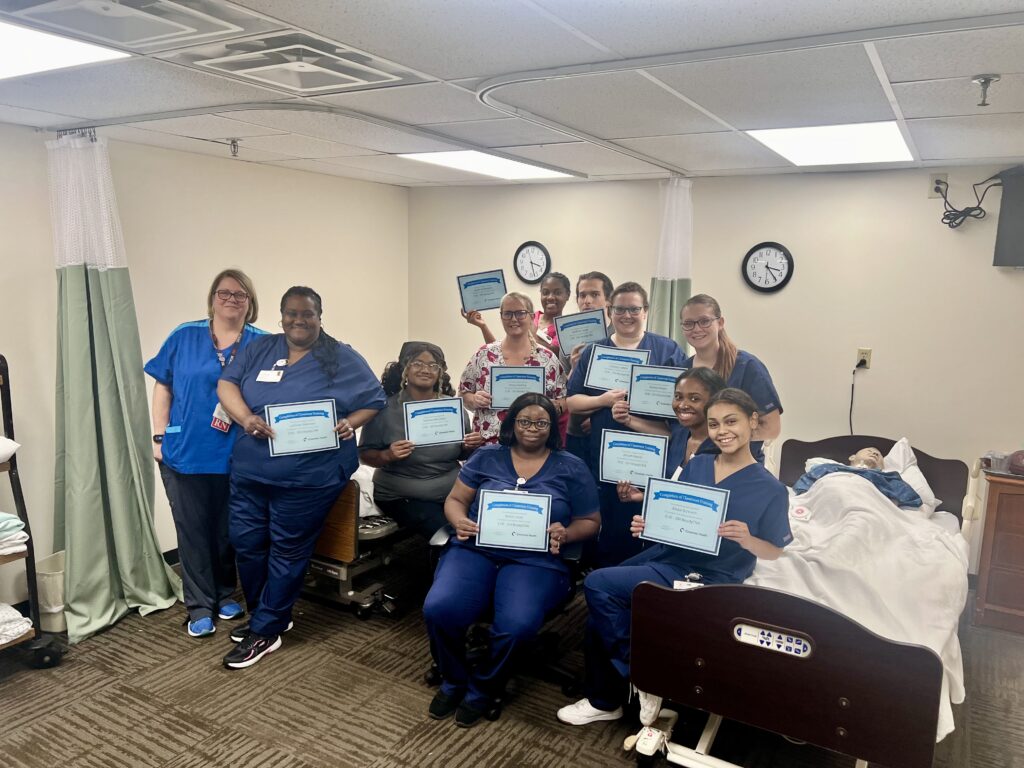
“[Bethany Village] is always to support growth for their employees. In the first class, I had several people from housekeeping go through my program and it was just to grow [their career options]. And we have helped several of them to pass the test by giving extra time to practice in lab just so we know they’re comfortable,” adds Carruth.
