

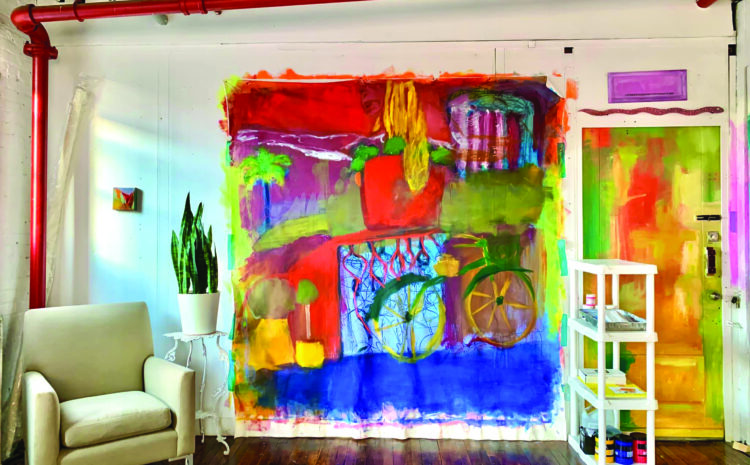
Front Street Art showcases the Dayton community’s creativity
Walking down Front Street in Dayton, visitors can expect to see a number of murals. Contrasting these colorful murals, visitors will also find three industrial buildings that were once manufacturing hubs. In 1965, however, these warehouses were transformed into art galleries and exhibits for the Dayton community.
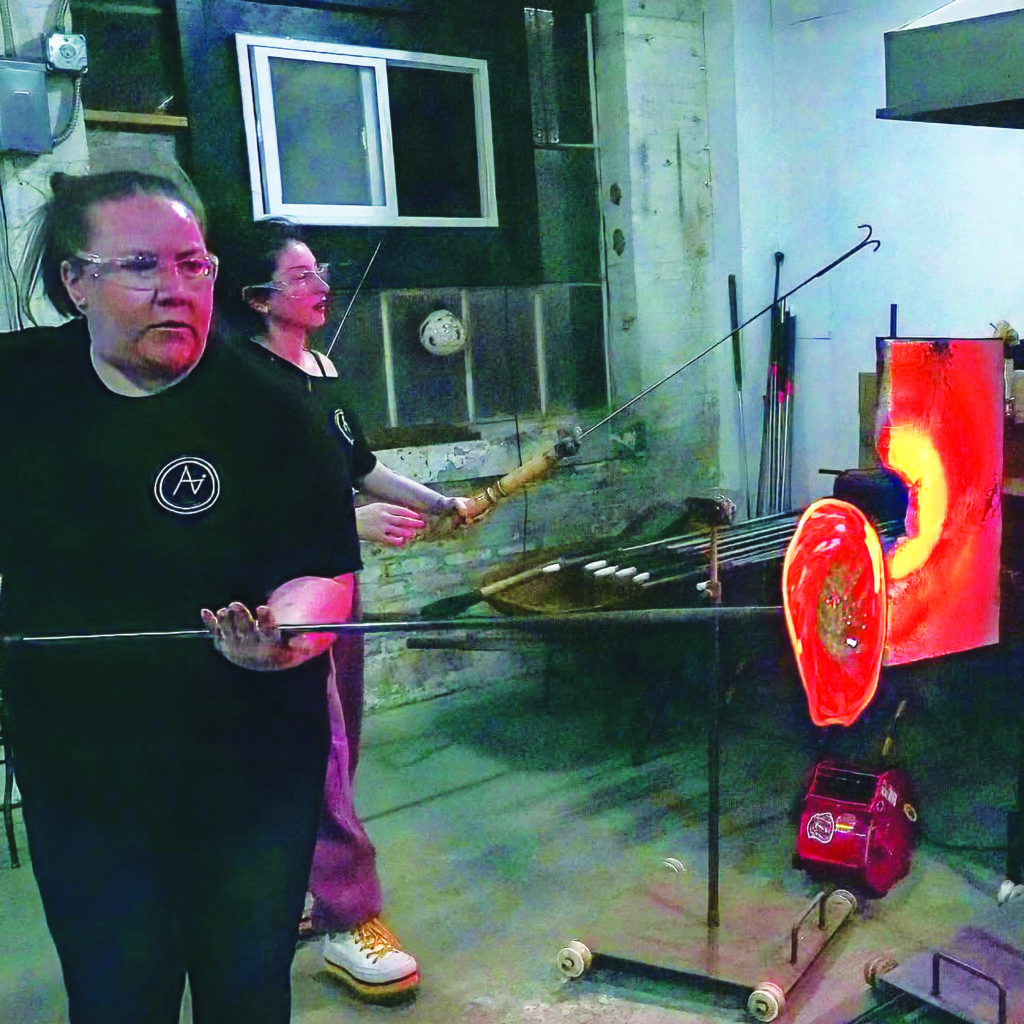
Today, those buildings, now Front Street Art, are home to more than 150 unique studios, galleries and boutiques that host the hundreds of artists working there. “We really have a mix and match,” Richard Lundin, the owner of Front Street Art, says. “We have glass artists that do hot glass work. We also have the ones that do slumping. We have woodworkers that do carving and woodworkers that do canvas for your home.”
Front Street Art can host this wide variety of artists because of its retired warehouse. “They had a big, open factory floor in a lot of areas,” Lundin says. “If one person needed 1,000 square feet, they would make 1,000 square feet for this guy and 500 square feet for that guy.” Over the years, the room layout and building development has changed, but the goal of keeping the spaces reasonably priced, safe and friendly has attracted artists to come and stay.
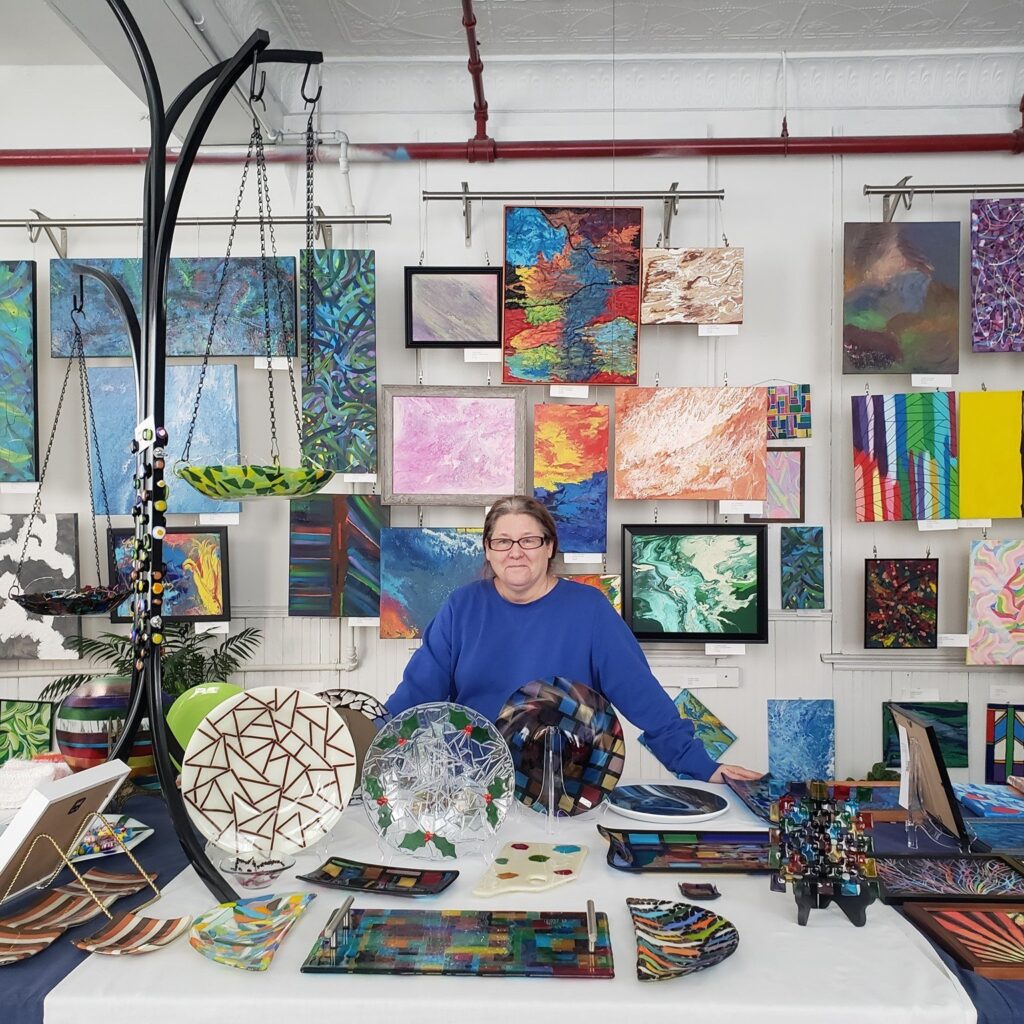
Lundin oversees the property with two other managing partners, Kathy Hahn and her sister, Deborah Vignochi. Hahn and Vignochi both currently live in Chicago but still hold a strong connection to Front Street Art as their father, Zimmel Miller, was the original owner.
“The community piece is really the largest piece of it all,” Lundin says. “Without having [the artists] work together, we are just another building that people are just renting space in, and there is no soul to it. [Artists] have a commitment to their own work and they have a commitment to help each other out.”
While Front Street Art is a Dayton-focused operation, many of its artists eventually go on to create for larger, more well-known organizations. Gary Hinsche, a graphic artist, designed pieces for the Olympics back in 1976 and another artist Scott Gibbs worked for Julian Schnabel and Andy Warhol in New York. “We have a lot of those hidden gems here that are like that,” Lundin says.
One of these artists is Mike Elsass, an internationally known abstract artist who has paintings and collections across the United States. He is in his 25th year of being an artist. Beforehand, he sold health insurance to schools and corporations. During this time, one of his mentors painted steel. When he retired, he took up painting with him.
“I paint on recycled steel that had another life,” Elsass says. “It was rusty and grimy, but with the combination of acrylic paint and textures, I made a pretty interesting, abstract art. I use all kinds of unexpected textures. I use oil and water together, silicate sands, walnut shells and tar to create a kind of interesting, layered effect.”
Since those humble beginnings, Elsass’ career has proven successful. He has just finished working on a piece for the lobby of Tower 45 in Midtown Manhattan. “It was about a combination of 28 pieces, which made one big piece that is 60-some feet,” Elsass says. “There’s probably five or six main colors and the pieces integrate together, so it is a huge palette of some symbols, textures and cohesiveness. Yet each piece can stand alone. It looks like a big wall of color and energy that hopefully is pleasing to the people that walk by.”
Elsass doesn’t really know what the piece is going to look like when he starts. Front Street Art allows him to get into the creative mindset since it is a “developed community of likeminded, helpful people,” he says.
Front Street Art is currently rebuilding its website and including information about artists and their work in the process. On top of this, it is creating a podcast that features at least one artist every month, so viewers can get to know the artists and what type of art they produce on a more personal level.
“Everybody here is happy, but with that being said, my main goal is to bring Dayton artists to the outside world and to bring the outside world back into Dayton,” Lundin says.
This plan comes with some challenges. Lundin says his biggest obstacle is getting the word out. “It’s a really cool place down here, so it’s really getting the people to know about Front Street, know about what’s going on here, know about the energy here and once they come down here, they always come back,” Lundin says.
Lundin also notes that buying art is a very personal thing and something that people have to be introduced to, so Front Street Art is seeking other ways to get people to stop by. One way is the First Friday events, which will begin heating up again with spring and summer approaching
Every first Friday of the month, Front Street has an evening planned for artist meet-and-greets, live art demonstrations, music and local food trucks for visitors to enjoy during later hours. “We try to just make it a fun and inviting place for [people] to come up with the families, just have a good time and introduce them to Front Street and what it’s all about.”
The Front Street Art community is constantly growing, Lundin explains. “That’s the fun part about it, because I always get to meet new people and it’s not a onetime thing,” Lundin says. “We really become friends after all.”
