

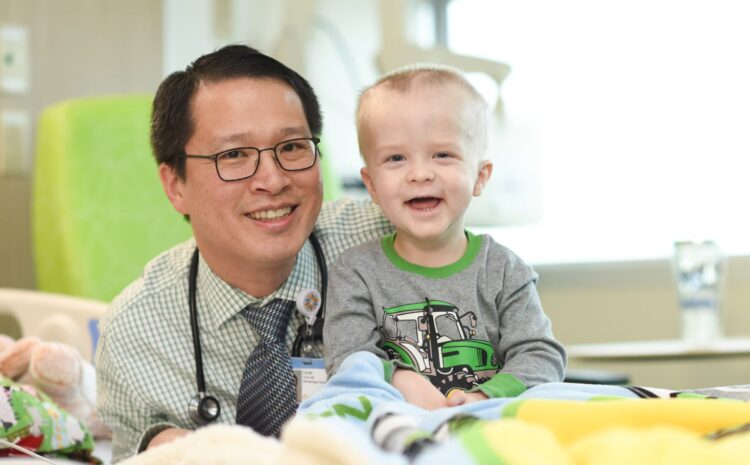
Cancer patients can find cutting-edge technology and trained specialists in the Miami Valley
A cancer diagnosis no longer has to mean a shortened life span or difficult treatments that may or may not have positive outcomes for patients. Nor does it have to mean cancer patients must travel away from the Miami Valley in order to receive state-of-the-art cancer treatment and care.
Premier Health is a certified member of the MD Anderson Cancer Network, one of the nation’s top-ranked cancer centers, and brings world-renowned cancer care and expertise to patients throughout Southwest Ohio.

“Being connected to MD Anderson Cancer Center allows us to pull some of their world-class expertise into discussions on cancer cases that we are having here locally,” says surgical oncologist Dr. James Ouellette, clinical service line leader, oncology, Premier Health, and certified physician with MD Anderson Cancer Network.
Through strong physician collaboration and advanced diagnostic testing and treatment, local patients can receive high quality care closer to home. And Premier physicians are always receiving current information about treatments since cancer care continuously evolves.
Premier prides itself on being on the leading edge in the diagnosis and access to cancer treatment and care. As the first Ohio health system to use Monarch Platform technology—a robotic bronchoscope that improves vision, reach and control for viewing inside a patient’s airways, Premier’s pulmonary specialists are able to search the delicate, distant branches of lungs and can obtain tissue samples from hard-to-reach nodules for biopsy.
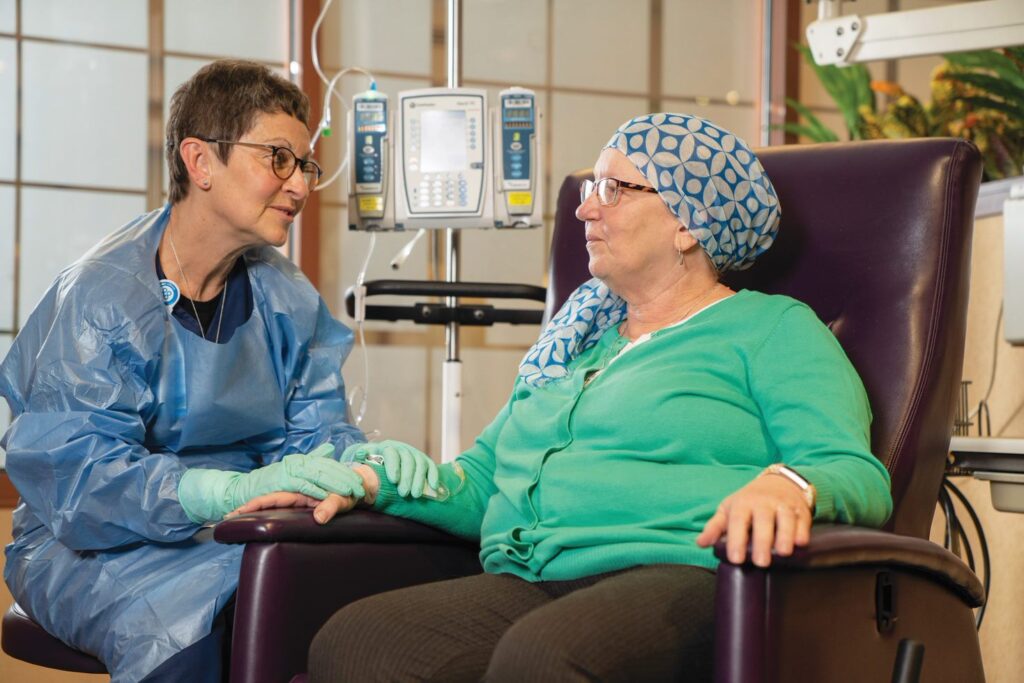
Clinical trials and research are what continuously pave the way for cutting-edge cancer treatment that actually saves and extends lives. Premier Health participates in several of MD Anderson’s phase II and III clinical trials that are focused on new cancer medications and devices that may slow or stop cancer growth or destroy it altogether.
“Clinical trials allow us to advance the science of cancer treatment in real people,” says Ouellette. “Many patients benefit from being involved in clinical trials, and the trials provide access to medications or treatments that would otherwise be limited or restricted.”
Oncologists, or physicians specializing in cancer care, are often the link between patients and the care they need for their specific type of cancer. The Dayton Physicians Network (DPN) understands that patients and their families are human first and their cancer is something that often comes out of the blue, disrupting and changing lives forever.

“It is critical that every person on the patient’s medical team focuses on the needs of both patient and family,” says Dr. Trevor Bluemel, a radiation oncologist with DPN. “We strive to utilize every resource at our disposal to ensure this happens.”
The expansive teams include nurse navigators, clinical trial coordinators, financial counselors, social workers, dieticians, speech, physical and occupational therapists, palliative care specialists, registered nurses, radiation therapists, physicians and oncologists as well as medical and surgical oncologists.
And cutting-edge treatments over the years have resulted in decreases in deaths caused by cancer, as well as diagnoses of all forms. The American Association of Cancer Research (AACR) report, released in October of 2021, showed that the overall age-adjusted cancer death rates decreased by 31% from 1991-2018, which translates to 3.2 million lives saved. The number of cancer survivors grew from 3 million in 1971 to nearly 17 million in 2019.
Some of these encouraging statistics are due to new FDA approved anticancer treatments, diagnostic imaging agents to help detect cancer in early stages, new surgery guiding devices and next-generation sequencing liquid biopsy companion diagnostic tests.
But the identification of lifestyle changes that can cause an increased risk of cancer has also made a huge difference. For example, the reduction in smoking rates has directly contributed to a 41% decrease in lung cancer deaths between 1991-2018.
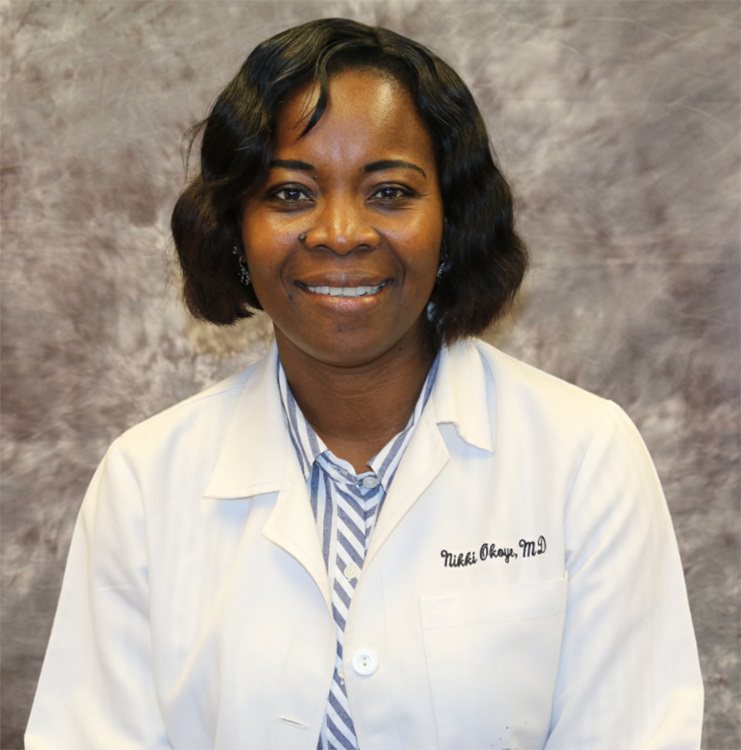
“Our chance for curing cancer is highest when the cancer is diagnosed early,” says Dr. Nkeiru Okoye, hematologist and medical oncologist with DPN. “Unfortunately, 75% of lung cancers will be diagnosed at an advanced stage and most due to smoking. Early detection saves lives, so it is important for eligible patients to talk with their providers about getting screened.”
Globally, breast cancer remains the most frequently diagnosed cancer and a leading cause of cancer death in women. But today, most patients will be diagnosed in the early stages, increasing survival rates. And five-year survival rates for all cancers have increased from 49% for those diagnosed in the 1970s to 68% for those diagnosed today.
This is particularly good news for children for whom a cancer diagnosis may mean a life cut prematurely short. At Dayton Children’s, the focus tends to be more on prevention than on screening for cancer. Teaching children and their families to maintain healthy lifestyles and taking important steps to prevent cancer are important at any age.
“We recommend keeping up with well-child visits with your child’s pediatrician,” says Kim Balio Quill, patient family communications manager and services marketing manager at Dayton Children’s Hospital. “We also recommend receiving the HPV vaccine, practicing sun safety and taking advantage of education classes we offer like smoking cessation.”
Should the worst-case scenario happen and a child is diagnosed with cancer, Dayton Children’s offers state-of-the-art cancer care close to home, created specifically for the youngest patients. The hospital is a member of the Children’s Oncology Group (COG), a multi-center alliance with other leading pediatric cancer institutions across the country. This ensures patients have access to the most advanced protocols and clinical trials.
“Our cancer team is cross-trained in hematology and oncology to provide ongoing, personalized care throughout a child’s treatment, from first appointment to remission care,” says Quill. “In our integrated care setting, all departments are located on the same floor. This enhances familiarity with doctors and staff and enables us to provide consistent, high-quality care, while relieving anxiety and stress for families.”
